Spiritual Bankruptcy to Breakthrough: Justin Shaw’s Story of Renewal”

Send us a text Show Notes Keywords spirituality, healing, addiction, grief, emotional intelligence, comedy, self-discovery, sorcery, mental health, personal growth Summary In this episode of Father's Refuge, host James Moffitt speaks with Justin Shaw, a mystical comedian and author, about his journey through addiction, grief, and spiritual awakening. Justin shares his unique perspective on healing, the importance of emotional intelligence, and the role of spirituality in overcoming life's cha...


Show Notes
Keywords
spirituality, healing, addiction, grief, emotional intelligence, comedy, self-discovery, sorcery, mental health, personal growth
Summary
In this episode of Father's Refuge, host James Moffitt speaks with Justin Shaw, a mystical comedian and author, about his journey through addiction, grief, and spiritual awakening. Justin shares his unique perspective on healing, the importance of emotional intelligence, and the role of spirituality in overcoming life's challenges. He emphasizes the need to embrace emotions rather than suppress them, and discusses the concept of 'sorcery' as a means of connecting with source energy for personal growth. The conversation also touches on the impact of societal pressures on men regarding emotional expression and the importance of finding balance between masculinity and femininity.
Takeaways
Justin Shaw describes himself as a mystical comedian, blending humor with spirituality.
Spiritual bankruptcy refers to a state of hopelessness and despair.
Healing requires feeling emotions rather than suppressing them.
Addiction often stems from a lack of spiritual fulfillment.
Loss can lead to profound spiritual awakenings and insights.
The concept of sorcery is about connecting with source energy for healing.
Emotional intelligence is crucial for men to navigate their feelings.
Society often pressures men to suppress their emotions, leading to struggles.
Finding balance between masculine and feminine energies is essential for healing.
Grief is a natural part of life, and embracing it can lead to growth.
Sound bites
"What you resist will persist."
"Healing is about feeling, not judging."
"You can still keep your man card."
Chapters
00:00 Introduction to Justin Shaw's Journey
02:52 The Role of Comedy in Healing
06:02 Struggles with Addiction and Recovery
08:48 The Impact of Loss and Grief
12:10 Spiritual Awakening and Transformation
15:01 Creating a New Path: Sorcery 101
17:50 Understanding Spiritual Bankruptcy
20:56 The Role of a Shaman in Healing
31:02 The Journey of Healing and Religion
37:05 Understanding Emotions and Grief
49:22 The Impact of Technology on Mental Health
01:01:31 Embracing Emotions as a Man
01:03:40 Connecting with the Audience
Website
https://www.awakenthesourcerer.com
Podcast link
https://www.yourspirtualjourneypodcast.com/episodes/episode-131-justin-shaw
Instagram Link
https://instagram.com/sourcerer_13
Call to Action for Father's Refuge Podcast
Facebook Page
https://www.facebook.com/profile.php?id=61583591441571
Podcast Support
https://www.fathersrefuge.com/support/
One Time donation
https://www.buzzsprout.com/2528600/support
Monthly Support
Want to be a guest?
https://podmatch.com/hostdetailpreview/fathersrefuge
Mobile Follow Page
James Moffitt (00:01.414)
Hello and welcome to Father's Refuge podcast. name is James Moffat and I'll be your host. Today we have Justin Shaw. Hey, Justin, how are you? I'm really good. Thanks for being here. Justin Shaw is here with us this evening and he has a unique story to tell. And I'm glad you're here to do that. I'm just going to read from your profile. It says,
Justin L Shaw (00:12.462)
Good, how are you?
Justin L Shaw (00:16.206)
Thank you.
James Moffitt (00:29.062)
It says, Source does not call the qualified, it qualifies the called. Justin Elshaugh, a mystical comedian, a doctor of divinity, and a sorcerer, passionate about empowering people to reclaim their self-worth and manifest their higher potential. Following a long battle of substance abuse, PTSD, depression, and anxiety disorders, Justin, a former stand-up comedian, experienced firsthand the redeeming power of Source energy.
After an incredible experience he will never forget. A little bit Deepak and little bit Tupac with a sharp cometic edge. Justin Shaw challenges the status quo and empowers people to wake up and live their truth with his new book, Sorcery 101, 13 Rungs to a Higher Elevation of Consciousness, a new system designed for sourcing a spiritual revolution. That's a mouthful.
Justin L Shaw (01:06.306)
Comedic. Comedic.
James Moffitt (01:26.406)
So as I told you before I hit record, your profile really grabbed my attention. And I felt like you would be an excellent guest here on the podcast. And I know that you will be very inspirational and you've got a unique story to tell. And I love stand-up comedy. And so.
Justin L Shaw (01:26.722)
That is, you did well, very well.
James Moffitt (01:53.37)
My wife and I watch more me than my wife, but we watch Netflix and we watch the Netflix specials. And so I'm just going to rattle off a couple of comedians that you'll probably recognize like Dave Chappelle, Lewis Black, his girlfriend Kathleen Madigan. She's hilarious. And several others. And there's probably about 10 or 15 that I really like to watch.
Justin L Shaw (02:05.962)
Mm-hmm. Mm-hmm.
James Moffitt (02:22.69)
And you know as well as I do, life can suck sometimes. It's hard, it's grueling, right? And you just do the daily grind and you just sometimes you just want to sit in front of your TV and laugh, right? Laugh or cry or both, you know, whatever. So anyway, when I saw that you were a standup comedian, I was like, yes, we'll have somebody that's funny on the podcast. So anyway, I'll quit babbling now and let you kind of take off with it.
Justin L Shaw (02:35.734)
Absolutely.
Justin L Shaw (02:52.59)
Yeah. So, yeah. So I like to call myself a mystical comedian. I make names up for myself, a spiritual sherpa, a hope dealer. But, you know, I kind of mix in the comedy thing was, you know, worked for me for a while. And I'll kind of get into my backstory a little bit. But, you know, it worked for me for a while until it didn't. And it was kind of like a just not a healthy atmosphere for me anymore to do stand up comedy. But now, now I get to use all those skills.
And kind of not just make people laugh, but make them think and feel at the same time. So that's what mystical comedy is all about. I'm kind of creating a new niche because there's so much growth in healing and laughter and humor. And when you combine that with kind of the mysticism and ancient wisdom and make it funny and add in some pop culture and things like that, it's something new and fresh and a new way to kind of help heal.
So it's, it's, yeah, it's, it's a new path, a new journey. But yeah, if you want to be, kind of do a brief kind of overview, is that what you like, kind of like what I've been through? Okay. Yeah. So yeah, it's always good to, to understand that, you know, whoever you're talking to has empathy for your situation, not just sympathy. know, sympathy is just listening to your pain. Empathy is it feeling it with them. And I have a lot of empathy for people cause I've been through the ringer.
James Moffitt (03:58.579)
Sure. Yeah. Yep.
Justin L Shaw (04:14.638)
You know, I grew up in a very kind of emotionally suppressive atmosphere. It was just me and my mother and my mother was not good with emotions. She was, you know, the type that she was going through her own pain. There was a divorce happening when I was younger. She, you know, they were older parents, so all brothers and sisters were moved out. So it was literally just me and my mother. And she would kind of have these depressive instances where and she just we just spent a lot of time alone in our rooms. She would be alone in her room and I'd be alone in mine. And
And that's where I created my world, because she was not good with hugs or saying, love you. That was not a word that was mentioned around my house. I had a very strange relationship with it in that I couldn't ever say it. couldn't say it. I didn't. I couldn't say it. So, you because it was never said to me. So it was it was it was tough. She did the best job she could. I love my mother. She was she was a kind person. She never abused me in any way, but she just didn't.
know how to handle emotions at all. would try to talk to her about emotions and she'd get kind of flustered and just say, go take a shower, you'll feel better. And sometimes I did. Sometimes a shower did work. you know, it was it was just a really tough atmosphere to grow up in. So I would seclude myself to my little cave. And that's where the comedy came in. That's where.
You know, this was the time of the 90s. I would stay up late when I wasn't supposed to and watch Saturday Live. And Saturday Live at that time had, you know, like David Spade and Adam Sandler and Chris Farley and Dana Carvey and all just, was, was the, it was the true Yankees lineup of all time. Like that was the greatest SNL lineup ever. And I would just loved it. And I would stay up watching and laughing. You know, Jim Carrey was at the top of his game in living color and Ace Ventura and the Matt, know, Dumb and Dumber and
James Moffitt (05:44.228)
yeah.
Justin L Shaw (06:02.006)
all those movies were coming out. The Simpsons was just at the peak of their awesomeness. And so there's just so much funny out there. And, you know, when something was funny, I just watched it over and over. The content was not there. So we don't have all this content back in the 90s with all this, you know, all this stuff. There wasn't a lot of choice. So when something really made me laugh, I just watched it over and over and over and try to emulate it and do voices. And I realized that I was good at that.
And I could make my mom laugh. I would bring her out of these kind of depressive atmosphere things and I would imitate people and I would end up doing like George Bush Sr. was the president at the time and I would end up not doing George Bush impressions but doing Dana Carvey doing George Bush. Not gonna do it. Not at this juncture. Wouldn't be prudent. And so I'd say these things and make her laugh and that made me feel good.
James Moffitt (06:51.164)
Yeah.
Justin L Shaw (06:57.92)
And then as I progressed, I realized that, you know, this is an easy way to make friends, even though I really kind of didn't care about friends a lot because I was was isolating a lot and I would just go home and, you know, video games and movies and and food were my were how I brought out of my pain. That spiritual bankruptcy, which is the core of everything we're struggling with, is spiritual bankruptcy. And that's what I was feeling at the time. So I was looking for avenues out. And that's that's where the
addiction can come in. you know, in high school, I kind of became the funny guy and I got invited to parties a lot and I really got into partying and drinking and weed and, you know, drugs. that's, you know, that's that was the really easy outlet. That didn't take any work at all to bring me out of my pain. So that was something that I got. You know, I went down that road, which my 20s were.
A dumpster fire, let me tell you. They were just, you know, it just was so bad at times. And I moved to LA to try to do the stand-up comedy thing and I would get on stage and just have a bunch of Xanax and Oxycontin in my system and I would hardly remember what I even said. And the alcohol and all this stuff, it led to nights where I would, you know.
I'd end up in jail for DUIs and drug possession and I'd have, you know, I'd end up, you know, have to go to halfway houses and rehabs and rehab five times. And, you know, it's I spent a couple of weeks homeless. mean, it really got bad. So in my 30s, that's when or late 20s, that's when I went to rehab. And the first time I went, I didn't understand the spiritual aspect of healing. And
I just was so messed up on drugs. was like, just get me clean. Get my body clean. I won't want to do drugs again. Period. End of story without really understanding that spiritual bankruptcy part. And somehow that lasted three months. don't know how it did, but it did. I lasted three months. But again, I'm back all doing everything all over again because I wasn't treating my spirit whatsoever. Didn't understand it. I didn't even realize it was a real thing. It wasn't really a big part of my life growing up. So, you know, I went back to rehab again and said, OK,
Justin L Shaw (09:18.818)
you you tell me what to do, because obviously I don't know everything. Crazy. I don't know everything. So, you know, that's when they they got me into it was a faith based treatment center because it was like, all right, I understand. guess there is a spiritual aspect. And, you know, they kind of got me into the Christianity and AA, which go very well together, kind of hand in hand. You AA is just kind of disguised Christianity. So that worked for for time and it worked until it didn't. And, you know, I kind of
realize that healing and trauma healing is not one size fits all. And that's kind of what they try to get you into. it's just like, this works, this is, and it forces it. And it just wasn't working for me. kind of, my mother at the time, I was sober for about five or six years. you know, that was, but I was living a very mediocre life, which I thought was amazing because I was functional. I was at least functional. Like I had a car and a place to live and...
To me, that was amazing. That was as good as it gets. But it was true mediocrity. And that was fine for a while until my mother got terminally ill. And that year of her passing was, know, already that's traumatizing. You see someone kind of dwindle away mentally, physically. Her body was kind of eaten away by the cancer treatments in her mind. The dementia was kicking in and she was, you know, not remembering, you know, things. And so that was...
very traumatizing and sad. what made it much worse was this this programming I was given in Christianity that because she was not a practicing Christian, she was going to hell. And so that was 10 times traumatizing for me. I mean, just horrible. And I couldn't get anyone, any pastor to say she wasn't going to hell. They're like, well, maybe you can convert her before she passes. And it's just I mean, it was just just what's just made the trauma so much worse. And at the time, I realized I started realizing that
Christianity was this amazing house that I was in, this mansion, this metaphorical mansion where it is 17 bathrooms and bedrooms galore and there's a game room and there's a pool and there's all these amazing amenities and, but you can't leave, you're stuck in the mansion. You can't leave the mansion because outside the mansion they tell you is death and destruction and a zombie apocalypse. And so I'm stuck in the mansion, which for a lot of people is fine.
James Moffitt (11:37.327)
Right. Right.
Justin L Shaw (11:43.503)
But I realized that this mansion is built on a cracked foundation of fear judgment and control So when my mother started passing and these ideas of hell and she's gonna be stuck there. Well my mansion crumbled completely and so I laughed I left that mansion to never come back again and I found true freedom and this is where kind of fun things happen and Yeah, it's still some trouble get into with especially the father aspect of it, but
You know, I started seeing a shaman. I replaced my kind of pastor with a shaman and he started opening me up to other things and you know that Christianity was not maybe the only way and there maybe these other religions have maybe they're all pointed in the right direction, but where they get lost is in the kind of the dogma and this is, the control system of you need to be if you're going to be us, you have to be us completely. And maybe that's not true. Maybe they're
There's something to them all and maybe they all have something to offer without having to get to, you know, get myself into to say I'm this, you know, maybe I'm everything. And so I started thinking about that and working with him and meditating and doing all these really cool spiritual things and getting into other religions. And one day I had what I can only explain as a bliss attack. And this bliss attack was like the onset of a panic attack, which I had had for years.
But instead of replacing panic, you replace panic with love. And so I wasn't doing anything. I wasn't even meditating at the time. It just came on when I was stretching from a workout and it was just flowing feelings of love. And I call it my near life experience because a lot of people call this a near death experience to have something like this. But I wasn't dead and I didn't leave my body. I still have not done that out of body experience. It sounds amazing. And I'm sure I have not done it yet because I think I know.
But it was like I was emotionally taken to the other side. was like emotionally I had died and I was feeling what it was like to cross over and it was just pure bliss. I was feeling my mother's energy. I had connected to it. found she's definitely not in hell burning away. I realized truth and you know in this feeling I'm getting downloads of reality and truths and I knew they were truths because of how I was feeling.
Justin L Shaw (14:04.318)
It wasn't making me feel icky and bad like, you know, some of the aspects of Christianity, which was both helpful but also destructive. So I kept the helpful portions of it, just ended the destructive portions of it. this, I realized the best way to put it is that I had been on airplane mode my whole life and a phone perpetually in airplane mode is not living up to its potential. Still very useful, you know, but you can't get any emails or texts or messages or phone calls or anything.
if it's in airplane mode. And that's what I realized I was in. I was in airplane mode and all of a sudden I was off. And once you're off, know, it can never come back on. And so this was an amazing moment and changed me. But there were still a couple years of struggle, and it's important to know that this experience happened and I was still, it was like all of a sudden a phone started to ring at that moment and I didn't answer it right away.
but that phone kept ringing. And it's one of those really annoying ringing tones. It's not like a nice, it's one of those old school ones with like, and it's really annoying. One of those really annoying ringing phones up in your ear. And so I struggled for a couple of years and, and you know, the mother died. I had a sister die. I had a close childhood friend die. Then I was with a woman who was my fiance at the time and she went to Boston one year. We had an infant son together, six months old.
James Moffitt (15:09.381)
Right, right.
Right.
Justin L Shaw (15:29.966)
And one Christmas she went to Boston to visit family and never came back and cut me out of their life completely. So that was horrible. mean, I mean, I father's refuse. I get it. I've been there. I've been through the grief. And at that time, that's when, you know, I started listening to that ringing for after something like that happens, you re-examine everything. And so
You know, I still have not heard from them in three years. I still send her an email once in a while, but there's never a return. So she knows what she's doing. So it's a daily struggle. It is a daily struggle. But after that happened, I up and just moved to Sedona, which I'm in Arizona. So I went from Phoenix to Sedona and just spent a year there and helping traumatized kids in a trauma, kind of like a halfway house for 18 to 29 year olds. And it was...
really amazing and I placed my intentions when I went up there, show me what I need to do with my life, you know, because things are really not going so well for me right now. So, you know, and I placed my intentions and that's when the idea came in for the book and to have to create a map and a system for other people to heal and have their own bliss attack and be able to handle the trauma.
better and to heal from it and to recover. And so this whole idea of, you know, sorcery I spell with a U, because it's, you know, unfortunately, I don't know how to turn, you know, anyone into a frog or, you know, levitate the remote into my hand. And so it's not about, you know, you can it's hooded robes and everything. You can leave those in the closet for the Harry Potter convention. It's not that kind of sorcery.
It is with the use of source energy. That is what I connected to. That is what took me off of airplane mode. It is the unified field that surrounds us. There's a field of energy that is around us all the time that connects us and bonds us. And it is there. And so to be to get people to be able to connect to that, I realized I had to come up with something kind of like the 12 steps. And I kind of thought to myself, I was like, well, there's something that worked for people. But I have some issues with it, of course.
Justin L Shaw (17:50.575)
You know, the very first step is you're powerless. That's not true. That's very destructive and damaging because you're extremely powerful. Like the energy of God is within us all. It's about letting God out, not letting it in. And that's what I realize is where AA has gone sideways. It's built on this religious portion. So sorcery is a complete...
Disconnect from all religion. It is spirituality over religion because spirituality unites and religion separates so Instead of 12 steps I created 13 rungs So, you know moving forward is good but moving up is better because you know a bird has a better perspective on things than a worm so And there's 13 very specific reason immediately. I people thinking about The number 13 it's it is not unlucky. That's a false belief
And in order to have one of these bliss attacks, we have to first start attacking our shadow and our limiting beliefs and things that are holding us back. And the number 13 is garbage. It is not unlucky. It is actually a very divine number. And in tarot, it represents death, rebirth, and transformation, which is what sorcery is all about, becoming a sorcerer. So.
It was very exciting and so I'm finally answering that phone and doing what I've been doing. The book only came out nine months ago so this is all very new and it's very exciting and I love to see where it's going. That's kind of a little bit of my backstory and where it came through. A little bit long-winded there but I think I got it all in.
James Moffitt (19:27.642)
No, no, that's great. I appreciate you sharing all of that. I'm sorry that, I'm sorry about you losing your mother. know that's losing anybody that you're close to is difficult. And there's certainly loss and grief involved in all of that. I, my sister and I were adopted by a military family and my dad passed away in 1990 and my mother passed away.
I don't know when she passed away because she hit it from me and my 38 year old son that passed away last year, got me on Yahoo chat. Did Yahoo have chat? think it did. Didn't it? Yeah. Yeah. I think it was Yahoo chat. And he was like, where are you sitting down? And I was like, well, yeah. And as soon as he said that I knew something was up and he was like, well, your mother passed away. She had apparently she had a breast cancer and she was in remission for awhile and it came back and she died. All of that.
Justin L Shaw (20:07.212)
Yeah, yeah, they probably still do.
James Moffitt (20:26.532)
I wasn't really close to her or my dad because they were really, how do you say it? They provided the physical things that my sister and I needed. We were in a Schaffenberg, Germany in an orphanage and they adopted us. And I was very thankful they brought us to America and they provided the, know, a roof over our head, food to eat, new school clothes every year, blah, blah, blah. All that stuff that most American children just take for granted. And,
But they didn't know how to demonstrate love towards us. They didn't know how to say, love you. They didn't know how to hug you. They didn't know any of that. and they say you're not supposed to speak evil of the dead. Right. And so I'm not trying to speak evil of my adoptive parents. I'm very thankful for the good things that did, did for us. And, I recognize I'm 64 now, you know, I've got four grown children of my own. We're empty nesters.
Now I got four pets instead of four children. You never, you never get away from children. Now I got four legged children, but anyway, uh, yeah, I can look back, you know, hindsight's 2020 and I can look back and recognize that my mom and dad, my adoptive parents probably did the best they could with what they had. You know, my dad's, uh, uh, one of eight children. His dad died of pneumonia.
back in the thirties, I guess. and his mother raised all eight of those children by herself. And so he had a rough childhood himself, right? And he probably, he probably didn't get a lot of love demonstrated towards him either. I'm assuming that, but anyway, I say all that to say that, you know, he had a tough go of it. And I recognized that he didn't know how to love us. Right.
And, he acted the way he did because of the way he was raised. And so I tried to, I did my best to break that generational curse as I became a parent. Some of it I was successful in some of it. wasn't, cause it's ingrained in us, know, it's ingrained in our psychology. It's ingrained in our minds and our hearts. But anyhow, we have that in common. And, so I want to go back to a term that you've used a couple of times.
James Moffitt (22:49.547)
just for clarification. You talk about spiritual bankruptcy. What does... what does that mean to you?
Justin L Shaw (22:56.846)
It is, it's the best term I have for just feeling completely at the end of your rope. I mean, with no hope, just completely hopeless and, you know, kind of up the creek without a paddle kind of thing. It is just, it's the most descriptive term I can come up with to where we just, feel like.
This is it. I don't want to be here anymore. This is no longer enjoyable. I just want to die. so that is, you know, those thoughts and feelings are kind of at the core of everything, of all addiction, all mental illness, even some physical things like autoimmune disorders and stuff. If you dig to the core of a lot of these issues, you're dealing with spiritual bankruptcy. And part of the issue of
of our medical community is that we don't take the spirit into consideration when someone comes in sick, mentally or physically, emotionally, whatever. But it is the trinity of the mind-body-spirit triangle. And if all three of those things are not taken into consideration, then true healing will never happen. that's not to say there's... Doctors are amazing. I love...
Doctors are great. We need them. for anything that people are suffering in, that's called acute, go see a doctor. But there's these conditions called chronic. And unfortunately, you know, just because doctors really have the body down, they feel like they understand the mind and well, the spirit that, you know, they didn't get trained in that in medical school. So that's not really, doesn't exist. So we're never going to get
healing. I think a lot of the drug companies like it that way because a cured individual lines no one's pockets because once a individual is cured, the pills go away and the doctor visits and then there goes the whole lifeline. So I think they're OK with this model.
James Moffitt (24:49.556)
of course.
James Moffitt (24:59.974)
Yeah. Don't, yeah. Don't get me started on, on, on, pharmacology and, and every day I watch TV and out of a one hour show, there'll be 25 or 30 minutes of nothing but drug company commercials. Wow. I could have a, I could have a podcast episode just on that alone. So are you familiar with Denzel Washington and his equalizer movies?
Justin L Shaw (25:13.966)
Mm-hmm.
Yep. Yep.
Justin L Shaw (25:21.9)
Yeah, no, yeah.
Justin L Shaw (25:26.491)
sure, yep.
I've seen them, yeah.
James Moffitt (25:31.409)
Yeah, of the... I guess part of his mission for helping people. People that are downtrodden, people that are disadvantaged, whatever. He mentions body, And he always tells people, you know, he identifies, you know, a lot of the people that are downtrodden or under attack in his movies are people that...
or unable to protect themselves or unable to speak for themselves or whatever. And sometimes, like in his first movie, there's that young lady, you know, she was a prostitute and he was talking to her on several occasions and he said, he said, if you don't like your world, change it. You know, it's part of the mind, sort of thing. You and you said that, I was like, there's a lot of truth to that because, because we go through life and sometimes
the things that beset us or the things that affect us, whether they be temporary or acute or chronic or whatever, sometimes we bring some of that stuff on our own. You know, we bring it upon ourselves because we have bad habits and we make bad decisions. Right. And so part of that body mind spirit is, is, getting your spirit right and getting your mind right and going, okay, I've got this problem. can't beat. How can, how can I change that? I don't like my world. How can I change my world?
Right? And I kind of, I kind of see that in some of your backstory about, you know, the, the spiritual bankruptcy, body, mind, spirit, and all of that. I love Denzel Washington and his movies and I, don't really know what his religious or spiritual background is or is not, but, but I like the, I like the positivity of the body, mind, spirit and changing our world. And, you're not quit being a victim. You know, you don't have to be a victim. can.
Justin L Shaw (27:16.438)
He's very spiritual.
James Moffitt (27:26.616)
overcome this thing, you know What is a shaman?
Justin L Shaw (27:31.407)
So that is someone who has one foot in the spiritual world and one foot in the physical. And that's where I try to live as well. I'm not a trained shaman. Actually, that's kind of what I want to go be trained in. And there's a South American kind of thing that I'd love to go to. you know, Sorcery 201 would be I get trained as a shaman. So it was someone who came in and like I said, one foot in the physical world and one foot in the spiritual world. And that's how they heal. So and and
And I kind of do my best to do that with and I can't wait to be trained someday, but.
James Moffitt (28:06.832)
Is that kind of like being a priest or a pastor of a church or is that like a religious leader of sorts?
Justin L Shaw (28:15.982)
Spiritual leader. Yeah. The Native Americans have a lot of shaman. It is a medicine person and they deal with issues of the spirit. I like to say, and that's part of what I'm doing is trying to get into the spirit, which there's a lot of healing in that. I like to compare it to, so if you fall off a ladder,
and there's a bone sticking out of your arm, this is not the best time for meditation. Acupuncture is probably not the right move, right? So you go to a doctor, you get that set, but once it's set and done, the doctor's part is done. What heals the body, what made the body, heals the body. So what kind of sorcery is about is the shamanism aspect of setting the spiritual bone.
James Moffitt (28:49.424)
right right
Justin L Shaw (29:11.68)
and letting the body heal it. you know, trauma is never going to get healed if you don't know how to set that metaphorical bone. You have to, once you set the bone and know how to do that, now the body will heal itself. But without being able to spiritually, you know, set your spiritual bone, it's not going to heal itself. It will continue. Just like with a regular injury, you know, you don't set that bone and you just kind of let it
heal, well forever, you know, that's going to be a sore spot. And just like with, you know, our trauma becomes a sore spot. And if it's not healed, you react instead of respond. You know, the shadow is the reactor, the sorcerer is the responder. So, you know, the once you'd and so just like trauma, when you touch that broken bone that didn't heal, wasn't set properly, you get a reaction and a jerk and that's exactly the same thing with trauma. You hit that
You hit that trauma button, you're gonna get a reaction, because that has not healed. But once you set it and it's healed, well, there's still a scar there. It's never completely gone. You get shot, there's always gonna be a scar, a scar is a whole lot better than a gaping wound. But once it's set and it heals, then you can touch that scar, because it's healed, and there's no feeling to a scar, it's just there. You can see it, it's there, but...
James Moffitt (30:35.228)
Right.
Justin L Shaw (30:35.662)
There's no reaction to when you touch it. And that's where we can get with our trauma. You can get to the point where once you detach the emotional reaction from the memory, well now your trauma has been alchemized into wisdom. So, and that's where we can get to, but you have to know how to get there. And it's been a journey for me, but I've, you know, I don't know everything, but I know a couple things.
So that's what's exciting for me is to help people that are struggling out.
James Moffitt (31:08.818)
Well, life can be hard and it certainly takes us on a journey that is not for the faint of heart. I liked how you were talking about the different religions and the difference between Christianity and the shaman and AA. AA has a very... it's kind of a religion unto itself. And I know that AA...
Justin L Shaw (31:34.04)
It is.
James Moffitt (31:38.179)
absolutely provides a foundation for people to start the healing journey and break the bonds of addiction, you know, for alcohol and all that. And that's a good thing. as I listened to you talk, you kind of alluded to the good and the bad of some of these different religions, right?
I was kind of reminded of the fact that sometimes we get so dogmatic in our theology, no matter what religion you're practicing or whatever, that it's easy to start labeling people, labeling things, and labeling experiences. And that's not necessarily a good thing, right?
Justin L Shaw (32:27.112)
No, and I kind of said that trauma healing and recovering from addiction or anxiety or depression is not one size fits all. It's simply not. that's where people get programmed is just like, this is what you're supposed to do. But it's not like Christianity works for me. Well, it's going to work for you. Well, no, because it's not one size fits all. So this is something different. And there's nothing wrong with religions.
James Moffitt (32:36.636)
Right.
Justin L Shaw (32:55.426)
There's some amazing things to it, but there's also some aspects that's like our way is the only way. Well, that is not true at all and kind of forcing things. And my experience in the Christian world was I didn't, I never felt like I fit in. had tattoos, I still had had sex, I questioned the Bible and I cursed and I never felt like I fit in ever, but they want you to be a certain way. And if you're not gonna fit into that certain way, well,
you're going to feel a little bit ostracized. And so I did. So, you know, I feel like, you know, religion to me is that there's a great parable, an old ancient parable that compares religion to... So there's, you know, several blind men and they're sitting around an elephant, okay? And they're trying to figure out what this thing is. So the one near the, you know, the trunk says, this is a snake. The one near the ear says, this is a fan. You know, the one near the tail says it's a rope.
and the one by the foot, well, this is a tree, you know, but there's only one truth. And the way we find out this truth is to have them all work together. And that's what I see sorcery as, is taking all these things from all the best parts of religion and just kind of bringing them all together, because they're all right. They're all right. They're all, all of them.
James Moffitt (34:15.74)
Right.
Justin L Shaw (34:19.458)
the practices and things, it's the negative feelings that are holding us back. It's that judgemental feeling. No Muslim is gonna feel okay with going into a Christian church and busting out their carpet and putting it towards Mecca and praying that way. And no Christian would be comfortable having that. Well, why not? You guys are all, everyone's praying. Who cares how you pray? And so that's the problem is this judgment in things that's like, well, if you're not gonna do it our way, well, then you're out.
And that's the problem I have with religion is this separation of we're better and that's what wasn't working for me. And I never got that. I never felt comfortable talking to people about converting the heathens and getting them over into Christianity and just like, well, it's working for them. Who cares? So I was never accepted in that community as much as I wanted to. But I wasn't.
I wasn't going become a sheep. They all and pastors and they all openly say, you know, my flock and, you the sheep and that's not a good thing. That's not a good thing to be a sheep and just go along. Sheep are lost without a shepherd. And everyone thinks Jesus is the shepherd. Well, it's actually your pastor that's a shepherd because he's interpreting these words in the Bible and spewing out whatever he wants to say. You know, it wasn't Jesus that signed his seminary school diploma. That's what I started realizing.
Did Jesus give you permission to speak for him? Because I don't see his autograph on that diploma. know, like sheep, it's just... And one of the rungs is goats over sheep. And I use goats as in both the animal, which is kind of a, you know, like it's kind of a do its own thing, you know, non-hurtable, I'm going to do whatever I want to animal. But I also use it in terms of how everyone uses it as that greatest of all time.
And, you know, it's to become arrogant about being the greatest of all time, but anyone that's done something great doesn't listen to other people, knows what, who they are and what they're doing and goes for it. And, you know, that mindset of a goat is extremely beneficial. And, you know, the sheep, you know, unfortunately, you know, everyone blames Hitler for the Holocaust, but Hitler would be, wouldn't be anybody without his sheep.
Justin L Shaw (36:36.822)
So, you know, we have to, and there were some goats in the, Oscar Schindler, the Schindler's List, there's a goat. He did, he's like, no, this isn't right. Don't believe any of this. And did his own thing and is a legend. And, you know, that's, we need more people like that and not sheep that are just gonna go along with whatever they're told and do whatever they say. that's just, I want people to think for themselves. And that's, it's helped me so much.
James Moffitt (37:05.08)
One of the other things that you talked about, which I think is very relevant, and I think we've all experienced this, whether you're a Christian or not, or you go to a Protestant church or not, you know, you may be part of the Catholic church or Muslim or whatever, you know, any religion that comes to your mind. But I know that, especially in the Christian church, I know that that people,
People like to label and they like to make pronouncements. And I'll just bring it full circle and say, you know, I have a son that my 38 year old son that passed away in January of last year. He was gay. Right. And, and, I don't fully understand that lifestyle. Right. And I know there's huge debate on well, they're born that way or
or it's learned behavior, or there's a whole debate that's swirling around all of that, right? And I certainly don't understand all of that. But one thing that I did understand about Jeremy was that he was my son, and I loved him, and I wanted him to be happy. Now his mother went to Southern Baptist Convention Church, and they are, that denomination is very legalistic and judgmental about homosexuality.
And they point to several play, you know, Leviticus and several books of the Bible and the Old Testament, especially that quote unquote labels, you know, homosexuals as evil and that God spoke against it. And if you don't purge yourself of that lifestyle or mentality or whatever, but you're going to go to hell. Right. And if you don't, you know, if you don't accept Jesus in your heart and repent of that sin, then you're going to go to hell.
And you know, my mother was Catholic. She was a non-practicing Catholic, but she was raised in Austria in a Catholic church. And, she kind of had, you know, her, her ideology of who goes to hell and who goes to heaven was very simple. If you do, if you go down the road of life and you do bad things and stupid things, don't do as I do do as I say, sort of mentality, then you're going to go to hell. If you do what you're told.
James Moffitt (39:34.653)
Then you're a good boy and you're going to go down the road of life. And there's like a why, you know, if you're bad, you're going to go to the right, go to hell. If you do good, you're going to make right decisions and you're to go down the left side of that fork and you're to go to heaven and all of this. anybody that has a loved one that, that is, you know, has cancer or, and, and, or eventually passes away. there's eternity. Right. We, we step.
off of this plane into another world. We are, our spirits leave our physical bodies and none of us really know. I think, I don't think anybody, I don't care what religion you're in. You don't really know what you're going to see or experience on the other side because you've not been there. We have a lot of people telling us what's going to be there and we see movies and stories about people that, you know, they die and they go to heaven and they meet Jesus and they, you know, they experience this.
all this love and peace and who doesn't want to experience that right and they come back and they tell us it's it's it's not it's not false it's true and you know jesus is real and they may even talk about other gods other than jesus right i i don't know but you get what i'm saying and and it's very traumatizing to somebody that loses a parent or a child and and they quote unquote haven't
fulfill the requirements for going to heaven. And in Christendom, we're taught there's heaven and there's hell. Heaven is awesome and wonderful and all your sins are forgiven and you'll be with Jesus for eternity. Right? And hell is just the opposite. Right? It's eternal damnation. Right? And so I don't want to harp on it too much, but I think you bring up a
think you bring up a mirror or a reflection of the struggle that we all have. You know, when you're faced with your parent or somebody that's passing away, you want to know they're going to a good place, right? You want to know that they're going to be healed and that they're going to experience a good eternity. Does that make sense? Yeah.
Justin L Shaw (41:59.987)
sure. Yeah. Yeah. No, it's and you know, that's not that's the that's the lies they want to feed for the control, because it's like they need to you need to fit in and you need to control. And, you know, in order to get to heaven, you keep coming to church and keep tithing your income and you need to be this way. And, you know, it says in the Bible not to be gay. Well, you know, if the Bible was a piece of art, no one would buy it because there's something called prominence and it traces, you know, the the Mona Lisa is so expensive because you can trace it back to the hand of Da Vinci.
Who wrote the Bible? mean, I mean, there's things like who says it's not OK to be gay? Like I see in every single church, God is love, which means love is God. And the energy of love doesn't care who and how you love, just love. So this is all garbage programming. Just it's just and it's and it's the fear and it's and it's so many people are living these fear, you know, that that cracked foundation of fear and judgment.
And so it's just, yeah, it's it's it's just there's so many things in the Bible is just as amazing. It's this amazing thing, right? I've read it and and it was a very difficult read. And there are there are some really dark things that and some amazing things. And it is full of it is both helpful and destructive. Two things can be true at once. That's that's a hard thing for our minds. It's like everything's true in the Bible or nothing is. Well, it's both. There are are there are some.
amazing divine wisdom in there and there's some egregious bull crap lives. And what we choose to focus, this is just like life. What we choose to focus on is what becomes our reality. So there are the dark parts of the Bible and I honestly think it's about 50-50. And then there's some amazing, amazing stories of hope. so you can, the Bible, can go into the Bible if you come in with the right energy. I like to say the sorcerer goes into the Bible. It's like a cave, okay? So.
Going into the Bible, it's a cave. It can be dark and scary, but there are some very valuable gems to be found in this cave. But it takes some digging and some spelunking to find those gems. But then you find the gems and you keep the gems. A sorcerer will keep the gems and discard the rest because a zealot goes into the Bible, finds the gems, but then holds on all to the useless rocks and dirt and that weighs them down.
Justin L Shaw (44:20.684)
So it's a magnificent thing. It's a magical book. There is a lot of truth in there, but there's a lot of lies too. so, know, whoever wrote, know, according to who? It's in the Bible. Well, okay, well, it is supposed to be the word of God, but a human had to write that, which means it's open for corruption. If a human wrote that, it did not...
just show up, it wasn't just manifested, it was channeled, supposedly, through people. Well, if it's a human hand that's writing it, it is open to corruption. we cannot take everything in the Bible as complete truth. And you'll know it's truth because of how it makes you feel. When you read something in the Bible that's dark and nasty and it gives you what the kids call the ick, that's not true. That is not true. Leave it.
But when you read something and it starts giving you hope and faith and the story of Job and what he went through and know, that's, know, I'm going through something similar and you just kept his faith and, you know, that's an amazing story. And there's some amazing stories of Jesus in there, but there's also some things I don't agree with because the Bible was written decades after Jesus died, decades. And so we're supposed to, I can't remember what I had for breakfast this morning. So we're supposed to believe that everything in there.
Everything in there is the literal, actually what he went through. I mean, we can't, you can't take the Bible so literally. whatever you resonate with, keep that and let it grow and sit on it. And if it doesn't, it's not truth. It's not, you know it's truth because it's how it makes you feel. So that's how I enter the Bible. Because there's a lot of useful stuff in there, but there's a lot of not so much too. So it is.
That's what I've come to realize about the Bible. It's just it's this magically written book that allows us just like in that life to focus on the negative or to focus on the positive and creating heaven. Heaven is here and now everything is here and now. And so the energy we're creating now, we're creating our own heaven and that energy can just carry over. And, you know, I think there is a dimension of negativity. I think it because it has to kept secret from kept separate from everything else. Otherwise, there's chaos and
Justin L Shaw (46:42.156)
The other side wouldn't be nice at all. So, but I don't think people go there because I think we are all one consciousness having separate experiences. You know, I say, who are you? I'm you. I'm just having a different experience. So I wouldn't want to ban a part of my consciousness forever to be tormented. That's my consciousness, you know, and and we're here to learn things. I subscribe to simulation theory, which means that in a simulation you are
in a very un-consequential atmosphere, practicing something that you need to take into the real world, just like a flight simulator. You get in there, a pilot gets practicing, and then they take those skills and they move them on to the quote real world where they fly the plane. Well, here that practice we're supposed to be getting better as love. This is a simulation of love, and that is the only thing we're supposed to be practicing to get it, because it's the one thing we will leave here and take with us. It transcends space and time.
And it is what we're supposed to be getting better at. And it is the only thing that matters. Everything else doesn't matter. It is all about how and who you love. And I think there is a, it's not judgment. There is an akashic review at the end of our life to see how we did. And I think what we feel is how we made other people feel throughout our life. So, and we get to feel that. So, you know.
And it's to practice, like how did you do here? You didn't do so well in this situation? Well, now you learned. Now you know how they feel, you learn. And so that's what I believe. So if you've been causing people, like you've been tormenting people your whole life, it's gonna be little bit of a hellish experience, but you're not banned forever and that's it, you're done.
you learn from it and then you come back again and maybe you go through an experience where if you tortured people, now you're the torturee and now you gotta learn lesson. And so we learn and it's just this cycling over and over. there is, energy cannot be, what is the first law of thermodynamics? It cannot be created or destroyed. It can only be transformed. we're just kind of going through this. We're just all learning.
Justin L Shaw (48:55.63)
We're just all going through this fun cycle of learning and that is kind of my world and that is such a pleasant world for me. Everyone hears simulation, they think the Matrix and we're all attached to batteries and AIs. It's not like that at all. It's beautiful on the other side and we're just here to practice love and get better at it. And that's what I think we're here to do.
James Moffitt (49:22.46)
I liked your, your story or your analogy of airplane mode. And I think I, when I think about airplane mode, I think about people doom scrolling, tick tock, you know, or stuff like that. And I'm like, yeah, cause you're just mindlessly getting dopamine hits off of 20 second videos, right? Or 10 second videos or whatever. And you know, when you're, when you're in airplane mode, it's, it's like,
It's like you're a turtle out on the road and you don't have the energy to get out of the way. The stuff that's coming down the highway, you just keep taking hits, right? And you just think, well, that's just the way it is. I'm a turtle and I'm going to be, that may be a bad example, but, but I liked, I liked how the airplane mode just kind of your, your spirit and your mind is just a neutral. I you're just not, just not doing anything. You're just.
kind of a punching bag. Does that make sense?
Justin L Shaw (50:25.118)
yeah, is. So if we are not constantly questioning our thoughts and feelings before they become actions, we have been relegated to organic robots. And society is full of what role playing characters is that is the term that's being thrown around. But it is the programming. We're not questioning anything. just our subconscious is ruling our life no matter what. So unless you're consciously creating stuff and intending for your life to go someplace, your subconscious is going to create your world.
the whole doom scroll. And that's an addiction. It is an absolute addiction. It is the biggest addiction out there right now. That and food, probably, you know, addictions. that's what I'm trying to... You know, there's no meetings for phone addiction, but it is the bad one. And I see it in the gym the most. People can't get through a set of leg extensions without checking Instagram. And it's sad. So and that's what I want to get out to people. If you cannot put the phone down...
for like a half an hour and people do like they'll put it and I say just try putting it down and it's uncomfortable. and if you are experiencing discomfort by putting the phone down and not using it, your soul is crying to you that you need some healing because that is not normal. That is you distracting yourself from just being. If we're constantly a human doing, we can never be a human being. And if you're having a struggle,
being a human being, that's a big sign that your soul is calling for healing. And that is the best way, you we all need our phones. They're not, they're they're a bad, they're very useful, but they can absolutely be abused. And again, it is that both and world of gray. Phones are both helpful and destructive. It's just, how are you using it? And I've used it for bad. And I know, I understand the dooms growing up. I was off social media for four years. I only recently got back on Instagram about six months ago.
Because it's like I want to contact with me and connect with people and everything. But yeah, is it's the phone has become a major issue and it is it's the biggest pain ducker. I call a pain ducker and you know, there's lots of pain duckers and none of them are necessarily good or bad. It's just, you know, the drugs and alcohol and the phone and the gambling and the sex and the food and none of those are bad. It's the attachment to them that causes the suffering.
Justin L Shaw (52:50.582)
So that's the biggest thing.
James Moffitt (52:53.958)
Not too long ago I watched a Netflix special. You probably think I'm addicted to Netflix, and maybe I am to a certain degree.
Justin L Shaw (53:02.125)
I watch plenty of Netflix, believe me.
James Moffitt (53:04.006)
Yeah. So I watched a Netflix special and I forget the name of it, but it basically, was, it was, most of them were it people and they were scientists, computer scientists. were from Facebook. They're from Google. They were from, you know, meta. They were from Instagram, all these different social media giants. Right. And they were talking about how, how we are being programmed as, as a society.
to... they actually figured out the psychology of keeping you glued to your screen. Like if you are on Facebook and you're talking about, I need to go out and get a... I need to go out and get whatever it is. Something for inside of the house, outside of the house, or whatever. And before you know it, there's an advertisement for it. Right there on your screen. And you're like, wait, are they listening to me? Absolutely. Absolutely they're listening to you.
They want you addicted to that screen and they want you addicted to feeling that you have to have that thing. Getting those dopamine hits, know, tick tock, Snapchat, Facebook, Instagram, all of that stuff. YouTube, YouTube is just as bad as the rest of it. Right? Of course I have a YouTube channel and you know, and I, have the funny thing is I have figured out that people love YouTube live and the shorter the YouTube live is the better. And I found out that.
that they, people like to watch my pets, my dogs and my cats. And I'll literally, I'll just be talking in the background. I'll be taking video of my dogs and my cats sitting in my lap or walking through the living room or whatever. And when I'm doing that, I get a lot of hits. You know, when I don't do that and I put the, the, the camera on me and I'm just talking about whatever a 64 year old baby boomer is going to talk about. Yeah, not so much. not so much interested in that, but they, they apparently they love the pets, but anyway, uh, yeah.
Social media is pretty dangerous and it's like you said, when we're hurting, kind of wrapping all this up, try to bring everything, put a nice little red bow on it, but when we're hurting, when we're experiencing grief and loss and all of that, and we're hurting, what do we do? We do what we know to do. We're either addicted to sex or alcohol or drugs, comfort foods.
James Moffitt (55:28.496)
Right? We love our comfort foods because what do they do? They make us feel good. You know? I want a bowl of ice cream because the bowl of ice cream for a few minutes makes me feel good because it tastes good. You know? I want that sugar. I want that sugar high. You know? And, and that doesn't, does that make your problems go away? No. Does that make your grief go away or your feeling of loss or bewilderment or frustration or any of those many myriad of emotions?
Justin L Shaw (55:29.602)
Mm-hmm.
Justin L Shaw (55:43.022)
Mm-hmm.
James Moffitt (55:58.109)
that we experience is that, does that solve all of that? mean, when you, you tie one on and you're drunk and you fall asleep, when you wake up the next morning, what happens? Unless you're an expert at being a drunk, you're going to have a really bad headache, right? You're going to have a hangover that's going to, it's going to pound on you and you're going to be going, my God, why do I keep doing this? Right? So.
Justin L Shaw (56:12.44)
Mm-hmm.
James Moffitt (56:23.58)
Let's talk about, let's talk about people that are hurting, that are experiencing loss and grief, loss of loved ones, sick children, parents dying, cancer, active shooters. There's a whole wealth of, or there's a whole panoramic view of the things that affect us in our lives, right? Turn on NBC Nightly News and it's just one, one horror story after the next, right?
Justin L Shaw (56:52.216)
Mm-hmm.
James Moffitt (56:53.654)
And so talking about grief and loss and moms and dads and fathers and mothers and you know, how, what would you say to them?
Justin L Shaw (57:05.9)
Well, yeah, that is a good question. it's critical for people to understand that all human emotion is layered. OK, so there is the emotion and then there is the judgment we place over the emotion. I shouldn't be feeling this way, this way. This is wrong. This is not. We're making our emotions worse. So if if if you are grieving and are sad and then you become
angry that you are sad, well now you're hysterical. So it is very important when dealing with emotions to know what is going on and not to judge the emotion that's coming up. And it's important to know that emotions are emotions. Let's stop labeling them as this is bad because it feels uncomfortable. It's not bad. It is a normal part of being here. We're here to feel. We're here. That's why we're here, to experience emotion. This is
This is this is it's all about emotion here. We're here to experience emotion so that we can grow spiritually. So it's important to feel and also to not use a pain ducker all the time when we're not feeling, you know, go into a meditation instead of picking up the phone or a bag of ice cream or a beer and and and dive into the emotion. That is what I suggest to people. You know, if you're feeling that grief coming on instead of instead of, you know, going and, you know, smoking some weed or something and sit there and bring it on.
And that is where the healing comes in. Because you might start breaking down and start crying and that's perfect. That's what it should be. Start letting and that is healing. Because in order to heal it, you must feel it. Otherwise, what you resist will persist. So understand that these emotions, they need to be worked through and not judged. And we'll never heal if we continue to judge our emotions. And I shouldn't feel this way and I should. There is no should. Just feel.
And instead of grabbing a pain ducker, dive into the emotion. It's a challenge. it's going to be uncomfortable. I do it all the time. I've been through all kinds of grief and now I understand how to handle that grief. And there is healing in it and it feels really good on the other side. When you dive down and you have a great cry, I cry for grief, but I'll cry in gratitude too. And I cry a lot and I'm cool with that and I like it. And because I feel better afterwards. So
Justin L Shaw (59:33.388)
That is the biggest thing I would tell people is not to be afraid of the motions, dive into them and stop judging them.
James Moffitt (59:41.821)
Well, you know, this being Father's Refuge, I want this to be a safe place for dads, for fathers. And you know, I'm a child of the eight seventies and eighties and we were taught, I was taught as a child that, that men pull themselves up by their bootstraps and they make of life what they're going to make of it. know, suck it up, buttercup. If you want to cry, I'll give you a reason to cry and all of these platitudes, you know, that we all remember.
and, men have been told for so long that it's not healthy to be emotional, to, to, work on your emotions or have any kind of, of emotional, intelligence, right? And I think men are, they've been told for so many taught for so many years to compress that, that those emotions and push it, push those emotions down and don't, don't acknowledge those emotions and don't deal with it. And.
When you're going through grief and loss, those emotions are going to come out one way or the other. They may, they're, you're either going to embrace those emotions and, and learn how to deal with them in a healthy way, or they're just going to, you're going to turn into a nuclear fission and you're just going to blow up. Right. And you're just going to get it all over yourself and everybody else. And that's never a good thing. So how, how, how would men that are listening to this podcast episode that are, that are suppressing.
all these wild, painful, ugly emotions. Here I go labeling them, but they are pretty ugly, right? And so how would somebody that doesn't, hasn't experienced what you've experienced, how would they begin to manage those emotions?
Justin L Shaw (01:01:31.19)
Well, know, yeah, like I said, it's important to feel, it is is. And that is why men in this society are struggling because we're not supposed to be feeling, which is insane. Let's let that feminine energy in. I believe I have an incredible balance now. lot of, you know, guys be like, I'm a guy. don't have feminine energy. What are you talking like? No, no, no. You can still be you don't have to be, you know, emasculated by letting in.
Feminine energy. You know, I have a lot of feminine energy and that's part of why I struggled because I wouldn't wasn't I was shoving it off and trying to be that guy and that that toxic male kind of idea. You can still keep every part of your masculinity and and allow that. And if you allow the feminine energy in, it will get rid of some of the toxic ideas and things. So, you know, it is not about becoming an effeminate male.
I still, my favorite movie is still Fight Club. I still yell at the TV when the Suns and Cardinals are losing, Rage Against the Machine and Wu-Tang Clan are still on repeat in my phone. I'm still very much a man, but I have let in this feminine energy that allows me to heal and to feel and to be okay with feeling and to be okay with crying and to letting emotion come out.
There is nothing unmanly about it. Believe me, if you're with a spouse, gonna be turned on by it. I'm telling you. And if you're single, you will attract more women by being more in touch with your emotions and letting the feminine energy in. Because the truth is on the other side of the veil, there is no male, there is no feminine. There is only one energy. And once we get poured back, we're all kind of glasses of water being held separate from the ocean.
And when we get poured back into the ocean, it all becomes one thing. And once you allow and understand that this energy is all one thing and that we are both men and women, you can let that in and still keep your man card. Trust me.
James Moffitt (01:03:29.574)
That's interesting. so I want to give you, well tell the listening audience how they can get a hold of you.
Justin L Shaw (01:03:40.015)
Yeah, so I have the book is on Amazon sorcery with a U, sorcery 101, or you can use my name. Sometimes it wants to auto correct because it's a misspelling of sorcery. But the website is awakenthesorcerer.com with a U. I have also it's on audio too. A lot of people don't have time for a book. I put it on audible and I think it's on Spotify too. And it's also on the website for on audio if you don't, if not.
big into reading, which I totally understand. And the audio is fun because I get to tell my own jokes and do voices and stuff. So it's a fun read. I'm telling you, it's a fun read. There's a lot of humor in it, a lot of pop culture, a lot of technology metaphors. so that's and then if you can't afford a book, I can send you one. My email is I can send you just a PDF. It's Sorcerer13 at Gmail with a U. And then the Instagram is the only right now the only
James Moffitt (01:04:11.568)
Right?
Justin L Shaw (01:04:35.79)
social media I have, of wading back into that. I've only had it for a few months here, kind of getting used to it. But that's sorcerer underscore 13 on Instagram. So those are the ways you can get rid of me. Find me. So all that, yeah, those are all the ways just to spell sorcery with a U, which kind of people forget, but that's how just with a U and that's it.
James Moffitt (01:05:02.332)
So you filled out the guest profile. Did you put all those links in there to where can share them in the show notes? That's what I'll do. I'll go to your guest profile and I'll grab all those links and stick them in the show notes so that people can find you. Justin Shaw, thank you for being here. Thank you for sharing your story and your life and your all the things that you talked about. I thought that was wonderful. And I think that it might open the eyes of some people.
might be just what some people need or are looking for. and to the listening audience, I want to thank you for the privilege of your time. You can find a father's refuge on Apple podcasts. You can find it on Spotify. You can find it on public radio, I heart radio, Amazon music, or any, any podcast host, or app that you're using to listen to your favorite podcasts. If you listen to an episode, please go on Apple podcasts and leave a review, leave a like.
share the podcast episode with your friends and family and I'm thankful that y'all are here. Thank you for for being a friend of the podcast. You can send me a text or an email or a voicemail on fathersrefuge.com and I'll respond to that. So anyway, thank you everybody for being here and thank you Justin for being on the show.
Justin L Shaw (01:06:23.98)
Thank you for having me.
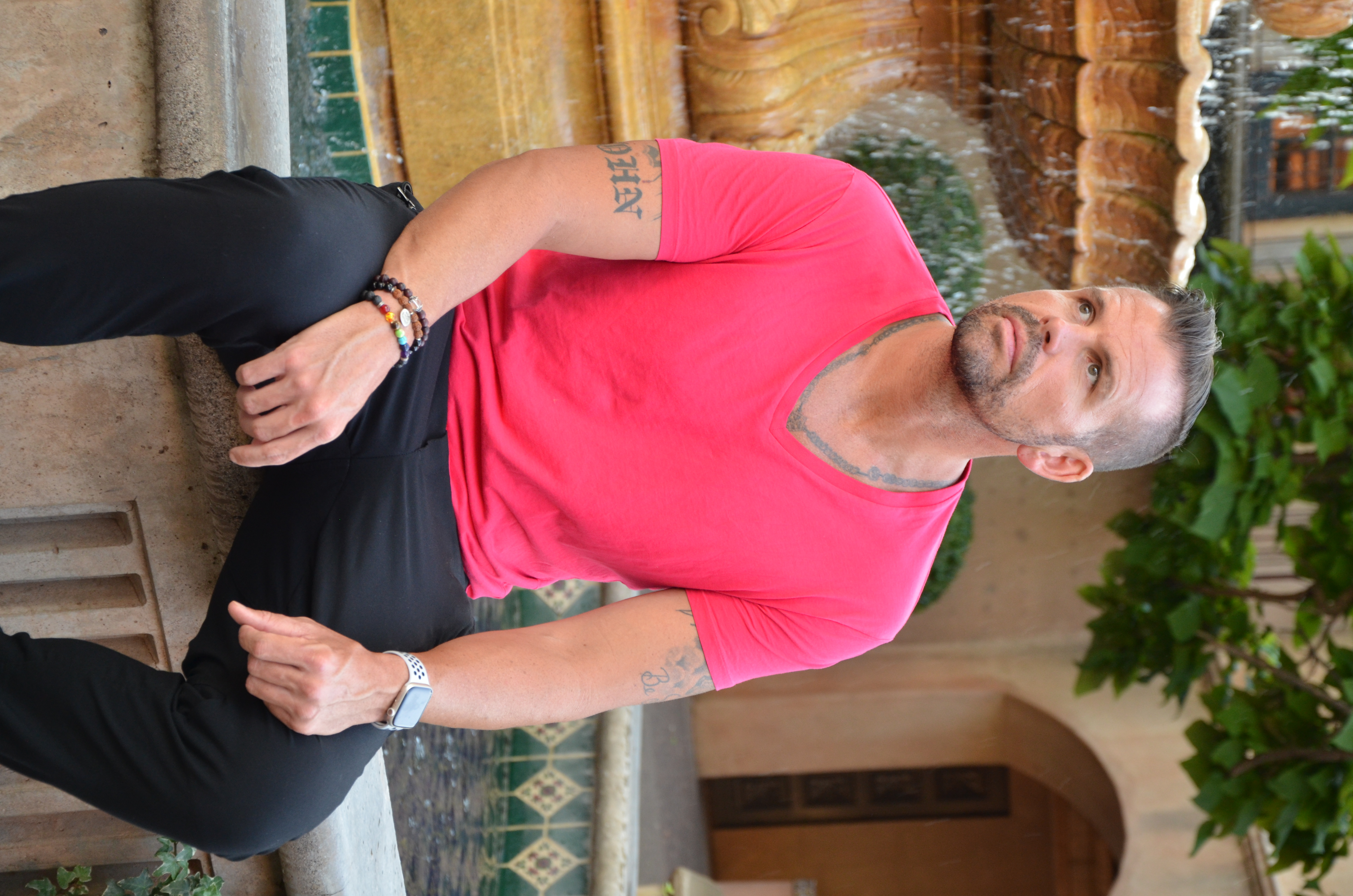
Author, Mystical Comedian, Hope Dealer
I love to say “I’m a little bit Deepak and a little bit Tupac.” I am a former stand-up comedian with an inspiring story of overcoming trauma, emotional/mental issues, and heavy drug addiction that got me into plenty of trouble and had me stuck in the USA’s “sickcare” system for decades. I now live a life filled with joy and just published my first book Sourcery 101: 13 Rungs to a Higher Elevation of Consciousness. The misspelling of sorcery is purposeful because becoming a Sourcerer is not about casting spells, it is about using Source energy to heal trauma and manifest a thriving new life. My backstory is weaved together with lots of humor, pop culture metaphors, and insight to create a unique system of healing that was inspired by the 12 steps of Alcoholics Anonymous. However, unlike AA, the 13 rungs of Sourcery do not discriminate between the symptoms of soul sickness. A Sourcerer recognizes that the overuse of our phones and a hyper focus on the material world can be just as destructive to the soul as drugs and alcohol. Each specific symptom, such as addictions to gambling, food, shopping, sex, drugs, etc., as well as most forms of what is referred to as “chronic illness,” all branch out from the same root cause: spiritual bankruptcy.


