When Grief Becomes Leadership : Jonathan Pitts on Stewarding Loss
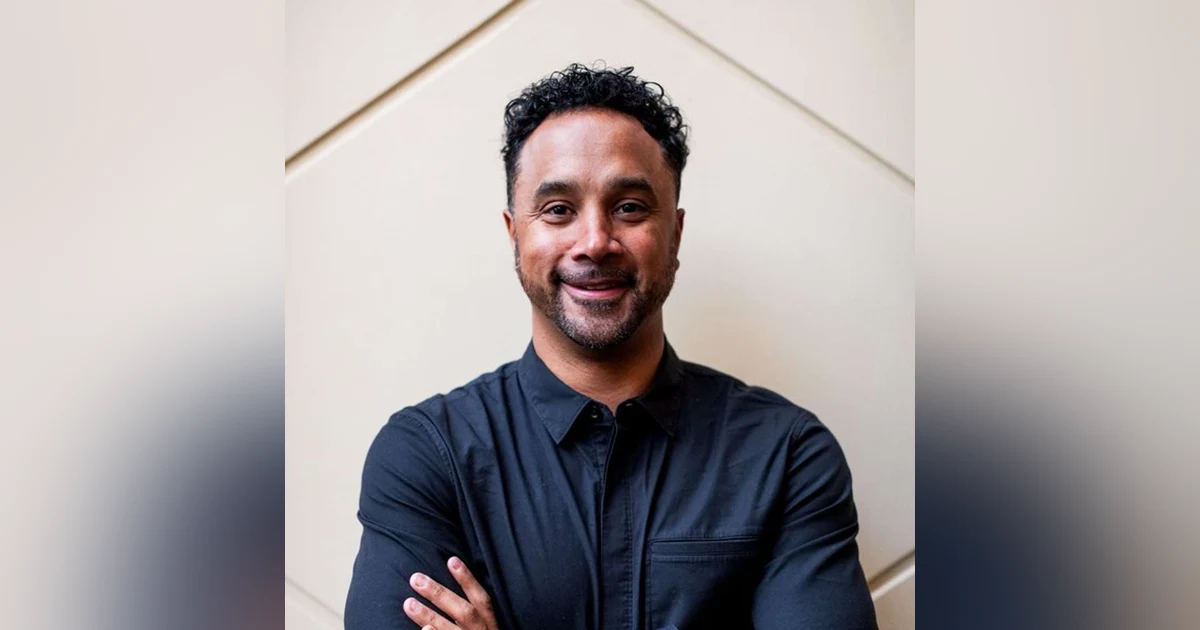

I would love to hear from you. Click the link now Jonathan Pitts on grief, faith, and leading your family through loss James Moffitt talks with pastor, husband, father, and author Jonathan Pitts about the sudden loss of his wife Winter, the faith that carried him through grief, and the role of community in healing. They also discuss how fathers can steward sorrow without shutting down, and how Winter’s legacy continues through their daughters, ministry, and the magazine For Girls Like You. Ke...


I would love to hear from you. Click the link now
Jonathan Pitts on grief, faith, and leading your family through loss
James Moffitt talks with pastor, husband, father, and author Jonathan Pitts about the sudden loss of his wife Winter, the faith that carried him through grief, and the role of community in healing. They also discuss how fathers can steward sorrow without shutting down, and how Winter’s legacy continues through their daughters, ministry, and the magazine For Girls Like You.
Key topics
- Jonathan Pitts shares his background growing up in South Jersey, coming to faith in a Christian household, and meeting Winter in college.
- He explains how his career in ministry eventually led him to work with Tony Evans and later to pastor in Franklin, Tennessee.
- Jonathan recounts the day Winter became ill, how her cardiac dysrhythmia unfolded suddenly, and how he discovered she had passed at 38 years old.
- He describes the early grief process, including fear, sleeplessness, worship, and the importance of being physically and emotionally held by family.
- James and Jonathan discuss the pressure men feel to stay strong, and Jonathan frames grief as a lifelong stewardship rather than a problem to solve.
- Jonathan explains how the church community in Franklin became family, helping with practical needs, school placement for his daughters, and long-term support.
- He reflects on the importance of speaking about Winter in the present tense and keeping her memory alive for their children.
- James shares his own experience losing a daughter to cancer, creating a shared conversation about child loss, faith, and unanswered prayers.
- Jonathan encourages grieving fathers to look at their story from another angle, focusing not only on loss but on what God may be doing through it.
- He closes by emphasizing that leadership in suffering means open-handed surrender, refusing resentment, and allowing God to shape the story.
Timestamps
00:00 - Jonathan Pitts introduced: pastor, father of five, and author of My Winter Season
00:51 - James references the Family Life Today interview and Winter’s passing
02:35 - The water-ski analogy of “letting go” and crossing into eternity
03:15 - A scripture Jonathan memorized while afraid to fly becomes a comfort in grief
05:54 - Jonathan’s upbringing in South Jersey and faith-filled family background
07:00 - Meeting Winter in college and building a life together in ministry
08:26 - Moving to Franklin, Tennessee and the sudden day Winter became ill
09:54 - Discovering Winter’s heart had gone off rhythm
10:23 - Winter’s passing at 38 and the family’s life after loss
11:13 - Church of the City becoming a family of support and adoption
12:21 - How soon Jonathan was able to talk about Winter after she died
13:03 - The first night after the hospital and the fear surrounding death
14:15 - Being held up by family, presence, and Psalm 34:7
15:32 - Why Winter’s name was never a bad word in the house
16:10 - James shares his daughter’s death and the impact on faith
20:41 - The body of Christ, mutual comfort, and how to support grieving people
22:49 - When Jonathan realized God was still holding his story together
23:53 - An answered prayer fulfilled through Winter’s hope for their daughters’ school
24:53 - The discipline of celebration and thinking on what is true, lovely, and praiseworthy
27:13 - Jonathan on not dismissing pain, including the loss of their stillborn son
30:17 - Why the love of God is the only long-term anchor
31:51 - What fathers misunderstand about grief and why it’s a lifelong mantle
34:05 - What to say to overwhelmed fathers: come to Jesus and don’t walk alone
35:40 - Winter’s legacy in their daughters and the continued work of For Girls Like You
37:13 - The story behind My Winter Season and why Jonathan wrote it
38:15 - The easiest part of writing the book was telling what God was doing
39:18 - Looking at grief from a different angle and stewarding leadership in suffering
41:20 - Closing encouragement and thanks from James
Notable quotes
Copy
“Winter is. She wasn’t a was, she’s an is.”
Copy
“If all you see is what you see, you’ll never see all there is to be seen.”
Copy
“Grief was a mantle that God was giving me to steward for the rest of my life.”
Facebook Page
https://www.facebook.com/profile.php?id=61583591441571
Podcast Support
https://www.fathersrefuge.com/support/
One Time donation
https://www.buzzsprout.com/2528600/support
Monthly Support
Want to be a guest?
https://podmatch.com/hostdetailpreview/fathersrefuge
Mobile Follow Page
What would you say to a father listening right now who feels overwhelmed, broken, or unsure how to move forward?
SPEAKER_02Yeah, scripture says, uh, what is it, Matthew eleven, twenty-eight, is it? Uh Jesus says, Come to me, all you who are weary and heaven heavy laden, take my yoke upon from upon you and learn from me, for I am humble of heart, and you'll find rest for your soul. Uh I would say, Come to Jesus. Uh Jesus offers us something that nobody else offers us, which is peace in the middle of the storm, a hope and all hope is lost. And so I would say, Yeah, look to Jesus. And you know, practically I would say, if you're a Christ follower, like sit in that truth. If you're not a Christ follower, find somebody who you know who is a Christ follower and ask them what it looks like to follow Jesus. You can pray to him. He's listening to you now. Practically, outside of that, just you know, find people that are willing to love on, that are willing to love on you and walk with you. Like for me, when I had others that were willing to walk with me and share some of that burden, that's the cool thing about God is he offers us to take our burden, but oftentimes he sends us people that will help us uh carry that burden as well. And so to not be alone, don't be alone. Men like to walk alone, and grief is not a great place to walk alone.
SPEAKER_01A father is often expected to be the strong one to hold his family together, to keep moving forward, even when part of his world has fallen apart. After losing his daughter Jessica to cancer, James Moffat discovered how few places existed for grieving fathers, and how many men were carrying their pain in silence. The Father's Refuge podcast was created to give those fathers a place to be seen, heard, and reminded that they don't have to walk through grief alone. Through honest conversations, personal stories, and faith-rooted encouragement, James explores the realities of loss, trauma, emotional healing, and rebuilding life after the unimaginable. Grief may change a father forever, but it doesn't have to destroy his faith or take away his hope. This is the Father's Refuge Podcast, a place for grieving fathers to find understanding, healing, and refuge.
SPEAKER_00Hello and welcome to the Father's Refuge Podcast. My name is James Moffat, and I'll be your host. Today on the Father's Refuge Podcast, we welcome a man whose story has touched countless families walking through grief, rebuilding, and rediscovering hope. Jonathan Pitts is a pastor, a husband, and a father of five children. He's also the author of the powerful book, My Winter Season, where he shares the deeply personal journey of losing his wife winter and learning to trust God in the middle of heartbreak. Jonathan, thank you for being on the podcast tonight. Uh, please introduce yourself to the listening audience.
SPEAKER_02Yeah, glad to be with you, James. Yeah, Jonathan Pitts. I'm a pastor in Franklin, Tennessee, suburb of Nashville. Do a couple other things, but pastoring is really the call that God's had on my life, and I'm grateful to do it. Yeah. Glad to be with you tonight, James.
SPEAKER_00Amen. I appreciate it. So I listened to where is it? I listened to your podcast. Let's see. Oh yeah. The podcast episode from Family Life Today, The Passing of Winter. That was a very moving story.
SPEAKER_02And I and I will say James, the late the late James Robinson, right? He passed away not too long ago. Right. Is that the podcast? I think that's a podcast. Yeah, it's called uh it's called Family Life Today. Maybe that's uh Family Life. Sorry, wrong podcast. Yeah, yeah. Yeah, yeah. A couple of family life ministries. Yeah.
SPEAKER_00Right. The episode was called The Passing of Winter, and I loved the thing that you talked about about you were talking about basically passing on into the next life, right? And you were talking about how the you used the analogy of the somebody skiing, right, being pulled from the boat, you know, and people are like, How do you know if you if you've never done it before, I've never done it. If you've never done it before. Yeah. And and I I love that analogy about how how they were telling the person that was on the skis that all you gotta do is just let go. You know, and it's a very gentle exit, you know, off the skis into the water, and yeah, you were using that to talk about how doing that is what it's like for someone to pass into the kingdom of heaven. And so that was um that was pretty powerful.
SPEAKER_02Thanks. It's funny. I'm trying to remember if that was something I came up with or something I hijacked from somebody else in my grief journey. But yeah, just the idea of just kind of slowly gliding, you let go, you know, because the the thing is with that analogy is most of us are holding on, like you know, you water ski, you're holding on for dear life, and you're kind of afraid. Sure. Because that water is seemingly hard and got, you know, you don't want to skid across it. And I think about a scripture, I'm not sure if I mentioned this when you were listening to that, but I there's a scripture that I I memorized when I was actually afraid to fly. Uh, this was years ago, and it was oh gosh, man, you're bringing up some stuff that's way back in my past. Have no fear of sudden disaster or the ruin that overtakes the wicked, for the Lord is at your right side and will keep your foot from being snared. And I memorized that scripture because I was afraid, I was literally afraid flying. I was flying with my old boss and mentor, Dr. Tony Evans. My hands are sweaty and I'm gripping on for dear life. And the thing I realized when winter passed away, which was a little over eight years ago now, is that that verse that I memorized in preparation to fly the next time was actually preparation for my heart when she suddenly passed from death to life. Because I realized, like, oh wow, like God just receives her, you know, he just receives her and all of her humanity and all of her. She was only 38 years old years old, she was very young, but God just receives her when we when we let go of this world. And so we'll all we'll all do it. But yeah, just I haven't talked about that analogy in a long time. I didn't think I'll listen to it myself. It's okay.
SPEAKER_00So I I think you'll agree with me when I say that we all kind of cling to life. Love to wake up every morning and breathe, and that's just life is something that we we become accustomed to, and maybe even sometimes we take it for granted. Uh the word says that that we're not promised of tomorrow. We assume that when we go to sleep at night, that we're gonna wake up the next day, but that's that's not really promised to us. And I guess the the other thing I want to say is that I think a lot of people that are listening to the podcast, and or just Christians in general, I think that pastors are kind of put on a pest pedestal a lot. We forget that we forget that you guys are you're human too, right? And you're susceptible to emotions and heartache and just all of the struggles that the rest of us experience in our lifetimes. So here you are, you said it's been eight years, but you experienced uh just a terrific trauma in your life when Winter passed away, and I'm sorry that happened.
SPEAKER_02I grew up in a little town in South Jersey, the byproduct of a a German American, I know you're German, got German in your background, a German American mom and an African American dad who got married, and really both kind of were I say they probably had one foot in the world, one foot in the church, and God would bring them together and they'd kind of grow in faith. And I was born into just a uh convictional Christian household. My parents were the volunteer youth pastors or ministers at my church, and yeah, grew up with a kind of, you know, I'd say I was just below the poverty line, but we always had what we always had what we needed, and God was good. And so I met, I actually went to college and Philly, went to Drexel and University. I met winter at college. I had one foot in the world, one foot in the church, and we met when we probably were both in a place of not necessarily walking that close with the Lord. We love the Lord, but we were kind of just, you know, trying to figure out life. And God would actually kind of use each of us in each other's life lives to really draw us really close to the Lord through that season, which is a story for another day. But we got married June of 2003, right after we graduated college, moved to South Jersey where I'm from. Winter hated that. We lived there for about uh two years. Too dark and no streetlights in South Jersey, so she didn't like that as a city girl from Baltimore. But long story short, we'd end up in Texas. Our first daughter was born in New Jersey. We moved to Texas, and I ended up working with her uncle, Dr. Tony Evans. Uh, some of your listeners might know Dr. Tony Evans, but I would end up working with Dr. Tony Evans for about 14 years, him, his son Anthony, who I managed, really kind of in the Evans family of ministries. And Winter would end up, we we would have three more daughters, and she would end up creating a resource for girls, a magazine called For Girls Like You, really out of the necessity of trying to find resources for our girls. And, you know, we had this kind of idyllic life. We both kind of worked and served in ministry and never really wanted for a lot. I mean, we had a our struggles and our journey like anybody else, but life was going pretty well. And in 2018, June of 2018, we celebrated our 15-year anniversary on June 27th, 2018. And then I would, I would actually accept a call to come pastor in Nashville or Franklin, Tennessee, and we'd come here to pastor. I'll never forget. 27 days before moving here, sorry, 27 days before she passed, we celebrated our 15-year anniversary. And uh it was a big deal because we were still in Dallas, but we're in the middle of this big transition, this big move. And we would come to Franklin, we'd buy our house, we'd move in, uh, we'd spend four nights in that home, and then we'd end up back in Dallas for me to finish my last week of work with Dr. Evans. And it was a Tuesday, I was doing standard operating procedures for my team. Uh, had a team of like 40 people at that point working with Dr. Evans. So I'm just preparing to leave, and I remember Winter texting me and just said, Hey, I'm not feeling well. Kind of sent me the sick emoji. I said, What's going on? And she just never responded. At that point, our girls were 14 to 14, 11, and my twins were nine, all girls that we had. And anyway, I remember going home, I picked up some Costco ribs and a Caesar salad. I I'll never eat those to this day, uh, just because of just the memories those bring back. But I would, yeah, I would uh bring that stuff home and then ultimately I remember I would she she wanted to take a nap, so she laid down to take a nap. She pretty much took a short nap every day, so it was normal. So she went to take her nap and like prepared dinner. I remember knocking on the door, asking her if she wanted to eat. She said no, she wanted a nap some bit longer. So I'd finish dinner and then I'd head into the master bedroom just to floss my teeth because I had these the ribs of my teeth. And I remember looking out of the door and seeing her sit up, and then she she s she f she slumped over in a way that looked really unnatural. I remember just saying, Why are you playing like that? And what I didn't realize that I would soon realize is that she actually was experiencing cardiac dysrhythmia, her heart got off rhythm, and she would, like you said, with that analogy, she would slowly glide into the kingdom of God really suddenly. We had no idea. She had a heart murmur, so we knew every year she'd go to cardiologist once a year, but she was very healthy, you know. And I can obviously talk about it now. It's been eight years, and yeah, I've processed a lot of that or all of that. But long story short, she would she would go on to meet the Lord at 38 years old, leaving behind a 14-year-old, an 11-year-old, and our twin nine-year-olds, who are now uh 22, married and pregnant, 19 at Baylor University, Sikkim. And my twins are 17. They graduate high school this year. And yeah, it was uh what's interesting is I thought I was moving to Franklin, Tennessee to pastor, and I did and I would and I still am. But ultimately, uh the way I see it now, and what I realized is God would move us to Franklin, Tennessee to to heal. And so I came to a church. I'll never forget the day before her funeral. My now boss and pastor, uh Darren Whitehead, would he call me from Franklin and say, Hey, I want you to know if you guys want to just stay in Texas, we'll get your stuff back, we'll help you sell the house, we'll do everything you need to do to kind of get your old life back if you feel like that's the best thing for you. But if you come, you'll find a family ready to adopt you. And the thing I would say about Church of the City is that from the very beginning they adopted us and have just continued to love on my family through all that grief journey. They'd love on me through eventually meeting my now wife PETA, dating her, marrying her. They'd love us through the loss of our first son. We had a son stillborn at 38 weeks, about two years in the marriage, I think I'd say.
SPEAKER_00Right.
SPEAKER_02And uh yeah, we now have a two and a half-year-old little boy, and God's just been just so good and kind to us. And so I'm sitting in a place I'd never thought I'd be as a dad, as a husband, right. As a former widower, you know, God's been really good, but it's been a it's been a journey.
SPEAKER_00So how long do you think it took before you were able to really sit down and talk about winter and that experience?
SPEAKER_02No time at all. I'm a I'm a verbal processor, and so for me, what I'm really grateful for is I had close friends and family that were willing to listen. And they say about grieving people that people that are grieving need to be seen, known, and loved. Sometimes I hear seen, heard, and loved. Like they just need to be received. And so I was able to process from the very beginning. Um, you know, I have an identical twin brother by God's grace, and I'll never forget the first night I could barely sleep. I was just I was I was gripped by fear, to be honest. Like just the darkness of death. It just kind of had gripped me. And I'll never forget we came home from the hospital, but they pronounced her, and I'll just never forget just being in that in my brother-in-law's house, Winter's brother's house, in a guest room. And I remember singing, just like worshiping God on the bed, like just I was determined to love God through that. And that's one side of my brain. One side is just determined to love God, and the other side was just like gripped by yeah, just all the things you think about. I mean, I was thinking about Winter's body, you know, being in the basement of that hospital. I'd taken her rings and her socks and all the all the things that she had. And you know, you're just thinking about somebody you love dearly just being no longer here, their body being here. And a couple of things are true. I mean, it what's that's the funny thing about grief is the funny thing about losses you know, they say two things can be true at once. I would say multiple things can be true at once. One to be absent from the body is to be present with the Lord, which is great because I knew right away I was I my my faith was affirmed when she died. I knew that she was no longer in that body, that she was with the Lord. But at the same time, I still had this real body to grapple with. You know, this real body, it's a is a very morbid thing to deal with. And so I just remember her body being there and remembering I'm leaving the hospital, I'm leaving her there, and my girls are with me. And so that first night I couldn't sleep. And my brother, by I don't know, 10 o'clock that morning, he had flown down from New Jersey where he had lived our whole lives and just came to be with me. And so I'll never forget for the next probably six or seven nights, he just slept on an air mattress next to me at my brother-in-law's house. And I'd never I'd never forget, I could only sleep when I felt like a body part of his, like a leg touching me, just that that presence. And so, yeah, from the very beginning, people were near to me. Um, you know, I I there's a scripture, Psalm 34, 7, it says the angel of the Lord encamps around those who fear him, and he rescues them. And the beautiful thing about that verse is I know the angel of the Lord represents Jesus, but ultimately I also believe the angel of the Lord encamping around those who fear him and him rescuing them has something to do with the people, you know, those that are around us that God puts that are the representation of Jesus physically for us in our lives. And so I had my brother, my sisters, my oldest sister came and moved in with me a couple weeks after my wife passed. I mean, I had people that just came out of the woodwork for me and I was able to process. And I I always say Winter's name was never a bad word in our house. I never stopped talking about her. I never talked about her in the past tense. I always talked about her in the presence tent because Winter is. She wasn't a was, she's an is. She's with the Lord now. She's not here, but she's still Right. She's still she's still eternally alive, you know. And so, like with my girls, I always talked about their mom, and I still do, as if she's present and not necessarily present, but that she's uh she's more alive than she's ever been, you know. So so we just, you know, I never stopped talking about her. Yeah. And just grateful that, you know, her absence doesn't mean her non-existence. So Right.
unknownYeah.
SPEAKER_00So let me ask you this. Do you do you feel, and I'll I'll share this. I have to say that when I lost my daughter to cancer back in 2001, that event probably it probably rocked my world more than any other event in my life. And and I have to say it also shook the foundation of my faith in several ways. Uh it didn't destroy my faith, and eventually I was able to come back around and well, I kind of had an epiphany in that, well, you know, there's there's six stages to grief. Anger's one of them, denial's one of them, bargaining's one of them, there's, you know, anxiety is one of them. I forget what the other two are, but I went through the whole kaleidoscope of of emotions with with grief. And and that was before she passed away that I went through all those emotions. And I I just felt like uh well yeah, the epiphany. The epiphany I had was at one point I realized that Jessica didn't belong to me. She was not mine. She belonged to Jesus, right? And he's the author and finisher of our faith. And when I realized that, you know, of course, our prayer was that good that Jesus or God would heal her on this side of heaven, and that we'd be able to, she was 10 years old. So we were hoping and praying and believing that she would get healed on this side of heaven and that we would have more time with her. But then, you know, there was it was a 14-month period of, you know, diagnosis, emergency surgery at MUSC, children's hospital. And the closer we got to that, you know, 14-month end, the the the surgeons told us at the beginning that there was no hope that that if she lasted 12 months, that we'd be lucky. Because the the she had a tumor in her her brain, and uh they got as much of it out as they could, but some of it was on her brainstem, which they can't touch. And so despite that, despite the fact they told us that, I want to say that we still hung on to hope and to faith. And we went to church at that time, still do go to church. And we have Jesus you know, if our faith in Christ is is, you know, we have that in common. And I know a lot of people that are listening to the podcast, or maybe some of the people that are listening to the podcast may not share that faith. And I always encourage people to to seek out faith, whether it be in Jesus or whatever religion or whatever the you know that they they subscribe to or they feel comfortable investigating, or whatever. You know what I'm saying. I just encourage people to have some sort of faith and and realize that there's something bigger than us here on this planet. And so anyway, yeah, I I uh you know, I had that epiphany and and so we walked through that and we didn't have the type of support system that you did. We just kind of we went to church, the church, you know, they realized what was going on, uh, but they didn't really surround us or come around us after the fact. People don't know what to say, you know. When you when you lose a loved one to cancer or whatever, they they really don't know how to, you know, some people want to fix the problem, you know, you hear people that say, Well, you know, you just need to get over it. You know, she's she's been gone for three years or six months or whatever the time period is in their mind, people will say, Well, you just need to get over it. And it's like you you never get over your loved one. They always stay with you, they're always in your heart, they're always in your mind. And uh so anyway, yeah, I'm gl I'm glad that that you're a man of faith and that you were able to lean into your relationship with the Lord and and that you were able to receive a lot of healing and the ability to, like you said, verbally process a lot of that. And so that's really good.
SPEAKER_02Yeah, and I just I mean, just to to add to what you're saying, I do think, you know, one of the beautiful things of the body of Christ is it is a body, like the Bible describes it as a body. So it's, you know, in the body there's different parts, and scripture talks about that. And so I do, I do for anyone, I just encourage people to to go find and be a part of a local body of believers. Nobody is perfect. They're all they all come with flaws, but there's something really beautiful about the church and the way that they can come around you. And the thing I would say is like there was a I called it like a kingdom ROI in my book, but this this return on investment of the years that Winter and I had invested in the community that we'd been part of and we had invested for a lot of years. So part of that was just I do feel like we invested and people invested back, but a part of that was God's just kind because the church that I came to in Franklin, I didn't know anybody. I'd met my boss. I I knew pe three people in our church, and I knew none of them well. So I'm really grateful. That's not everybody's story. I'm really grateful, but I do think that's the the most beautiful thing about the body of Christ is that it is a body that provides for each other and cares for each other. I also would say, you know, there's a scripture um in, I think it's in first or second Corinthians that says that we uh that we comfort others with the same comfort that we ourselves have received. And so my encouragement always is to people like me or people like you is like whatever encouragement we've received, that as a part of the body of Christ, we uh should offer back out with gratitude ourselves. I actually had a friend uh who lost his son yesterday and uh found out early in the morning. And so the thing I would say is if you, you know, it's it's oftentimes hard to want to reach out because you don't know what to say. And so all I would say is just say something. You're not gonna get it perfect, but just say something, you know, just you know, reach out and say, hey, I'm so sorry. If there's anything I can do, I'm here, call me, reach out to me. You can't say anything perfect. So I just always encourage people just to to reach out because you know, again, people want to be seen, they want to be known, they want to be loved, and that can only happen if you're willing to engage them.
SPEAKER_00And so, Jonathan, when you look back on your journey after losing winter, what was the moment you realized God was still holding your story together?
SPEAKER_02Yeah, I mean, I would say every moment post the most tragic moment. I never felt I never felt like God wasn't holding me, that he wasn't holding my story, that he wasn't holding my girls. I never felt lost. And I know that's just my story, but I never, yeah, I mean, there were dark days, there was a lot of fear, I had a lot of fear, but I never feared that God wasn't there or real or present. I felt like he was just filling in gaps. I mean, just a couple of stories. Like you mean what I just told you about my boss, Darren Whitehead, calling me and saying, Hey, you'll find a family ready to adopt you. One of the other things that happened was we were new to our community. We hadn't really lived there. We had only stayed in our house for four nights before going back to Dallas to finish my last week of work. And when Darren called me, the first thing he said was, You'll find a family ready to adopt you. But the second thing he said was Hey, I I know, you know, that Winter wanted all your girls to be at this school, this Christian school that my girls, uh, my oldest two girls had been admitted to, my youngest two girls hadn't been admitted to. Winter was praying for that, but I wasn't praying for it because I didn't think we could afford to have four girls in this private school. And he just says, uh, I just want to let you know, I talked to the administrators there, and not only are they going to make room for your girls, but don't worry about the cost. They're gonna figure that out, we're gonna figure that out. And so that whole next year, my girls and the answer to their mother's prayer ended up in this beautiful community, Christian community, Christian school that my twins are about to graduate through from. And what I realized in that moment is that God was advancing an answered prayer for his daughter that I didn't even have the faith to pray. And that prayer that she prayed that these girls could, that my youngest two girls could go to the school, which I didn't pray because I didn't have the faith for it, was not only an answered prayer for her, but it was also an a a real need for me. And so God just started filling in gaps. My sister moving in with me was a gap filled. Um, I didn't even think I'd need it, but she just became a surrogate mom to my girls for three years. Was it Cece? Cece, yeah, Carmen's her name. We call her Cece. Yeah. Okay. So yeah, so God's been uh yeah, just incredibly kind. I you know, I don't know. Like uh sometimes people go, Man, you sound so incredibly optimistic about this. There had to be some bad parts. And there were, but I I think um you know, my life verse is Philippians chapter four. It says uh Philippians four or four, I think it is says, rejoice the Lord always, again I say rejoice. Let your let your um let your gosh, it's not anxiety, let your angu let your anxiety, something like that be known to the Lord, he's near. And then it says, hold on. Rejoice the Lord always, again I say rejoice. Let your what is it? It's let your anxiousness or something be known to the Lord, he's near. And then it goes on to say whatever yeah, whatever's true, whatever's right, whatever's honorable, whatever's pure, whatever's lovely, whatever's admirable, whatever's excellent, if anything is excellent or praiseworthy, think about these things. And so I feel like, you know, my my parents taught me it's called the discipline of celebration, is what some some theologians call it. But this discipline to actually see what's true behind the truth that you see. You know, Tony Evans, my mentor, would say if all you see is what you see, you'll never see all there is to be seen. And so there's there's there's there's truths available to you that can give you hope, even when you have truths that are happening that might feel hopeless. So it was true that Winter died. She left, she was gone. And I remember the first night that I had to well that at the hospital I had to tell my girls that Winter was no longer here, and I I had to think about what do I say to my girls. And the only thing I know to be that's both true and hopeful was that Winter went home to be with Jesus. And so that's what I told my girls. It's whatever's true, right, honorable, pure, lovely. It's a lovely thing. Your mom's with Jesus now. It's a hard truth to hear, but it's also a lovely thing. And so I do think there's like there's something about trying to dwell on the thing that God is doing that is a better thing than the thing that you that you currently see as a is a is a good practice and a good discipline. So I also I don't wanna I don't want to make light of your story. Like there's a part of me as a dad that just thinks about I don't even know how I'd walk through losing a child. That's like one of the most terrifying things to me. And I also know that God would bring me through it, but I don't know how he would bring me through it. That sounds like a So I don't I don't wanna I don't wanna dismiss pain, dismiss hardship. I had a lot of pain, I had a heart a lot of hardship. I I think it can be it'd be easy to hear me saying none of that's real or that's hard, that's not you don't have to worry about that. No, that's real. In fact, I would say the loss of my son was as painful as any loss I'd ever experienced. You know, I got to hold my little boy and never got to meet him outside of the womb alive, but that was a a painful scenario as well. And so you have to process the pain, but there is a way to process the pain that you can borrow hope from other areas. That's a way I can say it.
SPEAKER_00Right. Well, you know, I think I think that I mean we're just human, right? And we have faith in Jesus, we're believers, and we have our faith to and our faith in God to to lean on, and we have prayer, and we can pray and ask God to to reach down from heaven and to touch our hearts and our minds and our spirits. But it's like you said, it's painful. You know, you I I can't imagine my wife and I have been married 36 years and we're we're like this close, you know. We're literally that close. We talk all the time, you know, I talk on with her on telegram when she's at work and I'm at work and and we're just like two peas in a pot, as they would say. And I can't I can't even fathom what it would be like to lose her, you know. And I none of us are gonna live forever. I I have it on good authority that none of us make it out out of life. So anyway, you know, it's it's uh it's a painful thing. It's difficult to walk through. And it's like you said, there's a lot of fear and angst and anxiety and all of that. You know, you just you're just torn apart and and uh you know, I it just it's a real thing. It's uh, you know, it's one of those humanity 101 things, you know, it's a full circle of life. We're born, we die, and uh we have to to do the best we can with what we have. And that's one of the things I'm hoping to do with this podcast is to give fathers a safe place to express their stories, tell their stories, and to receive some hope and healing and support. And as you're here tonight on this episode sharing your story, I'm positive that it's gonna touch some people's hearts and give them the support that they need and the hope that they need to walk through whatever it is they're walking through.
SPEAKER_02Yeah, it's a lot of pain in this world, a lot to process. I'm thankful for the love of God because outside of the love of God, I don't think I'd made it made it through a couple of things that I've made it through. And by the way, I I I do feel like it's it's never ending. Like even now, like I've been married five years this week to my now wife, and you know, every year you build up this friendship and depth of relationship, and every year it's gonna get harder to eventually say goodbye whenever we have to say goodbye. And hopefully and prayerfully, it's not for many, many years, you know. But that's just the reality of the beauty of relationship and the hardship of life is that ultimately pretty much everything that we gain in this life at some point is gonna be lost at some point. And the only thing we have, the only thing I know that we have is the love of God long term. And you know, relationships eternally, like I'll I'll I'll know I know winter, I'll know winter again, I'll see her again, you know, I'll see my son, I'll meet my son, you know. We've got all this great hope. Yeah. So, but that's where it's like, yeah, every day we get to show up and invest in the relationships we have and make the best of it. You know, it's like right now I get to go home and see my two and a half year old little son, then it'd be easy to want to veg out and watch football. And the reality is I have an opportunity to like invest in the things that actually really matter, and the only things that are eternal, which are my relationship with my God and my and my my relationship with others.
SPEAKER_00Amen. So, what do you believe fathers often misunderstand about grief, especially when they feel pressured to stay strong for their families?
SPEAKER_02Yeah, I mean, a couple things. One, I think we misunderstand that it's a process, and so I would say we want it to be done, we want it to be over. I think men are problem solvers. So grief, if it's a problem to solve, we know how to do it. But if it's a process to live in for the rest of our lives, we don't want to do it. You know, I would say that the the moment I started to grieve well would be the moment that I understood that grief was a mantle that God was giving me to steward for the rest of my life. You know, my girls will never have their mom this side of eternity again. And so as a father, I'm stewarding that grief, that loss. My first grandbaby's coming. There's gonna be some beautiful moments in the hospital when that baby comes. And there's also gonna be some hardship when she realizes that her mom's not there anew, as it is every time, every holiday, kind of every birthday, every every significant moment is a reminder that her mom's not here. And so, yeah, when I realized that grief was a leadership mantle God was giving me to steward, I finally accepted that this is just my life. This is not something to overcome or something to accomplish. This is just what God's called me to lead through. Yeah. So that's uh I think men can want to work through that versus just be in it, you know, for as long as they need to for the different people. You know, God's called us to lead. I've got a mother-in-law who lost her daughter, will never have her daughter this side of eternity. I've got four daughters that lost their mom. I've got aunts that lost their niece, I've got cousins that lost their cousin, and God at some level has called me to lead through that and be a part of stewarding that story. So it's almost like once I realize that, it's like, oh, like this is actually something I get to partner with God in. And so, yeah, so that's probably the biggest, the biggest thing, I would say.
SPEAKER_00What would you say to a father listening right now who feels overwhelmed, broken, or unsure how to move forward?
SPEAKER_02Yeah, scripture says, uh, what is it, Matthew 11, 28? Is it? Jesus says, Come to me, all you who are weary and heaven heavy laden, take my yoke upon from upon you and learn from me, for I am humble of heart, and you'll find rest for your soul. Uh I would say, Come to Jesus. Like Jesus literally offers us something that nobody else, uh Jesus offers us something that nobody else offers us, which is peace in the middle of a storm, a hope when all hope is lost. And so I would say, yeah, look to Jesus. And you know, practically I would say if you're a Christ follower, like sit in that truth. If you're not a Christ follower, find somebody who you know who is a Christ follower and ask them what it looks like to follow Jesus. You can pray to him. He's listening to you now. Practically, outside of that, just you know, find people that are willing to love on, that are willing to love on you and walk with you. Like for me, when I had others that were willing to walk with me and share some of that burden, that's the cool thing about God is he offers us to take our burden, but oftentimes he sends us people that will help us uh carry that burden as well. And so to not be alone, don't be alone. Men like to walk alone, and grief is not a great place to walk alone.
SPEAKER_00So Winter's legacy continues to impact so many people. How do you see her influence living on through your daughters and your ministry today?
SPEAKER_02Yeah, I mean, each each one of my girls carries something very special for their mom. I would say Alina carries her adventurous spirit, Caitlin carries her spunk, Cameron carries her girl boss vibes, and Olivia carries her creative edge. And so all my girls carry a little bit of their mom with them. And as a family, we've gotten one of the great joys my life is carrying on for girls like you, the magazine that she founded that all my girls work in. And, you know, we've got uh, I'd say eleven thousand current uh daughters, all kind of far removed and magazine subscribers, eleven thousand girls around the world, across the country, but many more thousands that have kind of been readers of her books and of her of the magazine in years past. It's we're in year 15 of uh for Girls Like You magazine, and so it's been fun just to carry that on and just invest in a work that is investing in girls, which was her mission.
SPEAKER_00So Yeah, I would like for you to share that link with me so I can put that in the show notes about that. Um because I have a ABC's a parenting adult children podcast, and those parents have kids of their own and all of that, and so I would like to share that with them.
SPEAKER_02Yeah, for girlslikeyou.com is the website, super simple, but I'll share it with you as well.
unknownYeah.
SPEAKER_00So I always like to give my guests a few minutes. Well, first tell me tell me about your book.
SPEAKER_02Yeah, my winter season, it was basically a book that I felt like God gave me from probably before Winter passed away, but ultimately it was a it was a book I was writing, just sharing stories of all that God was doing, even in the middle of my grief. And so I'd call it a seasonal memoir, share stories of all that God did for me financially, what God did for me uh spiritually, what God did for me relationally and physically, and the support he gave me with my girls. Just a seasonal memoir that just recounts God's goodness and kindness to me in in the shadow of the grief that I was walking through. Where could people find it? Anywhere books are sold. Uh about Amazon, any any Christian bookstore, yeah, anywhere books are sold. Cool.
SPEAKER_00The hardback, softback and softback.
SPEAKER_02Um yeah, softback and an audio version. I did the audio version myself. So cool. So how hard was it to write that book? Very easy. The hard part was whittling it down to less words. I I can elaborate. So I had an editor that helped me kind of shrink it down by a couple thousand words.
SPEAKER_00Did you think it was a little bit kind of therapeutic, maybe?
SPEAKER_02Yeah. Every story I wrote for that book was what God was really doing in my life and in my heart. And so it's probably the easiest thing I've ever written. You know, the thought of writing another book, I don't even know what I'd write about because I'd I'd never been as passionate about anything as I was about all that God was doing in my life in that season.
SPEAKER_00So what would you say to men who are listening right now as we s kind of bring this to a close? In any regard? Yeah. Fathers, fathers, husbands dealing with grief, you know, they may be dealing with a terminal terminal illness. They may have wives or children that are getting treatment at the hospital and all that.
SPEAKER_02Yeah. Yeah, I would say uh it's easy to to despise the thing that God puts in front of us, but I would encourage you to look at, yeah, you'd like a prism, you look at something from a dick different angle, you see a different thing. I just encourage you to try to look at your story from a different angle and look at not just the loss, not just the hurt, not just the pain, but to look at what God might be doing in you and through you. Uh, I'd think about the eternal soul of that child or that spouse or whoever it is that you're losing or that you lost. Um, but yeah, just take a different perspective. If all you see is what you see, you'll never see all there is to be seen. I believe that when God allows people to walk through hard things, specifically men, but not just men, that he he actually gives us a mantle of leadership. We get to choose what we do with that. We can bemoan it, we can, we can resent it. And I've seen this. I've I've walked with a lot of grieving men in years past, and there's nothing that is as debilitating as resentment. And so I would just say, open your hands and say, God, my life is your life. This person's life is the is their is a life that you've created. You're stewarding them. Help me steward me. Help me steward my heart, help me steward my gifts, help me steward the time I have left with them, help me steward my story, help me steward everyone else around me that's also walking through this loss. There's a leadership mantle that God gives us. And when we say yes to that leadership mantle, God can do something really beautiful with our stories.
SPEAKER_00Well, thank you for sharing that and sharing your story and and uh it's it's really wonderful to hear and see what God has done uh through all of that.
SPEAKER_02Yeah, thank you, James. I appreciate you having me on. Yeah.
SPEAKER_00So to everybody that's listening, I want to say thank you for the privilege of your time. Jonathan's life is a testimony of resilience, faith, and the quiet strength that comes from leaning into God when the world feels shattered. His voice has encouraged men, fathers, and families to hold on to hope, to lead with love, and to believe that God is still writing their story. So you can f you can find Father's Refuge on at www.fathersrefuge.com and uh you can you can sign up for a free newsletter and there's a actually a survey at the very top of the website that you can take to help me understand how to support you better. Um and anyway, Jonathan, thank you for being here and to everybody else. We will talk to you later.
SPEAKER_02Thanks, James. Appreciate you.


