Growing Faith: From Seed to Tree with Dr Charles Cooper
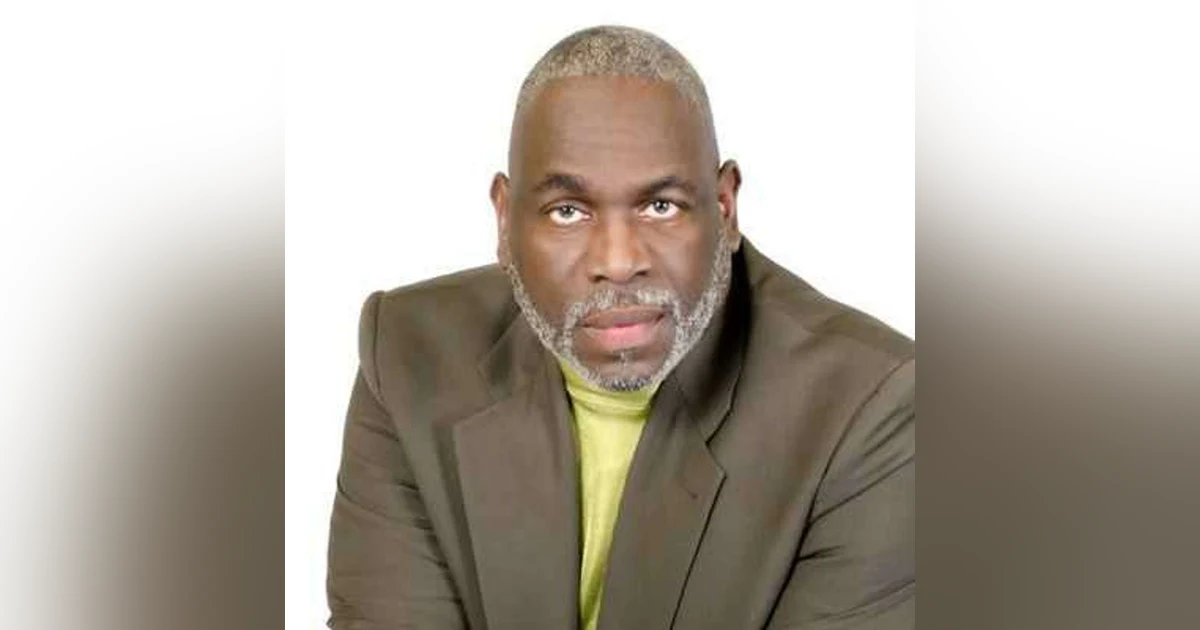

I would love to hear from you. Click the link now In this episode of Father's Refuge, James Moffitt engages in a profound conversation with Charles Cooper, a Christian author and Bible teacher, about the intersection of faith, grief, and unanswered prayers. They explore the challenges of navigating personal loss, particularly the sudden death of loved ones, and how such experiences shape one's understanding of God's promises and the nature of suffering. Charles shares his personal journey thr...


I would love to hear from you. Click the link now
In this episode of Father's Refuge, James Moffitt engages in a profound conversation with Charles Cooper, a Christian author and Bible teacher, about the intersection of faith, grief, and unanswered prayers. They explore the challenges of navigating personal loss, particularly the sudden death of loved ones, and how such experiences shape one's understanding of God's promises and the nature of suffering. Charles shares his personal journey through grief after losing his wife shortly after marriage, discussing the long path of discovery he undertook to reconcile his faith with his experiences of loss. The conversation delves into the complexities of faith, the misconceptions surrounding healing and prayer, and the importance of growing one's faith through trials and tribulations. In this conversation, Charles Cooper discusses the nature of faith, emphasizing that great faith is not developed in crises but rather through consistent growth and nurturing over time. He reflects on the role of pastors in addressing grief and suffering, advocating for a more honest approach to helping individuals navigate their pain. The discussion also touches on the importance of preparing for life's challenges and the necessity of understanding the process of faith development, particularly in the face of tragedy. Cooper shares personal experiences that highlight the complexities of faith during difficult times and the need for maturity in belief.
Takeaways
Charles Cooper's journey through grief began with the sudden loss of his wife.
Navigating grief requires a balance between faith and the reality of loss.
God often does not answer the 'why' questions directly.
Grief is a personal journey that varies for everyone.
Suffering can be seen as an opportunity for spiritual growth.
Faith must grow and mature through life's challenges.
Misconceptions about faith can lead to disillusionment.
Understanding suffering can provide peace and clarity.
The journey from faith as a seed to a mature faith is essential.
God allows suffering as part of His greater plan for our lives. Great faith is cultivated over time, not in crises.
Miracles do not automatically lead to faith.
Faith must be nurtured in the right environment.
Pastors often use cliches instead of addressing grief honestly.
Tragedy can be an opportunity for growth in faith.
Faith is a journey that requires preparation.
Understanding suffering is crucial for spiritual maturity.
Growing faith takes effort and time.
Faith can be a catalyst for maturity after loss.
The laws of the seed apply to the growth of faith.
Sound Bites
00:00 "Why didn't He perform one for my child?"
04:20 "I was on pace. Everything was going perfectly."
06:38 "God doesn't answer why questions."
12:26 "Why do bad things happen to good people?"
28:20 "If you have faith like a mustard seed."
30:20 "You don't get great faith in a crisis."
31:17 "Faith doesn't just automatically come."
32:44 "You must apply the laws of the seed to it."
37:10 "I never showed them how to have faith."
41:59 "Faith grows over time."
47:02 "Growing your faith takes work."
57:32 "You must apply the laws of the seed."
Chapters
00:00 Introduction to Faith and Grief
02:55 Personal Journey Through Loss
06:08 Navigating Grief and Faith
10:27 Understanding Suffering and God's Plan
22:17 The Role of Faith in Healing
29:51 Growing Faith from Seed to Tree
30:20 The Nature of Great Faith
34:10 Faith in Times of Crisis
37:30 The Role of Pastors in Grief
41:59 Understanding Suffering and Faith
46:54 Growing Faith Through Trials
54:13 Preparing for Life's Storms
58:12 Where's My Miracle?
Facebook Page
https://www.facebook.com/profile.php?id=61583591441571
Podcast Support
https://www.fathersrefuge.com/support/
One Time donation
https://www.buzzsprout.com/2528600/support
Monthly Support
Want to be a guest?
https://podmatch.com/hostdetailpreview/fathersrefuge
Mobile Follow Page
And more relevantly, why do bad things happen to Christians, those who are seeking God and trying to live a righteous life and are committed to living with Him in in purity and holiness? Why does He allow these tragic circumstances to come into their lives? So I basically worked that question and got to an answer. Bad things happen to good people because we live in a broken world. The world is broken, it's broken by Adam, and bad things are going to happen. You don't have to be involved or do anything for it to happen. The second reason bad things happen is because of choices. People make bad choices. Sometimes we make the bad choice, sometimes others make the bad choice.
SPEAKER_00A father is often expected to be the strong one, to hold his family together, to keep moving forward, even when part of his world has fallen apart. After losing his daughter Jessica to cancer, James Moffat discovered how few places existed for grieving fathers, and how many men were carrying their pain in silence. The Father's Refuge podcast was created to give those fathers a place to be seen, heard, and reminded that they don't have to walk through grief alone. Through honest conversations, personal stories, and faith-rooted encouragement, James explores the realities of loss, trauma, emotional healing, and rebuilding life after the unimaginable. Grief may change a father forever, but it doesn't have to destroy his faith or take away his hope. This is the Father's Refuge Podcast, a place for grieving fathers to find understanding, healing, and refuge.
SPEAKER_01Hello and welcome to Father's Refuge podcast, where we have honest conversations about fatherhood, loss, grief, faith, and finding hope when life takes us places we never imagined. Today, my guest is Charles Cooper, Christian author, Bible teacher, and the voice behind Three Crowns Plus Ministries. Charles has devoted much of his work to exploring faith, suffering, God's promises, and what it means to remain faithful when life doesn't unfold the way we pray it would. His book, Where's My Miracle, raises a question that many grieving parents have asked. If God is able to perform miracles, why didn't he perform one for my child? Today we're going to explore unanswered prayers, the tension between faith and grief, and how we reconcile the goodness of God with the deepest suffering of our lives. Charles, welcome to Father's Refuge. Thank you.
SPEAKER_02I'm very happy to be joining you. Um I should see a faith and uh to be able to uh put that the voice and appreciate the combination. So thank you. I appreciate it. Amen.
SPEAKER_01Amen. So uh do me a favor and introduce yourself to the listening audience.
SPEAKER_02Yeah, I'm Charles Cooper. I live in Orlando, Florida for the last 20 plus years uh after living in Chicago and teaching uh at the Movie Bible Institute there. That's where I met my first wife. Um, and uh some years led the nonprofit ministry where I was basically charged with writing, and uh now I'm retired, uh, but to continue to write and publish on subjects that I always had an interest in, but uh never had the time. So now I can devote my full attention to the thing that is the passion of my heart, which of course is uh teaching people truth, hopefully that they can live a successful life by yeah, I know a little there.
SPEAKER_01So, Charles, tell us, I mean, I know you're a pastor and you're a book author, and you're, you know, you've you have faith in Christ and all of that, and that's awesome. Uh we share that in common. But how did you was it your ministry that introduced you to uh loss and grief, or do you have a personal experience with that as well?
SPEAKER_02Yeah, it was, of course, uh my own personal experience, uh, more so than ministry alone. Um, having, of course, as a pastor, you deal with the death of sudden death of family members and the tragic death and all of that. And I had all that, of course, starting uh pastoring at the age of uh the 17. So I've been around it a long time. But it was in my own personal experience that I came to be personally acquainted with the difficulty of transversing sudden and completely unexpected loss. Um I started minister early. I uh began preaching at uh at 15, became a pastor at age 17, uh, went on to graduate school, became a college professor at age 26, and during that time I was uh basically uh charting my course to um finish graduate school, get married, uh have a teaching career and uh writing uh career. That's what I wanted to do. So I was on pace. Everything was going perfectly until which I got married, and uh my wife and I went, had a great honeymoon, came back and set shop to live life. But it was three months, 21 days, and 11 hours after that, that she suddenly fell dead at Midway Airport of a hemorrhage, completely unexpected, as healthy as she could be, had no indications of any sickness whatsoever. And uh that, of course, uh put me in somewhat of a tailspin. It's one thing to preach it for other people and to tell them to trust God and to be faithful, but when it happens to you, you have to determine what exactly is it that you believe and how does it actually work in your own personal life. And so that set me on a journey. Uh I had done it the right way. We we were good Christians, we were faithful to the word, we did not uh do inappropriate actions until we were married. Um we dedicated our lives to being involved in full-time Christian ministry, and that was going to be the way we did it. So for her to fall dead three months, 21 days, and 11 hours after we were married, uh was completely and totally um outside of what I thought was going to happen to my wife. And so that really put me on a journey of discovery that took about 30 years.
SPEAKER_01Charles, what was your wife's name?
SPEAKER_02Her name was Cordy.
SPEAKER_01Cordy? Well, thank you for sharing the uh story, and I'm so sorry for your loss.
SPEAKER_02It was uh tragic at the moment, of course. Uh, you have to navigate your life. Of course, when I was at that time I was teaching uh Christian college in Chicago. I had lots of students, I had lots of responsibilities. I was pastoring a church, and so you you don't have time to stop and you know grieve in a corner. You have to keep going. Life the next day comes. So a week later, I was back in the classroom and on the Sunday I had to preach and I had to do the meetings and to do all the things that pastors do. But at the same time, you know, asking why, and unfortunately, God doesn't answer why questions. Uh, you fell on the seldom are gonna get a direct response to why. It's over time through experience and circumstances and reading and studying and meditating and praying that you ultimately come to some kind of resolution in your own spirit. And that's kind of what happened to me. It was, you know, 30 years of looking at experience of people, um, disappointment, the heartache and the pain that they have, and trying to counsel them and encourage them to keep the faith and to keep going and keep believing, uh, but really not being able to put passion behind it because you have no answer to that ultimate test of why. So it really uh robs you of the ability to be passionately involved. And of course, you you try to get people to to understand that. But in my way of looking at it, since I study and since I'm a committed biblicist, looking at the text, trying to understand through what we've been told the answer to those questions. And that was the journey that I was on. And uh, like I said, it took about 30 years to get to the right answer in my mind.
SPEAKER_01Well, as you know, uh when you lose a loved one, uh I lost two children, and and the experience is very painful when you go through the six stages of grief. And uh some people I think I think everybody goes through the stages of grief differently. And uh, you know, initially the pain is very real, it's very raw, and the triggers are fast and heavy, you know, and they they come upon you faster than we're sometimes able to even catch a breath. But over time, you know, there's this this saying that time heals all wounds, and I think that while it may not heal all wounds, it makes it easier to um come to grips with them and come to grip with uh uh and learn how to, you never get over grief, but you learn how to live with it, right? You come to you come to uh conclusions in your heart and mind about what you've experienced. And one of the epiphanies I had to go through with our daughter when she passed away in 2001 from cancer, um, we were on a 14-month journey with her, and on the outset uh or on the onset of the emergency surgery she had to have, uh, the surgeons told us that they got about 85 or 90 percent of the tumor, but part of it was on the brain stem and they couldn't touch that. And they said, if she lasts 12 months, you know, you'll be lucky. Well, she lasted 14 months. And so we had a 14-month journey, and at the very onset of that, we had a lot of faith. You know, we we prayed and we believed that God could heal her. Uh we knew he could either heal her here on earth or he could take her home and heal her there. Uh, but we maybe selfishly uh prayed and asked him to heal her here, right? And at some point, I guess as time went on, my faith started to falter a little bit and it wasn't quite as strong as it was initially. And I came to this epiphany that Jessica didn't belong to us. We didn't own her. You know, she's a child of the of God, and uh he's the author and the finisher of our faith, and he he he b she belonged to him. We all belong to him, right? And so when I came to that epiphany of understanding that she wasn't something that I owned or that I could control or her outcome, I couldn't control her outcome. And uh so I had to come to grips with that.
SPEAKER_02Yeah, and often as so many in the Christian faith who wrestle with the loss of a loved one, who you prayed and you prayed and you prayed and you believed and you trusted and you hope that God would intervene and he doesn't, um, the release, the relief that comes with them finally suffering no more, uh, and being in the presence of the Lord is what ultimately we have to fall back to because we don't have very many answers otherwise. And for me, I I'm having having had the loss myself and then having to deal with the loss in so many situations, just that you as a pastor, it just I was dissatisfied with not being able to give people a more uh a clearer answer as to why God would not heal, say, a child. You know, if you're 80 years old, okay, I might take that you're 80. But if you're 10 or 5 or 3 or six months or 12 or 14, I I don't understand why God would not want to intervene, given Jesus some of the first miracles that he did always involved uh children and his uh healing of them. And so I kind of went on a journey of discovery and uh by accident really fell into understanding, uh, you know, asking the question that everybody asks, you know, why do why do bad things happen to good people? Uh, and more relevantly, why do bad things happen to Christians, uh, uh those who are seeking God and trying to live a righteous life and are committed to living with Him in purity and holiness, why does He allow these tragic circumstances to come into their lives? So I basically work that question and got to an answer. Uh bad things happen to good people because we live in a broken world. The world is broken, it's broken by Adam, and bad things are going to happen. You don't have to uh be involved or do anything for it to happen. The second reason bad things happen is because of choices. People make bad choices. Sometimes we make the bad choice, sometimes others make the bad choice. I can be driving down the road and uh minding my own business and doing what I'm supposed to be doing, and uh guy decided to run the red light and hit me and causes uh bodily damage and harm to someone else. His bad choices lead to my uh suffering situation. And then, of course, the third reason is that bad things happen to believers as one of the ways that God produces in us his ultimate outcome, an opportunity for us. I believe when the parable of the talent, that the talent in our lives, talent is an opportunity. Some of us are given more opportunities than others based on what we are able to do. And as these talents or opportunities come our way, how we respond and what we do in response to them often dictates whether we grow and whether we mature and become more like Christ or not. The ultimate journey of the Christian life is to become more like Christ. And we are going to be ultimately more like him on the other side, but the real question is how much like him are we going to become on this side? And suffering seems to be the uh modus operandi of God. And I discovered this uh somewhat by accident. I was studying Acts chapter 14, and uh I was getting ready to prepare, I was doing a sermon series on the book of Acts and got to chapter 14, working to chapter 14. I came to verse 21 and 22 where the apostle Paul, after having been stoned, uh said that they supposedly was dead. Uh he got up and went into the city, and then he came, he started on his way back to where he had started the missionary's journey. And in his journey back, he's he's he makes this statement that we must suffer travel, uh have many tribulations in order to enter the kingdom of God. That entry into the kingdom of God is tied directly to suffering tribulations. Well, I for I'm sure I had read it before, uh, but for some reason that day that just struck me as wow, really, because it's suddenly I realized that what Paul was saying, if Paul was saying, in order for disciples, and he's talking to disciples, if you look in the context of 14, 20, and 20, he's talking to both he's talking to the disciples that he just made, and he's telling them that entrance into the kingdom of God is going to be through suffering. Well, that that didn't make any sense to me. Immediately my mind, given that I had studied these things and been seminary and Bible college, and I had all these things, that if suffering was required to enter the kingdom of God, then the kingdom of God must be something other than what I originally thought it was. Now, in my theology and the way I was brought up, and the way I was taught, salvation comes by faith, through grace. Alone. You believe on Jesus, you ask him for forgiveness, your sins are forgiven, and you are given uh his life. There is, in my understanding, no requirement other than faith. If you have faith, and if you believe, then you receive this life. So if Paul says one must go through suffering to enter the kingdom of God, then my mind immediately drew the conclusion that I didn't know what the kingdom of God was. I couldn't, because it couldn't be equal to salvation, because that's free. So that kind of put me on a journey to figure out, okay, now what in the world is Paul talking about if he is saying that. One of the passages that I immediately saw in connection with that is in the Gospel of John, chapter three, where Jesus is talking to uh Nicodemus and explaining to him that you must be born again uh in order to um be right with God. And in that passage, chapter three, verse three and verse five, he says that one must in fact be born from above to enter the kingdom of God. So if if salvation is a requirement to enter the kingdom of God, then the two can't be equal. You have to do one before you can do the other. And so that caused me to look to see if I could discover, okay, what is the kingdom of God? The key to that passage is the word enter. We we use the word enter in different ways every day. I can enter a house, but that's different from entering a contest. If I enter a contest, that's a different type of entry than me physically moving from point A to point B. And we use the word every day that way. So would you like to enter a contest? Okay, what do I have to do? Well, you fill out this card and you drop it in this basket, and we're gonna spin it, and if you pull your name, you win. That's how you enter that contest. So the word enter can mean physical moving from A to B, or it can mean participation. Would you like to participate? And that's really what that word means when Paul says if you want to enter into God's kingdom, you must suffer. Suffering is required for you to be able to participate in the kingdom. And the kingdom of God is not a place. We're not talking about going from A to B. We're talking about a rule. We're talking about the administration of the thing, how it's going to be run, who's going to run it. And so Jesus, of course, he suffered, as it says in uh Hebrews chapter 12, uh verse 2, that Jesus, even though he hated uh death on a cross, despised it. It is what the text says. He despised it, uh, yet he allowed himself to suffer through that. And the the reward of that is that he is seated at the right hand of God. So suffering was a requirement for him to enter or participate in the coming rule of God. And that's really what that word means. And that changed my whole perspective. It it taught me that suffering, when if you're not suffering because the world is just a broken place and suffering comes to everybody, if that's not necessarily a reason, and if it's not because of choices, either yours or someone else, then it could be that God has allowed this opportunity to come your way as one more opportunity that you have to earn the right to sit with the son. And that's how I basically understood uh John chapter 9 when they asked Jesus, who sinned, this man or his parents, that he was born blind. Jesus said, Well, it wasn't that he sinned, and it wasn't that his parents sinned, but it was that God's power and way might be displayed in this man. It's an opportunity for God to be glorified through this man's life. And so that changed my whole perspective, and it gave me an answer to a question that I had been asking for 30 years. Why did God allow me to suffer a certain circumstance that was awful? It was an opportunity. It was one of the talents that I had. That's how I understand it. That's how I understand it. And it brought tremendous peace to my mind. It answered for me why it is that God does, in fact, allow bad things to happen in some people's lives who we would say didn't deserve it in any way, shape, form, or fashion. Well, it's one of those talents that God has enumerated for that particular person's life. And if we suffer well, if we earn the good, like Paul said of the Thessalonians, he said that you guys have become worthy of entrance into the kingdom of God. And he said the reason they are worthy is because they were willing to suffer, and in fact, did suffer. So that's how I brought uh the pieces together. And that's how I can explain to a person why something that is completely unexplainable on this side of heaven was allowed to happen in their lives, is that God allowed you to have that opportunity. And as I was telling some of my friends, if it had to happen to someone, I would rather it had happened to me and some of my other friends who were married young and had a great wife and had a great family, I would have hated for them to have to lose their loved one. But if it was going to happen, I think I was a good candidate for it because ultimately God did give me the answer to that question. Why do bad things happen to good people?
SPEAKER_01Amen. Well, that puts a unique spin on things. And I think that I think it's somewhere in the New Testament. I'm sure you know right where it is. It says something about the fact that we will suffer trials and tribulations when we become Jesus followers. He certainly Christians.
SPEAKER_02He certainly did that.
SPEAKER_01Yep. And so we know that there are uh I don't want to I don't want to call people uh not prophets, but uh who are the the wolves in sheep clothing that are that are Spreading um uh false witness or uh they're teaching a false doctrine. And what are they called? Yeah, well he calls them false prophets, but uh Right. Well, so there are we'll just call them that false prophets. There are false prophets out there even today that leave people with the idea that if they've they ask Jesus to forgive them of their sin and they turn from their wicked ways and they become Christ's followers, that that everything will be hunky-dory. You know, you won't there'll be no more tears, you won't have any negative, no negative things will happen to you. Life will just be beautiful. And it's unfortunately uh that's so far from the truth. So that's kind of a segue for my next my next question. We often hear Christians say that if we have enough faith, God will answer our prayers. Do you think that teaching can unintentionally leave grieving parents believing their child's death was somehow the result of their own lack of faith?
SPEAKER_02Yes, it's easy because that's kind of the way it's taught. Uh uh and of course, to get people to do what we want them to do, we often have to fan the flames of their passions and their desires in the midst of pain, hurting everyone wants relief. And if we try to give them uh what we think is an avenue to release or give them a peace or take away their pain, then most people certainly are going to try it. And it's easy to dope people into false hope because they want it so badly. And those who will teach easy street believism will often find ready and willing participants because by nature, our human nature is to be free of any pain and suffering. But it doesn't last long. Um we see it if it is not in my life, we see it in the lives of the people around us. And most of those people come disenchanted. Many of them walk away from the faith or stop having any kind of act, dynamic walk with God because they're disappointed, they're disillusioned, they're heartbroken, and they're let down. And that's really what I think is the real tragedy here. Yet uh the scriptures, the scripture challenges us to grow. And we have to grow our faith. Faith has to grow. And this is what I discovered in Matthew chapter 17, verse 20, when I was studying that text. Um, and in my Bible it says, if you have faith the size of a mustard seed, you'll say to this mountain, move from here to there, and it will move. And for years, I was very frustrated because I knew that I had faith. I knew I had faith, but I wasn't moving any mountain. And I didn't know why. I figured, you know, you don't have many options there. If you say you have faith the size of a must-seed, you move a mountain. If you're not moving mountain, then the only recourse you have is to say that you must not have any faith at all. Because a must-seed size faith is so tiny to not have even that, I mean you you all you land up in a land of confusion and frustration, and you basically just kind of give up trying to understand. But it was uh I was fortunate enough to go to school, both in college and uh seminary, and spent uh eight years studying the Greek language, uh, and one day, out of frustration, just decided to look at the original text to see what it says. Because the size of faith, those words, the size of a mustard seed, actually, that's not what that text says. It says if you have faith like a mustard seed, and that's that's a world of difference between like a mustard seed and the size of a mustard seed. Those are two universes in different. And I was looking at it in the in the Greek of how it was actually constructed. And the only illustration, by the way, the the theologians and the Bible teachers and the guys who write the commentaries, they they know the absurdity of saying to someone, if you have faith the size of mustard siege and move mountain. The absurdity of that has to be explained. You gotta explain it some way. And so they explain it by saying, well, it you it's it's not so much the size of your faith as your faith in how big your God is. You know, if God is big enough, then the size of your faith doesn't really matter. Well, you know, that just creates another conundrum in the mind of most people and they go away confused. The text actually says, and Jesus, in the only place in the New Testament that gives an actual illustration of the mustard seed, is Jesus. And he does it in Mark chapter 4. He says, the mustard seed, the kingdom of heaven, is like a mustard seed. It starts small, but it grows. And it grows so large that it becomes a tree that birds can build a nest in it. The illustration is seed to tree. The mustard seed goes from seed to tree. That journey from seed to tree is what he was talking about. He was saying if you have faith like a mustard seed that starts tiny and small, but grows large enough to become a tree that birds can build a nest in it. Well, once I understood that's what he was talking about, it completely changed how I understood that text. Jesus wasn't saying that tiny faith is the goal in life. He was saying great faith, a faith that has grown from a seed to a tree, is the goal in life. You want your faith to grow, and when it grows, it will do the work of that faith, which is why eight times he criticized his disciples for having little faith. If, in fact, in Matthew chapter 17, verse 20, as he started explaining to the disciples, he told them, the reason you couldn't cast this demon out was because of your little faith. But if you have faith like a mustard seed, you will say to this mountain, move from here to there, and it will move. And nothing will be impossible for you. Well, that that put me on a journey of discovery there because I had to go find out the laws of the seed. How does a seed go from seed to tree? What are the stages of that? And they're basically 10 laws of the seed, which is what I had to talk about in great detail in the book, Where It's Not Miracle. How do you take your faith as you receive it, tiny though it may be, and how do you grow that faith into a great faith, a great faith that Jesus described twice in the New Testament? Once with the centurion, who he said had great faith, and then once with the Canaanite woman who came to him and challenged his lack of compassion to give her the miracle that she wanted. And on both occasions, Jesus described those two people as having great faith. Well, in studying those two passages, I discovered as a key what Jesus was saying in terms of what happened in the life of those individuals long before they came to that moment. They didn't, you don't get great faith in a crisis. Some people believe you do. Some people believe you get a great faith because you see a miracle happen. A lot of people believe that, boy, if I just see a miracle happen, I'll have faith to believe in miracles. No, you won't. It doesn't work that way. There are over 200 miracles recorded in the Bible. And some of the greatest miracles seen by people didn't cause faith. Matter of fact, it caused skepticism and it caused them not to believe in the power of God, but rather to not believe. So faith doesn't just automatically come. You have to grow it. And the laws of the seed, first thing you have to do with a seed is that you have to plant it. Seeds don't grow without being planted. You can't. You can leave it on the jar on the shelf. It can stay there 20 years, and it'll not grow one iota. But if you drop that seed in soil, that environment, the first law of the seed of the environment, then the right environment will cause that seed to activate. And faith must be put in the right environment. This is what Jesus said in the parable about the soil. Guy went out and he sprayed the seed. The seed fell on four different kinds of soil. But it's only one soil that actually produced because it was the right environment for seed to cause them to germinate and to cause them to grow. So, faith, if you want your faith to grow, you must apply the laws of the seed to it. There is no other option. Faith is not going to grow. And you cannot do with a little faith what a great faith can accomplish. It simply can't be done. And many of us having not been taught to grow our faith, we're operating with this little faith, just like the disciples of Jesus. And on six different occasions, he challenged them that the reason they weren't getting the result that they needed was because of their little faith. He didn't say they didn't have faith. Different. He said their faith was a little faith. It was immature. It hadn't matured, it hadn't grown. And so I would say to all of your people that are listening and listening to this radio program or this podcast, it's so important for you not to rely on a faith that you begun the Christian life with. That faith must grow. And it's only in the crucible of the laws of the seed that it will become great and it will produce the results of what a mature seed produces. You only get the fruit when the seed matures. You only get the fruit from the tree when it's matured. As long as it remains a seed, you get nothing. In its early journey, you don't get much. It's when it matures that you begin to see the fruit, and faith is like that. And I can honestly say that I have proved this to be true, that it's only a faith that has matured through the laws of the seed that you get the mountain and that you can move the mountain. Otherwise, it will not move.
SPEAKER_01So sometimes Christians are quick to tell grieving parents that everything happens for a reason or that their child's death was part of God's plan. Do you think we sometimes use theology to explain away suffering rather than simply sitting with someone in their grief or in the in their pain? I do, and I think as pastors, we don't have any choice because we've got to give an answer.
SPEAKER_02We got to help our people, you know, have faith and to continue believing. And so we've come up with a lot of cliches, even in seminary. I remember being in the seminary class in the pastoral ministry class, you know, talking about counseling and things that you should do and say. We basically placate people. We don't challenge them. We say that's not the right moment. Well, it actually is the right moment because in the midst of suffering and pain is an excellent opportunity to push people to grow a little. And as a pastor, I can remember one of the first tragedies in the church that I was a young pastor, you know, still in high school, uh, a young man was driving a car too fast, uh, hit a curve and was killed. And his body was so badly uh mangled that they couldn't have an open casket. They couldn't view the body, which is a big kind of a big deal. People to have their last they couldn't do that. And so, you know, people were asking why, why, why, why, why? Um well, in reality, um that that that wasn't a tough why question to answer. But of course, they're grieving and they're in pain, and you as a pastor, you want comfort, so you you don't necessarily want to tell the naked bare truth. You you kind of have to ease around it and then you know try to comfort the people. But I think we as pastors probably do more harm to people in not helping them to grow through crisis than we we would if we would be more honest and more open with people. Tragedy does happen, but in the midst of that tragedy, we can see the greatness of God and his power and what we need to do to deploy that in circumstances and situations. I was never able to help people much because I didn't have the faith to help them. So I relied on cliches and word-isms and the same old, same old conversation that we pastors have because I didn't have anything else. But I regret, and I can tell you, the greatest regret that I have of having been in ministry. I started when I was 15 years old. I'm now 67. The greatest regret that I have is that I taught people the importance of having faith, but I never showed them how to have it. I could tell them they needed it. I could tell them what they could do with it if they get it, but I didn't do a great job in actually showing them how you actually grow your faith. That is a disappointment, and that is a grieving result that I shall have until I die and lay in the tomb.
SPEAKER_01So your ministry places considerable emphasis on eternal rewards and faithfulness through suffering. How do we talk about heavenly rewards to a father who'd gladly surrender every possible reward just to hold his child one more time?
SPEAKER_02And and then and you know, though we shouldn't confuse the two because they're not the same. A father who is struggling with the death of his own his child, to me, is not the moment to be talking about a reward. That is the time to be talking about uh having faith in the in the will of God and how God accomplishes things. And also, you know, when I was when I was sitting there in that emergency room, my wife felt dead in the airport. We had been waiting about 40 minutes, an ambulance drove up, and and I didn't know that they were coming to take care of my wife. And after about 40 minutes, and she hadn't come out, I finally back in those days, you could actually park right at the front door of the airport. You just get out of your car, walk right in the airport. And I got out and went in. Just as I went in the airport, there was a policeman standing there. He was holding my wife's purse, looking in her wallet. And I went up to him and said, You know, that's my wife. I knew it was my wife purse immediately. And I asked him for it. He said that she, this purse belongs to the lady that's in that ambulance. Um, and just as I did that, the ambulance drove off, and he said it was going to the hospital, and the hospital was right very near the airport there in Chicago. So I immediately followed the airport, followed the ambulance and got to the hospital and was waiting in the emergency area for the doctor to come out and tell me what was going on, because I had no idea what was going on. And the doctor finally came out after about 20 minutes and said, Well, we did all we could, but we couldn't save her. Well, from her being perfectly healthy and not a problem with her until we couldn't save her, that that was seconds apart in my mind. And I couldn't, it didn't make any sense. Um it took me a while to grasp because I didn't know what the context was. I didn't know whether someone hit her, shot her. I didn't know, I know nothing. But in the midst of that, I remember thinking that I should be able to raise my wife from the dead. Because this was, I did I couldn't, this couldn't be the will of God. Um I mean, we didn't have sex before we got married. We lived a holy life, we did everything the right way it was supposed to be done. We, you know, spent the money, we we did everything the way the Bible says we're supposed to do it. Now why? All of a sudden, three months, 21 days, and 11 hours, she's gone. And I realized in that moment that I I didn't have the faith to walk into that emergency room where she was laying on a slab and pronounce over her that life be restored to her body. That I didn't have that, but I didn't even know how to do that. I didn't even know what it involved. Uh to me, it was just words. It took 30 years of understanding what you do. You don't just wait until a crisis. Faith doesn't come in a crisis. Faith grows over time. Tree from a seed to a tree is a season. And if you don't grow that faith in the season of growth, then when you need it, you're not going to have it. So trying to explain to people, yes, God is going to reward faithfulness. Yeah, he is going to reward suffering. But in the midst of that suffering, at the moment of suffering, uh, you don't go into a long sermon on growing faith. You comfort or suffering hard. But when time is reasonable, then that is the very next subject I think we need to be talking about. I don't think we teach enough about it. I think most preachers tell people that they should have faith and that they need to have faith. And if they had it, what they could do with it, but they don't do a good job of showing them how to actually grow the faith. Right. So yeah, I I can tell a guy all day long about what he needs, but if I don't show him how to get it, I really haven't helped him very much.
SPEAKER_01Well, it's kind of like showing somebody a brand new car on the showroom floor, right? You can talk about that car, you can talk about the paint, you can talk about the engine, you can talk about the leather, you can talk about the wheels, you can talk about how fast it goes. But until that person actually is able to get in that car and experience the power of that engine and the new car smell and and how fast it goes, and you know, the the practicality of how to get you from point A to point B, right? That's where rubber meets the road. It's like, you know, like you said, we we can talk about faith. We can talk about it, we can say, hey, this is faith, but unless you actually embrace it and and and live in that faith, then you're not going to really truly understand what that means. Is that is that a good analogy? Yes, it is. It's a very effective one, in fact.
SPEAKER_02Um, I realized as I began to grow in faith, and as my faith began to grow, the the interesting thing is that when you start the faith journey, you are an immature believer. In the first stages of faith and growing, you're immature. And so you tend to act like an immature. I call them juvenile, not juvenile in a bad sense, but it's one of the phases of life. And as a juvenile, we do think, say things that we're not going to say, do or think when we are adults. But as a juvenile, we do. Well, faith operates the same way. And so when I was beginning my journey of faith, and as I began to move to faith and was beginning to see the works of faith manifest, I thought, boy, this is great. Um, everybody needs to know this, everybody needs to see this, and everybody, but I was immature and I didn't understand that there are many people who want the gift, but they don't have any love for the giver. They they want God to do the things for them that they want so they can be happy and they will be glad to come by shopping and pick up the items that they want, put them in their basket, and they're going about their business. And that's just not the way faith operates. Jesus didn't heal everybody. He didn't heal most of the everybody's. He could have healed everybody with one word. He didn't need to go anywhere. He didn't need to say anything. He could have just thought it. And every person in Israel, every man, woman, born, girl, sick, dying, even dead, he could have healed or called back to life. He didn't do that because he understood that the purpose of the kingdom is what is paramount. And the witness to the kingdom is what's important. Everybody would want to be healed. You walk in the hospital in Hollywood in here wants to be healed, and every sick person ever says I. So why doesn't God do that? Well, because God is looking for the demonstration of power that proved that the kingdom is exactly what he said it was. And that's what Jesus did. Jesus healed because by healing people in situations and circumstances, it demonstrated overtly that the kingdom of God was among men. And that's what I do. And so most people who benefit don't know where the benefit comes from because they don't need to. It's not important that they know. They don't have to know that I prayed for them or that I was in any way. It's not even important. The important thing is that they understand that the kingdom of God is among men, and the demonstration of the kingdom among men is that men are set free from the bondage of sin. That is, sight to the blind, heal the broken. He sets free the captive. The demonstration that the kingdom is among men is what God is after for those who are looking and want in order to live a life inspired by Jesus Christ to become more like Jesus Christ. So it it requires maturity to understand what's going on. And an immature person is not going to really understand it. They're just going to be looking for the gifts. They're not really too concerned about the giver. And God often gets the bad end of the stick. People come, they get whatever you have to give, then they take it and they go back to their lives and do whatever they were doing. It's just one of the reasons many people are not seeing uh miracles uh in the body of Christ.
SPEAKER_01Well, I as I was listening to you talk about faith, what it is, how it operates, I was reminded of the fact that growing your faith takes work. You know, and we we live in an instant gratification world in our culture. Um we want everything right now. You know, Amazon, three-day shopping, we want everything immediately. And growing our faith as believers can take a lifetime. You know, the process of sanctification uh it takes a lifetime sometimes. And I remember when I I got saved by a chopping block out in the woods. It's a long story, but let's just say that one of my friends, her dad was a he was a um chaplain for voluntary fire department. And I had a horrible horrible childhood, yada yada yada. Anyway, I was I was drawn to that family because they were believers, right? And they were they were walking in faith and they they told me how Jesus loved me and that how he could save me from my sins and that he could give me eternal life and all of this stuff. And I'll be totally honest with you and I'll tell you that when I when I gave my heart to Jesus when I was 17, I didn't understand all of that theology. I didn't understand the theology at all. But I knew that I knew that I knew that Jesus loved me and that he died on the cross for my sins. And I knew that that when I I accepted him into my heart, I bel I know I felt the weight that was lifted off of me. And I I felt energized and I knew that I had new life. I didn't understand how to use that new life. Does that make sense? Yep. But I was I was just a baby in the in the womb. You know, I was a baby Christian, and it wasn't until, wow, 10 or 20 years later, as I started walking through life and experiencing, you know, trials and tribulations of different kinds that I start to fully understand who Jesus was in my life, right? And I had to, I had to spend, I had to spend time, I spent 35, 40 days in a street rescue mission because I wound up on the streets. And I had I had my go to heaven card. We'll just assume that this is a business card. I had my I had my I had my my uh Save from the Fire card and I kept going to I kept going to services where they were preaching the gospel, you know, Matthew, Mark, Luke, and John, and they're preaching the gospel and the importance of being born again and all of that. And I I was I asked God, I said, Why, why me, Lord? I said, I I understand all of that. I got my I got my fire insurance card right here. I've already I've already accepted you as my Lord and Savior. Why why am I going through this? You know, in over the period of about 45 days, and you know, you had to you had to listen, go to the go to the services, the churches would come in and they'd feed you and preach the gospel and they'd have counseling sessions and I talked to counselors and you know, um a still quiet voice in my heart told me, he said, he says, James, it's not what you've done that has caused you to be where you're at. It's not what you've done, it's what you haven't done. And I was like, What? What do you mean it's what I haven't done? And then he was like, and it was like, he was like, I I saved you for a purpose. Your name is written in the Lamb's book of life, and and that didn't happen so that you could just live your life any willy-nilly, any way you want to. He said, I saved you so you could serve me, that you can serve me, and that you can you can glorify me through good works, and that you can glorify me through being obedient to the word, right? And that was a that was a an epiphany as a young man, you know. That happened to me when I was early mid-twenties. And so as as I'm sitting here listening to you talk about the faith of a mustard seed and the and the process of how your faith grows, you know, if it's it's put in good soil and it's nurtured and watered, and you and you are working towards growing that faith, as I think about loss and grief and the pain that we suffer and and the anguish and all of that, I think that I think that our faith at that point in time, whether it's immature or not, I think that can be a catalyst for us to step into a new uh area of maturity with our faith, right? I think I think it can go one of two ways. And I and I'll be honest with you, and I'll be honest to everybody that's listening to this episode, when my daughter died from cancer, that it it came very close to rocking, it did rock my world. It rocked my world. And I I was, I thought, a very firm believer, you know, a very, you know, active believer. And and I um I don't know how close I was, but a lot of people just walk away from the faith. They walk away from Jesus, they walk away from God, they walk away from their faith because they're angry at God, they don't understand why he would allow this to happen in their lives. And I get it. I get that. I understand fully why they feel that way. And I think, I think one of the things my pastor told me, you know, months or years afterwards, he said he he admired me because and I'm like, what are you what are you talking about? He says, you didn't allow that situation, you didn't allow that loss to derail your faith. You didn't walk away from your faith, you kept it, you know, and and I who knows, maybe, maybe I wasn't really watering that faith, maybe I wasn't really maturing because of that experience in my life, but I think that the faith that I did have helped me to hold on to to Jesus, right? It helped me to hold on to that faith that I did have. And I would think that as I sit here and think of all the things I've been through in my life, all the different trials and tribulations, I think as I've as I have worked through those things, that those things have been a catalyst for growing my faith, right? And so, so I think that you know, if you're a believer in Jesus and you're walking through this pain and you're walking through this, you know, horrible tragedy, you know, uh yes, it's painful. We live in an in an imperfect world, like Charles said, you know, and and I would say hold on to your faith and use that as a catalyst to move forward. Move forward into a new chapter. And I think that I think that God will He will supernaturally help you to to maybe grow that faith. Am I saying that correctly? I would say yes.
SPEAKER_02I I think you know, it it's hard. My fear is that as people listen to a radio for a podcast over here and they hear a uh, you know, a compact 35 or 40 minutes, it's easy to misunderstand that in terms of the totality of what is involved. So if you if you have some, if you're right now going through a painful situation, a loss of someone that was dear, or if you sick and seemingly can't be well, financial crises, in the midst of that crisis, my job is to comfort you with the the love of God, to share with you his love for you that is not on the in jeopardy, it's not misplaced that God hasn't forgotten you. It's it's hard to prepare, it's hard to face a storm once you're in the storm, unless you have prepared for the storm. And so it's hard to start talking about faith while you're in the midst of a crisis. Uh, do you need to hold on to God's unchanging hand? Yes. Do you need to lean in on the Lord and trust that he's gonna get you through it and that time will eventually move you through? Yes. But when the storm of life is not yours today, this is the day that you start working on preparing for the coming storm. And so if you take a self-examination of your faith and you say, I'm not moving mountains, okay? I have faith, I believe in God, I believe his word, I believe in Jesus, yes, but I'm not moving any mountains, then it's just when you start working on developing your faith and growing your faith. So we're doing two different things today. One, we're talking about the power of the crisis itself and how we get through that as overgets the growing up faith. And growing faith is a is a season. And I think Jesus used the illustration of the mustard seed on purpose. I think he consistently talked about the mustard seed as the image of what faith is like. It starts small, it'll stay small, but if you want it to grow, then you've got to apply the laws of the seed. And those laws, those ten laws, they every seed applies. So if you want to grow your faith, you must apply the laws of the seed. And those laws work. They they they're not violated. Every seed in nature goes through the same process to ultimately get to production. Now, seeds produce according to their nature. You know, an apple tree, an apple tree that produces hundreds of apples came from one seed. Okay, but one pumpkin seed produces one pumpkin. So the production of the seed is determined by its nature. And so faith as a seed is able to produce a harvest. And the harvest of that seed goes far beyond just you. You're not producing just for you, you're producing for the body, you're producing for the kingdom, you're producing for the maximization. So please don't um don't misunderstand and don't conclude just from this brief discussion that this is the totality of what it is in all for you to grow your faith. It took months, months. Uh now the mustard seed can go from a seed to a full-grown tree in a season. It it can do it in a season, about you know, about eight months. Um but how long it takes you really depends on the the hard work you're doing and the fact that you are in fact applying the laws of the seed. It's important, it's critical, but it's also crucial that you do it when you have the comfort of time to do it.
SPEAKER_01Charles, tell everybody about your book and where they can find it.
SPEAKER_02Yeah, it's uh it's called Where's My Miracle? Um Where's My Miracle? It basically re-examines Matthew chapter 17, verse 20, and the great promise that Jesus made. Jesus can't lie. He doesn't lie, he didn't lie. He said if you have faith like a mustard seed, you can say to a mouth and move it ever move from here to there, and nothing will be impossible for you. That's not exaggeration, that's not blown over. That is true, factual language. And if you understand what Jesus is saying and what he meant and how you apply it, then you can in fact develop great faith. So my website is three, the number three C. The letter C plus, three C plus dot org. You go there, you can find not only that book, but the other books in the trilogy that uh developed you and show you how to step by step, chapter by chapter, develop a great faith.
SPEAKER_01Charles, thank you for being on the show tonight. Uh, thank you for sharing your your story about your sweet wife. Uh again, I'm sorry for your loss, and and uh I know that uh because of that experience, you uh have great empathy and you're able to comfort people that are you know walking uh that path themselves. Absolutely.
SPEAKER_02More than once and uh more than challenged more than once in life to do that as a pastor, of course every day because tragedy is very common to the human race. But I thank God that He did not keep me from having that experience because through it, uh I am now really able to help people in a way that I never would have been had I not gone through it.
SPEAKER_01Right. Amen. So, Charles, thank you for joining me today on Father's Refuge and for being willing to wrestle with some of the most difficult questions of our Christian faith. For those of us who have experienced the loss of a child or a loved one, faith doesn't always make grief easier. Sometimes it leaves us asking questions we never imagined we'd have to ask. Why why didn't God intervene? Why were our prayers unanswered? And how do we continue trusting Him when our hearts are broken? Perhaps faith isn't about having all the answers. Perhaps it's about continuing to seek God even when we don't understand his silence. To every grieving father or family member listening today, you don't have to pretend you're okay, and you don't have to have your faith figured out. Your questions, your tears, and even your anger are part of a journey that deserves compassion, not judgment. Until next time, this is Father's Refuge, where grief is understood, faith is explored, and no father has to walk this journey alone. Thank you, Charles. Thank you. God bless.


