The Five Stepping Stones That Help Fathers Survive Child Loss with Warwick Dunnett
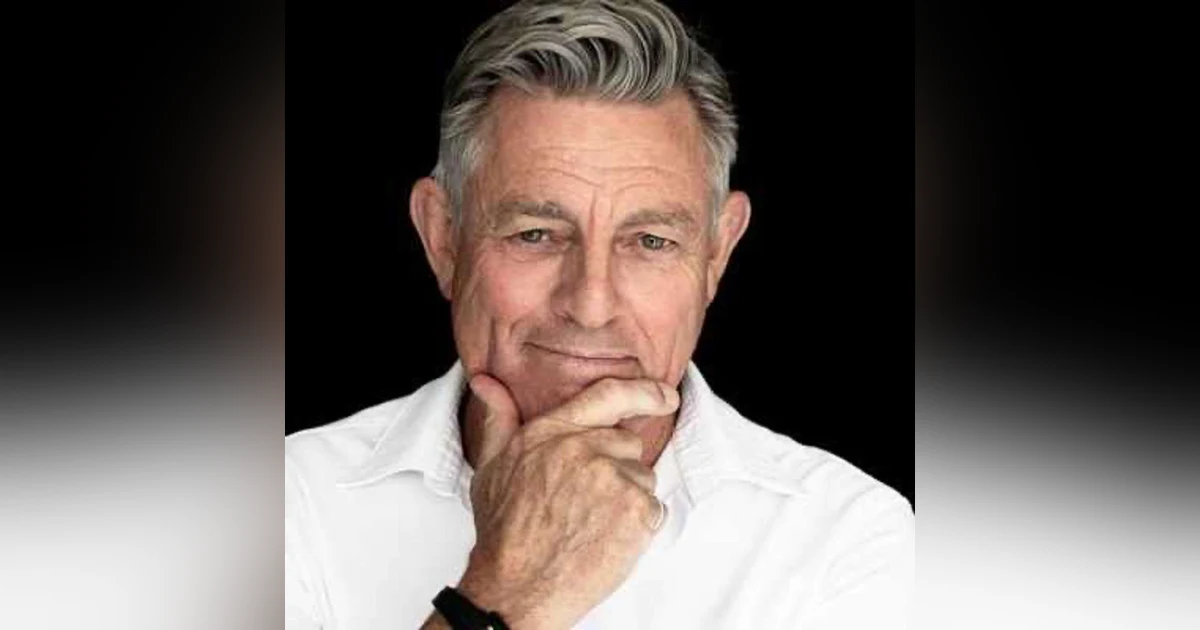

I would love to hear from you. Click the link now Dance with Angels and Finding Hope After Losing a Child James Moffitt speaks with Warwick Dunnett, a retired Boeing 747 captain and author of Dance with Angels, about the death of his 20-year-old son Harrison and the long search for meaning that followed. This conversation is for grieving parents, especially fathers, who are trying to hold on to faith, memory, and purpose after devastating loss. Warwick shares how grief pushed him to explore C...


I would love to hear from you. Click the link now
Dance with Angels and Finding Hope After Losing a Child
James Moffitt speaks with Warwick Dunnett, a retired Boeing 747 captain and author of Dance with Angels, about the death of his 20-year-old son Harrison and the long search for meaning that followed. This conversation is for grieving parents, especially fathers, who are trying to hold on to faith, memory, and purpose after devastating loss. Warwick shares how grief pushed him to explore Christianity, other religious traditions, science, and the idea of consciousness after death. James adds his own experience of losing a child and offers a pastoral, practical lens on surviving grief without pretending it disappears.
Key topics
- In this episode: Warwick explains how Harrison’s death in 2016 set off a decade-long search for answers about grief, soul, and what happens after we die.
- Warwick describes Harrison as a gifted rap and hip-hop artist with a huge presence and a contagious energy that filled every room.
- He shares the moment he saw Harrison’s body after the morgue and autopsy process, and how that made him realize the body was not the whole person.
- Warwick outlines the central idea behind Dance with Angels: that human beings are spiritual first, and physical bodies second.
- He describes his search across Christianity, Islam, Buddhism, Hinduism, and science to find a belief system that could actually help him live with loss.
- James shares his own story of losing his daughter Jessica after her 14-month cancer journey, including the final night when he told her she did not need to keep fighting.
- The two discuss grief triggers, memory, and how photos, places, and objects can feel unbearable at first but soften over time.
- Warwick introduces his “five stepping stones” for grief: community, compassion, time, purpose, and belief.
- He explains why community and compassion matter so much, especially for fathers who often have nowhere safe to talk about loss.
- James emphasizes that empathy matters more than trying to fix someone’s grief, and that people should say the child’s name and invite stories instead of staying silent.
- Warwick says the goal is not to “move on” but to eventually smile again when remembering the person you lost.
Timestamps
00:00 - Introducing Warwick Dunnett and the loss of Harrison
01:36 - Life on a floating home in San Francisco Bay
02:13 - What it feels like to fly after a 747 career
03:11 - A Malaysian Airlines story during Ramadan
05:20 - How 9/11 changed aviation and cockpit life
06:34 - The freedom of flying cargo without a locked cockpit
08:17 - Retiring from flying and missing the sky
09:41 - Harrison’s talent, energy, and bigger-than-life presence
10:18 - Seeing Harrison’s body and the first revelation about grief
11:16 - Why Warwick believes we are spiritual beings in human bodies
12:21 - Writing Dance with Angels as a search for a workable belief system
13:54 - James shares his own religious background and journey
Lighthouse Lane Books
Facebook Page
https://www.facebook.com/profile.php?id=61583591441571
Podcast Support
https://www.fathersrefuge.com/support/
One Time donation
https://www.buzzsprout.com/2528600/support
Monthly Support
Want to be a guest?
https://podmatch.com/hostdetailpreview/fathersrefuge
Mobile Follow Page
After this that long journey, the things that kept popping up in different religions that I looked at and speaking to people who had had loss, they're what I call the five stepping stones. And the community is the very first of those, right? And and the others are I can go through them individually if you like. Yeah, go ahead. Tell us about them. Well they c I'll I'll mention the first. It's community, compassion, time, purpose, and a belief. Community is, of course. It's obvious. You can get a great sense of community from the religion that you belong to. It's it's the sense of belonging. We go to church and we sing songs and we hold hands, and that actually releases different chemicals into our body that makes us feel better about life in general. But uh having support in the community is proven through numerous studies about increasing longevity and reducing the length of grief, right?
SPEAKER_00A father is often expected to be the strong one to hold his family together, to keep moving forward, even when part of his world has fallen apart. After losing his daughter Jessica to cancer, James Moffitt discovered how few places existed for grieving fathers, and how many men were carrying their pain in silence. The Father's Refuge podcast was created to give those fathers a place to be seen, heard, and reminded that they don't have to walk through grief alone. Through honest conversations, personal stories, and faith-rooted encouragement, James explores the realities of loss, trauma, emotional healing, and rebuilding life after the unimaginable. Grief may change a father forever, but it doesn't have to destroy his faith or take away his hope. This is the Father's Refuge Podcast, a place for grieving fathers to find understanding, healing, and refuge.
SPEAKER_01Hello and welcome to Father's Refuge Podcast. My name is James Moffat, and I'll be your host. Today we're going to have an honest conversation about the pain of losing a child, the challenges of grief, and the search for hope and healing. Today's guest is Warwick Dunnett. Did I say that right? It did. Okay. A retired Boeing 747 captain and an author of Dance with Angels. In 2016, Warwick lost his 20-year-old son, Harrison. That devastating loss sent him on a 10-year journey exploring faith, spirituality, science, and one of life's greatest mysteries. What happens after we die? Today we'll talk about Harrison, Warwick's journey through grief, the questions that challenged his beliefs, and what he discovered about finding hope after a loss. Warwick, welcome to Father's Refuge.
SPEAKER_02Thanks, James. It's a pleasure to be here. Absolutely.
SPEAKER_01I'm excited about our conversation.
SPEAKER_02Yeah. I think when we last spoke, I was somewhere in traveling around Asia and it was really hot. I had air conditioners going. We had we we still spoke for about 45 minutes.
SPEAKER_01Yeah, amen. It's it's what that's one of the joys of podcasting, is I get to meet all sorts of people all around the globe. And so yeah, that's that's it's it's nice to to hear other people's perspectives. You know, when they don't live in America, they live somewhere else.
SPEAKER_02I actually yeah, I'm I'm uh sorry to interrupt you. So I'm actually in San Francisco at the moment. I've got a little I'm on a little floating home here, and I have a place in Sydney and I go back and forth.
SPEAKER_01So you're what in San Francisco Bay on your on your sailboat or something? It's a floating home, like a little houseboat. Really?
SPEAKER_02Yeah.
SPEAKER_01There you go. Yeah. So, Warwick, you fly a 747, or you flew a 747. So I have to ask, are you a relaxed passenger when somebody else is flying, or are you mentally supervising the whole flight?
SPEAKER_02No. I'm very relaxed. You know, part of my job for 22 years with that company was traveling in the sitting in the back, you know, and I'm I'm very relaxed. It depends how far back I am, James, you know? And how close to the front and how big the seat is. That's how relaxed I am, depending on.
SPEAKER_01So what's the what's the safest part of the plane to sit at, or is there such a thing?
SPEAKER_02Yeah, the safest part for me was up front in the left seat. Oh, there you go. You can't do that. I think being down by the tail would probably be pretty safe. I always put myself next to an exit. I pay the extra dollars and I sit in an exit row, mainly for the legroom, but it doesn't hurt to be first out the door as well.
SPEAKER_01So do you have a funny story you can tell us about one of your flights, or maybe a maybe a passenger or a co-pilot or navigator or just anything humorous or or odd that we might not think about?
SPEAKER_02Aaron Ross Powell Well, I have about 50 years of them. But you know, when since this is a largely has a religious component, you know, your podcast, I'll tell you a story I was for two years. I I actually talk about this in Dance with Angels.
SPEAKER_01Okay.
SPEAKER_02I allude to it. I was flying for Malaysian Airlines for a couple of years, and of course, there's a very large Islamic population. And during Ramadan, as you know, Muslims don't eat or drink between sunset and sunrise. No, between sunrise and sunset, sorry. And so the uh a lot of the I was a first officer at the time, and a lot of the captains would go through these sugar high and lows, you know, like hardly be able to stay awake or uh and m and not always making the best decisions. I shouldn't have mentioned the airline. But the the funny story I had from Malaysian Airlines was back in the day when you could open the cockpit door, this is before 9-11, you know, the devout i is uh followers of Islam would at prayer time would come out of the cockpit and lay down a mat in the on the g galley floor in front of all the passengers and start praying. Which was often disconcerting to a lot of tourists, you know, right there who were.
SPEAKER_01Hey, who's flying the plane?
SPEAKER_02Well, they do it normally do it on the on the ground before takeoff. The captain would sometimes come out and start praying to Allah, you know? Which I always I always thought was a funny scene, you know, look at people's faces when you're sitting in first class or something and and the captain comes out and starts praying before takeoff.
SPEAKER_01Yeah, please tell me this thing's got autopilot or something.
SPEAKER_02Yeah.
SPEAKER_01Yeah, I can I can only imagine. There are certainly changed the the fabric of airflight, right?
SPEAKER_02It did. I was uh a passenger pilot for most of you know the early part of my career. And then 9-11 happened, and and I think I was I was in the U.S. by that time. I'd actually left flying. I was working on Wall Street as a futures trader and and then Femara Lynch. But then 9-11 I was actually in the World Financial Center when the first they tried to blow up the World Trade Center the first time. And my my desk shook, and we all this was before terror terrorists and and we went out and there was smoke billowing out of the out of the garage and uh we said, Oh, a generator must have blown up. And we just went back to work. Nobody thought about bombs and that sort of stuff.
SPEAKER_01Right.
SPEAKER_02And and the the pr I left Merrill Lynch and the person who got all my account sadly died in that explosion on the World Trade Center. Had I stayed at Merrill Lynch. After Merrill, I went I was on the floor of the Futures Exchange in the World Trade Center, and I left a few months, a year or two before that happened. But anyway, what with relation to aviation, yeah, it all changed after then. And you'd you the the crew becomes captive in those cockpits, really, to a great extent. So I was very fortunate for the last 22 years of my life. I was a 747 captain for a cargo company, and we didn't have those restrictions. We would just come there was no cockpit door. We just had the whole upper deck. Okay. And so we'd come and go, sleep, you know, in in the rest and area, make meals. It was a great last twenty-two years of my career.
SPEAKER_01So did you see the movie with what was his name? Castaway. The castaway.
SPEAKER_02Castaway with where he's stopped. There's a lot of discussion about whether that soccer ball was male or female, James. I don't know.
SPEAKER_01Wilson! What was his name? I love that actor. I can't think of his name.
SPEAKER_02Well his forest gump as well. Yeah. Yeah. Um Tom's name. Hanks? Hanks? Hanks? Tom Hanks, I think, is that? Anyway. Tom Hanks?
SPEAKER_01Yes. Yes, I think it's Tom Hanks. Yeah, that that uh that was very frightening, him looking through the windshield and seeing the water coming up and was like, whoa. And that was Yeah. It was a pretty intense movie at first. And then it and then it got progressively odd and funny, you know.
SPEAKER_02Yeah. I have a lot of stories over the 60 or 50, 50 something year aviation career, but I won't bore you with them all. But those last 22 years, most of a lot of our contracts were with the mil uh U.S. military air mobility command, so I was doing some my fair share of military contracts to the Middle East.
SPEAKER_01So do you Afghanistan? Do you still fly at all? Do you fly little air aircraft or are you got a pilot's license that you can do that?
SPEAKER_02I retired in 2020 and was doing some gliding for a while, but I I haven't flown for the last couple of years now. Do you miss it? I do. The last couple days I've been thinking about getting my medical back and and maybe flying flying for a seaplane show, but I don't think too many too many companies don't want to hire somebody who's 70 years old. This insurance issue of a seven year old.
SPEAKER_01Yeah. Age discrimination is alive and well in a lot of places. It is. I have stories about that I could tell, but we're not going to cover that here. But I want to I want to give you space to talk about your son. I'm sorry for your loss. You know, I've lost two children. Last one that I lost was in January of 2025, so it's been pretty recent. He and I were not that close. He was he was 38 at the time. And uh he wound up in uh ICU in Michigan for like five or six weeks. And he was uh a large y young man. He weighed way more than he should have, and I think that in in the end, I think that contributed a lot to his uh demise. But I want to give you I want to give you space to to talk about your book, and I want to give you space to talk about Harrison. Uh what would you you know, just as a kind of an introduction, what would you like to tell people about your son?
SPEAKER_02About my son, well, uh a lot of people who lose a child, I'm sure you felt the same way about your daughter. But my son was a very talented rap hip hop artist and with a zest for life that is hard to describe. You know, as as many parents say, when he entered the room everybody knew he was there. So he had a lot of energy and a lot of spirit. And i in one of the revelations I talk about well I was thinking of writing a second book called The Five Revelations, but I don't speak about it much in Dance with Angels, but briefly mention the fact that I didn't get to see Harrison until weeks and weeks after he died. Because the way the system works in LA at the morgue and there's an autopsy and all that sort of stuff. And when we finally saw Harrison lying lying there, you know. It was so clearly clear to me. That was at the time, of course, I was grieving and it didn't occur to me, but later it became so apparent that that was well actually no, I'm sorry, I'll I'll back up here. It was apparent to me at the time, I didn't recognize the significance of it until later, that when I f saw him lying there, it was clear to me that that was just his body. Okay? That that wasn't really Harrison. It was just Harrison's body. And if in the second book I might write called The Five Revelations, the first of those revelations would be the revelation that there is something much, much greater than the bodies that we walk around in. You know, the common phraseology uh that we are spiritual beings inside a human body, not a human body with a spiritual component, right? That became apparent to me when I I s I saw my son and I later realized the significance of that. There's no way that that was my son lying there. It was just his body. So I truly believe that we all have a spiritual component, a soul, if you'd like to call it, that moves on. The question is where does it move on, right?
SPEAKER_01Right. I think that's uh that's been a discussion through the centuries, through through the ages, not just centuries, but through the ages, I think we've all we've all wondered that, you know.
SPEAKER_02Yeah. Look, uh it's it's not a plug for the book, but uh i it's gonna seem like it, but that's the book I spent ten years writing. It's called Dance with Angels. And on the front cover, the reason I mentioned it is this spiritual sense of the fact that we we go off somewhere, right? That and as a Christian, I'm sure you believe we the you know, of a component of what happens, right? And different religions around the world have a belief structure and scientists believe something else, and and I didn't have a particular belief structure after I lost Harrison. So that's why I started to write Dance with Angels, because I found that people who do have something to believe in tend to recover from grief not quickly, but more quickly, you know, more easily than those who do not have a belief. And I I'm I was a pragmatic uh type of a person, you know, and I wanted to find a belief system that uh that I could res that would resonate with me. And so that's why I started to I didn't want to just lat latch on to Christianity, right? Because it felt good. I wanted to compare it, the historical relevance and of all the different religions, scientific, spiritual beliefs about what happens after you die, and see if one particular belief system resonated with me that would help me through that loss.
SPEAKER_01Well, I think that I think that all of us whether we subscribe to Christianity or or Muhammad or Islam or or Hare Krishna or one of the many, many religious or religions, we'll say, right? And all religions have little offshoots off of them, kind of like Christianity does. You know, you have all your little your Protestant d denominations and you've got, you know, the Catholic Church and you've got all sorts of stuff. And I think, I think all of us, whether it be because of our upbringing, you know, our families, sometimes we come into our faith uh because our families belong to a specific church or denomination or religion, right? And we're we're raised in the church, we go to church every Sunday, we're raised in the church, you know, our families are believers, and so I did I was not raised that way. My family, my mother was a my adoptive parents. I never saw my my dad never went to church that I knew of. Uh and as as he was raising me as a child into you know a teenager. He was a drill instructor for 26 years in the army. And anyway, he never I never heard him talk positively or negatively about religion or God or any of that. My mother, however, was a non-practicing Catholic. And she she was raised in Austria, and she spoke 26 languages. My mom and dad met at a at a bingo game in Frankfurt, Germany, because that's where he was stationed with the army. And they tried to have children, could not, so they adopted my sister and I out of a an orphanage in Schaffenberg, Germany, and her family was devout Catholics, right? And uh when I became of an age, I don't know, you know, from eight years on years old on or whatever, when I became aware of her being a non-practicing Catholic, I never really asked her the question outright, why are why are you calling yourself a non-practicing Catholic? She never went to Mass. She never went to church. The only time my mother went to church was when my dad was in state he went to Vietnam and Korea, and there was a a Catholic chapel in Terrell, Texas, that was open. You know, they have these chapels that are open 24-7, and you can go light candles and pray for your loved ones and all that. And so I distinctly remember my mother taking my sister and I to this to this chapel, and we'd sit in the back, you know, and she'd go light a candle and pray and all that. And this is right around the time that uh Martin Luther King got assassinated. And uh there was riding in the streets and everybody was hiding in their bathrooms. So it was a very it was a hard time, you know, scary time for a lot of people. And uh so anyway, I remember I remember all that, and and my parents always told me that as a teenager, they always told me that they wanted me to believe in the freedom of religion. And they they respected religion, and even though they didn't subscribe to a religion per se, they wanted me to feel free to explore, you know, spirituality, religion. They told me I could go to church any any place that I want they would never take me to church. But if I had a friend that wanted to come pick me up, you know, I could go to church with them. They didn't care. They were fine with that. So anyway, it was much later on in life as I became an adult. I guess I was in my early to mid-twenties before I actually subscribed to Christianity and embraced that. And that's a whole nother story I won't go into, but I'll just ask you you've spent nearly a decade searching for answers about death and what comes afterward. And I think we all think about that. Have you ever wondered whether the search itself might be keeping part of your grief alive?
SPEAKER_02Wow, what an intuitive question. I've of late, now that the book is finished and I spent the last three or four months trying to get it out there into the hands of people, I've now having to decide, well, okay, what do I do next, right? And part of that decision is whether I go back to Australia. And working on the book on a daily basis, it was one of the things I was thinking about just yesterday. The locality that I'm in, my son's buried just down the road, you know, and uh every day there are memories of him, but also the book has been keeping him alive. And in a sense, that grief alive. That's a really intuitive question. And it's something I was just thinking about yesterday. Would I be better off going back to Australia and starting a new life that didn't have I mean, look, I'm always going to remember Harrison, right? Even anybody with a even anybody with an iPhone, you can't forget about anybody, even old girlfriends, they're popping up on the phone. You know, the picture-I don't know if you have an iPhone, but people's pictures are popping up all the time, but my children's pictures pop up all the time. I'm never gonna forget about Harrison, even without the pictures, uh obviously. But I uh it's a very intuitive question because I I wonder whether that has delayed the recovery somewhat. I'm I'm not sure, and I I don't have the answer to that, but I I think it could. But uh there there are a lot of books written, James, about the benefits of writing about your grief. And for me it was a very uh a very beneficial process, I think.
SPEAKER_01I've I have not written a book. However, I do a lot of writing on Medium and Substack, and back in 2001, I wrote uh probably about five or six articles about my experience or our experience with her, her uh 14-month journey fighting cancer and all of that. And I think that I think that Yeah, it it sucks. I don't wish that on my worst enemy. Not that I have any worst enemies, but I I would not do that. I want to say that loss and grief, when you're when you're in the midst of it, what will somebody passes, your child passes. Oh my god, you're just you know, going Through a whole kaleidoscope of you know the six steps of you know the six emotions of of grief. Anxiety is one of denial, bargaining with God, anger, depression, all of that, right? You go, everybody's different. Everybody's grief is a little bit different, and you experience those emotions at different stages, I guess. And we're talking about, you know, phones popping up on your iPhone or pictures popping up on your iPhone. I think that initially, once when they pass away, I think that those photos popping up would be triggers for you that would would trigger, you know, grief and and some of the raw emotions. But I think as you know, as I think about Jessica, you know, she was she's been gone 25 years. And I think initially all of those photos, restaurants, books, she she loved sunflowers. I've got a hat in my desk over here that has one of her favorite hats, right? And so initially, when I'm and when the f when the grief was fresh, the triggers come fast and furious, and sometimes you just can't catch your breath. Twenty-five years later, I now I can talk about her without tearing up too much. If I were to focus or dwell on a specific time frame or whatever for too long, then yeah, that might create some emotion in me. But so yeah, it's interesting about the uh about the photos and when we talk about you know the triggers and how you how you survive all that. You survive the the anguish and the pain and the isolation and the depression and uh all of that. So I know.
SPEAKER_02I know the dark space that you're in. And uh look, before I forget to say it, I think what you're doing is uh with this podcast is incredibly valuable. Uh because there are I was so excited when I f I found you or you found me, I can't remember, but because it's a a place that really deserves a podcast. I was first let me respond to what you just said about remembering the people you've lost. I I talk about and then then if I could I'll I'll respond I want to say something about how valuable y what you this podcast is to people and something that happened to me yesterday that made me realize how valuable what you do is. But whether or not you're a Republican or liberal Democrat or whatever, but Joe Biden lost his wife and his daughter in a car accident when they were young, right? And he later lost his son as well. And he wrote a book called Promise Me Dad, which was one of the books that I I put on Lighthouse Lane books. It's I I got this curated list of books that I think are helpful for people, and books that I researched during the journey of Dance with Angels, and Promise Me Dad was one of them. And in that book, he points out something he says to he was also the person responsible for deer working and contacting the Gold Star families, the people who died, uh right, during the different Gulf Wars. And one one thing he used to say, and this is totally irregardless of your political viewpoint, right, or whether you like them or don't, uh, it's very valuable. And that he said he tells people that he promises them that no matter how dark and sad they are, to try and work through it, because someday when you see a picture of your child, or are a memory triggers a thought about your child, you will smile, not cry. And at the time, you, I'm sure, wouldn't have believed that. I didn't, I said, There's no way I'm not going to be able to cry when I see a picture of Harrison. But ten years later, in writing Dance with Angels, I've I've come to the realization that that is actually true. I sit here and smile, and Mike's wife, Harrison's mother, and his twin sister and I, we have great memories, and we smile and we laugh now. And when you're in that dark place that you're in with your l little daughter, it's so sad. You don't believe that that can happen. But can I go on to the reason why I mentioned that you what you do is so valuable, if you if I could. Yesterday, I finally, after 10 years, donated all Harrison's martial arts gear back to the dojo where he went. I couldn't stand to get rid of it, right, for 10 years. And this is a great place called practical martial arts, and they they teach great stuff to kids. You know, before they give them a belt, they've got to learn how to do stuff in the community and how to avoid fights and things like that. It's wonderful, wonderful Jojo. And I didn't realize and she she called me back. I'd left a message and said, Can you give this to some kid, you know, this stuff to a kid who can't afford it? It's expensive that stuff, the mask and stuff. She called me back and she said, Warwick, you don't realize uh we just lost our son three years ago, Levi. And uh she came in and in the morning they wake him for school and he was dead. Right. He just never woke up. He had a sixteen years old, had a uh epileptic fit. And uh her husband is the uh you know, it's a multi-black belt in numerous different in judo and different types of martial arts, and and he's just the most wonderful person. Uh but you know, he struggles, right? He there's no place for a guy like that to go. So I told him about your podcast uh because there are very few outlets where fathers can talk about their grief or where they feel comfortable talking about their grief. I could go on and talk about this forever. I'm I'm addicted to this thing. It's on Apple. It's about a bunch of Navy SEALs, right? And they're all tough, A-type personnel guys. And they go through this loss all the time. One of them loses the wife, the uh, you know, and then they lose a buddy and stuff, and they're they're just dealing with their pain as all real men do, right? Without sharing it. And so I think you do is just incredibly valuable.
SPEAKER_01Well, I appreciate that. And and my purpose for this podcast was born back in 2001 when my daughter passed away because I very quickly learned there's not a lot of support for dads, for fathers or men, you know, and men are, you know, I'm I'm a child of the 70s, you know, I told my told you my dad was a drill sergeant for 26 years. He was a child of the 40s, you know, or 50s. I don't know. And and back then, men were, you know, it was the John Wayne error, you know. You you pull yourself up by your bootstraps, men don't cry, boys don't cry. Right, right. If you cry, I'll give you something to cry about, you know, you did you're you were not encouraged to. There's no such thing as emotional intelligence for men back then. You know, you were just expected to be suck it up buttercup and be tough and not show your not show your your weakness, you know, tears equated to weakness and all that. And and luckily, I think we've over the last couple of decades, I think we've I think our our mental health and professionals and churches, pastoral care, uh family therapists, there are a lot of options out there for families, you know, mom, dad, kids. And so anyway, I just I just wanted to I was actually on my ABC's parenting adult children podcast, and I was talking to a doctor who came onto the podcast to talk about whatever it is we talk about over there. There's 50 different topics. And I was I talked to her after I'd stopped recording and I was talking to her about Jessica and all that. And she was like, Well, James, you should start a podcast. You have a story to tell that other people might want to listen to. And I had this, I just had this epiphany, and I was like, wow, I hadn't I it never crossed my mind to create a podcast around Father's Refuge. And so, you know, six or eight months later, here here I am, and I've had a lot of wonderful conversations with people.
SPEAKER_02That's very valuable. And and look, as a pilot, the as a captain for many years, there's a checklist whenever you have an emergency. And there's well that one, I'll never forget that fateful morning when I landed and got that call from my wife or uh ex-wife about Harrison. And there's no checklist for a s a tragedy like that, right? No. You don't know what to do. And there are not a lot of resources for fathers. So that's that you know, that's that's why I I struggled. It's part of the reason I wrote Dads with Angels and tried to compare different beliefs and and you know, the conclusions I came to about what happens after you die. But I had to do a lot of that my li myself. I didn't I didn't know about your podcast.
SPEAKER_01Well, I think we all like you said, there's no manual. There's no no checklist. You just you just wade through it, you know? All you can hope for is that you have a support system around you that can help you.
SPEAKER_02That's one of the five what I call the five stepping stones uh after this that long journey, the things that kept popping up in different religions that I looked at and speaking to people who had had loss. They're what I call the five stepping stones. And the community is the very first of those, right? And and uh the others are I can go through them individually if you like. Yeah, go ahead. Tell us about 'em. Well, they c I'll I'll mention the first it's community, compassion, time, purpose, and a belief. All right. Community is, of course it's obvious. You can get a great sense of community from the religion that you belong to. It's it's a sense of belonging. We go to church and we sing songs and we hold hands, and that actually releases different chemicals into our body that makes us feel better about life in general, but having support in the community uh is proven through numerous studies about increasing longevity and reducing the length of grief, right? And then I I believe that the second is compassion. That's also something you get from a religious group quite often, people who are compassionate. When I speak about compassion, I I often talk about I try to bring up the fact that something a lot of people don't realize, and that's you have to show compassion for yourself. Right? People suffer this grief. And it took me long to realize that I should be kind to myself, show compassion for myself. When you've lost somebody that you love, you you've you've you've undergone a lot of pain. You're so of course they're gone. They're the ones who really suffered, but you're the one left here thinking about what happened to them and suffering. And you've got to be kind to yourself. That's the second one. Time is the third stepping stone. Really, it everybody gets tired of saying time heals all things, but time actually, there's a neurological benefit for time. Your brain needs time to to build new neural pathways in in ways that it f can operate without feeling hurt, right? It teams needs time to recover. And then the fourth is purpose, I found primarily the concept was provided to me through a book called I'm sure you've read or heard of, called Man's Search for Meaning by Victor Frankel, uh, who is, I believe, may well be the most widely sold book in the world over time. Man's Search for Meaning. It was by uh Victor Frankel was a psychiatrist, a Holocaust survivor who lost watched thousands of people go through terrible grief and loss and hardship, right? And his conclusion was that having purpose was the one thing in his mind that really helped people through that tragedy. Right. And and then the final one for me is is belief, right? Having a belief about what happened to your loved one or to the soul of your loved one. You might be a a a a Christian and believe that they've gone to heaven. You might be a Buddhist and believe that their karma has been reincarnated. You might be a Hindu and believe that their soul is reincarnated, right? You might have any one of these beliefs. But the important thing, uh in my investigation of all of these religious beliefs, I didn't find a lot of validity in any of the basis for Christianity or Islam. Nothing that could be proven, right? But and so I was pretty critical about these religions. About halfway through the book, I started to realize it doesn't really matter, does it, right, if they can be proven. As long as the benefits are there. And you without a doubt, the benefits are there from being a Christian. You get the community sense of community, the compassion you get from other people, and the sense of belief. Having that belief about where your loved one has gone is in itself the remedy to the, you know, to a lot of that pain. And if I have any well, there are two main messages I have, and one is that when people are going through have gone through what you went through and what I've gone through, and they felt that darkness and that terrible, terribly deep, sad, depressing space after losing a child or a loved one. I I'm living proof ten years later, and so are you, that you can be do positive things, you can smile again. It's hard to believe when you're going through that terrible time, right? And the sec yeah, and my second message why I do these podcasts is to let people know that I well, certainly my belief, I came to the conclusion that none of these none of the religions are factually have a factual basis of truth, right? So you don't have to believe the dog dogma, right? If a priest tells you you have to do this or you will not go to heaven, right? You don't have have to believe what anybody tells you. You can create your own belief structure, right? As long as you can take the Ten Commandments, because the Ten Ten Commandments are great, right? And they're wonderful rules to live by. You can take your belief about a rebirth and or going to heaven, and you can formulate that into your own belief system. I'm not suggesting you have to do that, right? If if I were I'd love to be a there's a big part of me that would love to be a practicing Christian. I have a lot of trouble walking past the church, you know, when I'm traveling overseas. I hear people singing hymn hymns. I wrote a blog about it, you know. I have a lot of trouble. I just I go in and I sit with them and I sing, you know, and I I I've I've sat in some beautiful cathedrals. And when you go to Notre Dame, man, how's it you sit there thinking, how is it possible that this must be real, right? This must be real. Jesus Christ and God and and and everything that Christians believe when you sit in in a beautiful cathedral like that. So there's a huge part of me that wishes I was you know, had the same faith you have. But if you're like me and don't feel the confidence to do that, you can create your own positive belief system and take the best from different religions.
SPEAKER_01They all have a lot of a lot of great things to contribute. So this is a perfect segue for my next question. So you've explored different religious traditions and scientific theories about consciousness. As a Christian, I find hope in the promise of eternal life. Do you believe faith requires evidence, or can believing in something we cannot prove be enough to sustain us through grief?
SPEAKER_02Well that's that's exactly what I probably didn't express as eloquently as I should have. You don't need proof. You don't need a proof you don't need proof that Christianity or anything in the scriptures are real, right? You just the belief in itself is the important thing. So do I need proof of consciousness to believe in it? No. I know from seeing Harrison that there is something more than the body, right? And having a belief is probably the most important thing I uh for me. Creating some sort of a belief is finally what has helped me work my way through that, called it the cave you fear to enter. It's one of the last chapters in Dance with Angels. And the cave you fear to enter is really coming to terms with the darkness of coming face to face with the loss that you've experienced. Right? And if you have a belief you such as you just described, right? Did you say etern you believe in eternal life?
SPEAKER_01Is that just like you, I I believe that that there's more to life than living and and dying and then it's over. It's lights out. I I believe that we I have a spiritual being. We're spiritual beings that we have a soul or spirit that goes somewhere else, you know?
SPEAKER_02Aaron Ross Powell Without a doubt, James. Without a doubt. And all the research I did, there's just too much evidence of you can look at all the near-death experiences, but there are and scientists try to explain those some other way, but uh there are a whole bunch of books that now contradict the scientific original scientific explanations for what happens to people. But there are just too many other stories that support that we go on to another life. To not believe it. To think that uh look, there are three things that can happen when you die. One is that we have we a spirit that goes on to another destination, uh, as you and I believe. And in that first instance, they for a period of time can interact with us and see us see how we are grieving. Okay. The second option is that there's a spiritual component that moves on, and after they die, they have no understanding of the pain we are going through. So we're really just hurting ourselves when we grieve. So I I should step back to number one. If the if the person we've lost can see how what terrible pain we are in, do you think that they would want would your daughter want you to be in so much pain? Right? And the answer is probably no. No. No. And and in the second instance, there's a spiritual component. That spiritual component has gone on to another place, an eternal life or reincarnation or whatever, a journey of some sort, and they cannot see how we are suffering. So we are just the pain we feel is something we cause ourselves. You just have to realize it doesn't mean you shouldn't suffer, but you should realize that in the that state, we are caught the one causing our own pain. And the third thing is that you and I may I may be wrong, right? And scientists, a lot of scientists may be right, there may not be a spiritual component. When we die, we die. But one thing I have learnt in writing Dance with Angels is that when we die, we don't, our physical body doesn't ever disappear, right? We know that energy never dissipates, it just changes shape and form. Half the world buries their lost loved ones, and half the world cremates them. And so that energy is dissipated in different ways. When you're cremated, a lot of energy dissipates into the atmosphere and then off into the universe. But something I've learned post-riding Dance with Angels is I didn't even realize is that the atoms that make up all the molecules that our body's made of, the A the HTO and the carbon and all these things that our body's made of, that doesn't dissipate either. That goes back into the earth around us. So imagine all of those people we've lost, right? They haven't gone. Their energy, their molecules, that all in the water around us, when you go walking in the woods, right, they're around us. So I believe in option one or two. But if I'm you and I are totally wrong, it's made my life easier to know that when I go swimming in the bay right here, out my door, I'm surrounded by some of Harrison's energy. So I didn't really a did I answer your question, but I think the belief is is all that really matters.
SPEAKER_01Right. Yes. That's I think you shared a good a good thing there. So many grieving parents worry that as the years pass, memories of their child will begin to fade. Is there something about Harrison, a sound, a mannerism, or an ordinary movement that you're ex especially afraid of forgetting.
SPEAKER_02Aaron Ross Powell I wrote about this also in in Dance with Angel because one of my great fears, and I believe a fear of a lot of people when they lose somebody is that they're going to forget about them. And I I I think it's in the sequel or something I write that you don't you don't have to worry about that because you'll never forget about them. And I I I have a particular image. Most of my recollections of Harrison are from photos and we have all these videos and music videos and I'm very fortunate. But there was one instance where we where he was sitting at the end of a table and and people were playing his music on a demo tape and there were people dancing around and he was smiling. I won't take it it's this amazing thing that happened to Harrison and I, but I I remember his smile at the end of this 12 foot table. But it's a great memory and it's one I know I'll never forget and I don't have a picture supporting it, but I can I have a terrible memory by the way. But I I can picture it like it was yesterday of him sitting down the end of this table s just the look on his face. So that's awesome. So no no I I don't think y you ever forget and I don't believe people should be concerned about it as I was. But it was one of my biggest fears. Did you feel that? I don't know. I felt oh my God I'm gonna forget them or they're not gonna be a part of my life again.
SPEAKER_01No, I never I never had that fear ever. I didn't it's been well yeah twenty five years. She passed away in August the third or August the fifth? I'm gonna say August the fifth of two thousand one and I I remember she was she was in her hospital bed and sh she was towards the end, you know hospice had stepped in and she had her medical equipment around her and and I remember that it was it was two o'clock in the morning my wife was there she was asleep and Jessica was in her bed sleeping whatever and I remember going to like a a small grocery store gas station like right around the corner it was like two or three minutes from my house. And I I went to get gas and I remember that these idiots in a car I don't know what they did. They did something really stupid it was two o'clock they had just gotten out of the bar they were drunk. Who knows? But I remember that and I remember going back home and I walked into Jessica's room and she was laying there and she was struggling to breathe. You know and shessica was she was I want to say that she she knew the end was near. Even when they had the emergency surgery you know 14 months earlier they did everything they did everything they could. You know I think a bone marrow transplant was the last thing on the list that they could do. They took us into the conference room and my pastor was with us. He was a chaplain or he's actually the director of pastoral care at a hospital in Somerville. This was downtown Charleston and we I asked him to be with us when they explained all this stuff because he was our subject matter expert on all that, right? I we didn't had no idea. We didn't know what to do what to think or what to hope for or but they the surgeons or doctors were very upfront with us and and uh they gave us no hope and they basically said the last ditch effort that we have is to give her a a bone marrow transplant and that ultimately could kill her faster you know it could have saved her there was there was a chance there was like a 10 or 15% chance that it could have helped her but she was going to be in quarantine for like six weeks surrounded by plastic nobody could go in and see we couldn't go in and touch her or hug her or see her or talk to her. And after we had that conference we went into her hospital room and we basically gave her several options and we said these are your options and the doctors didn't give us much hope and so we want you it's her life her body her illness so we want to give you the option to choose what you want to do. Do you want to come home and be with us at home? Do you want to try the bone marrow transplant or do you want to stay in the hospital? She says I want to go home. She says I'm tired of this so she came home and there was a couple of trips we had to make back to the hospital when she was experiencing the later stages of the cancer of course there was nothing they could do for her other than make her comfortable but I remember walking into her bedroom at at 2 o'clock in the morning and she was struggling to breathe and I told her I said honey I said you you don't have to you don't have to fight anymore. You don't have to hang on. If you want to go, you can go. I give you I give you permission and I put my hand on her knee and she I watched her take her last breath and uh Jesus boy you want to talk about that's tough and it's everything I can do to say this dry eyed but uh I'll never forget that. As long as I she'll ever live I'll never forget her taking her last breath. Amongst other things.
SPEAKER_02Yeah that's a such a sad story. I I I think what I meant by my fear was that I would lose them. Right. And you'd never I use the word forget, but I I should have used the word lose. You never lose them, right? As you know, they stay with you always Yeah. And you know I if you're listeners or viewers I I might have been looking up I've got this beautiful view of the sky here. You can't see it in this view, but I I look out a window over the water into the sky. When I was listening to your story I was looking up at Mount Tamil Pius in the in the clouds so it wasn't because I was and then I occurred to me that people might think I was less than interested but it's I'm looking up in the sky literally the sky and imagining that what you were describing. It's a terribly sad story.
SPEAKER_01I'm so sorry for that to hear that well I always tell people it's the circle of life I have it on good authority none of us get out of this alive. That's what I've been told thus far thus far I I can I can validate that well and I I don't care who you are I don't care who you are you you experience the circle of life. You know we're born we live we die and we go on to we would like to think greener pastures, right?
SPEAKER_02Well I believe in I believe in that reincarnation the journey of souls type of thing and but but we we're all entitled to our own yeah I I I don't think we go to a bad place. Let me put it that way. Yeah. Yeah and Hem Hemingway I'm sorry I keep interrupting you I'm so sorry. Oh go ahead Hemingway to end in a lighter note there's a a phrase attributed to Hemingway in some bar somewhere in Paris where he's supposed to have said that we never really die as long as somebody mentions our name right it I I'm not quoting him accurately but as long as people still talk about you you're never really you're never really gone by you.
SPEAKER_01Well as you people don't really know what to do or what to say right after the funeral after the celebration of life people bring you food they sit with you they hang out with you for a certain amount of time as they're able to but then everybody else around us our families our colleagues our coworkers life goes on for them you know and life goes on for you just in a different way right and so people don't know they don't know what to say. And so one of the things that that people that are experienced in end-of-life things what do they call them end of end of life doulas or something like that anyway I've had several people on the show that that are they specialize in that sort of thing. They specialize in being with families and patients as they're going through the hospice deal stage I guess you could call it and one of the things they say is is that as a friend a colleague a family member always bring up the the the lost person's name how's Harrison doing or how was how how had you how do you see Harrison now or talk about you know a baseball game a karate match just a fishing trip. Encourage the person that lost a loved one say their name and encourage them to tell a story a funny story or a memorable story and that that's how our lost our loved ones live on in our memories and we can share those stories with everybody right but but sometimes it takes a kind compassionate soul caregiver family member to encourage us to talk about our loved ones and because people don't know what to say they don't want to hurt your feelings or they don't want to bring up bad memories they don't want to make you cry. So they just say nothing and they just don't come around and we're like no that's the worst thing you could do.
SPEAKER_02Or they'll say he's gone to a better place or something like that. And for and now if you're a believer in a Christian or something you might that might give you comfort but for a lot of people offering solutions is not you just need empathy, offer empathy. But I I'd never I look I deal with a lot of people as I'm sure you do because of Dance with angels and I I hadn't thought I will specifically make sure I do that from now on. Make sure I include the name of the person that they're grieving when I talk to them about it. I think it I think the most important thing is just to empathize with them and say that you feel for them rather than trying to say he's gone to a better place or something like that.
SPEAKER_01Well I I became involved in street ministry when I was younger in my twenties. Wow middle twenties late early thirties I spent ten years in street ministry because I wound up on the streets myself and I like to say that God saved me from that and I had I had some I had some tough lessons I had to learn. He got my attention let's just say that and so as a as a minister of the gospel I used to be one of those fire brimstone preachers and you need to turn or or you'll burn or many of the ridiculous sayings that hellfire brimstone preachers like to like to throw at people you know when they're trying to convert them to Christianity. Well one of the things I had to learn in ministry was about compassion and I've got this saying written in all my Bibles it says people don't care how much you know until they know how much you care. Right? We can have all the head knowledge in the world about a book I don't care what religion it is Christianity, Hinduism, Islam, Catholicism, just pull one out of the air I don't care I don't care how much you know about that faith in your head, if you can't be kind and compassionate to people where they're at then all that head knowledge is worthless right and God had to get my attention as I was going through the early years of my ministry and he basically you know Chuck Swindah wrote that book he wrote many help uh helpful help books it was a little tiny book about that thick. I mean it's like a hundred pages but he talked about compassion and how important compassion is and being kind to people and so as we as we are around people that are hurting or suffering because of loss and grief we just have to remember that whether you've experienced loss and grief yourself, we still have to be kind to people and empathetic and compassionate and just let people give people the space to tell their stories, to talk, to cry, to yell, to you know whatever, whatever it is they need to do at that moment in time, that's one of the most powerful things that we can do for hurting people is just to be there. We can't we can't fix people's problems we can't take the pain away but but we can do whatever it is in that time and space that they allow us to do. And sometimes that's all that they want. Right? Yeah sometimes maybe it's just a sitting on the couch and holding somebody's hand you know or just just being there you know and letting them letting them be lost in their thoughts or whatever. There's there's no magic potion. But anyway Warwick what I always like to give my my guests a few moments at the end of the podcast episode to talk to the listening audience. You're talking to fathers I would think that are dealing with loss and grief. They're either in the middle of it or at the beginning of it or at the end of it or what what would you say to them?
SPEAKER_02I I I believe that you will someday, as Joe Biden said, smile, not always cry at the memory of somebody you've lost. And you'll never forget them, you'll never lose them. You just need to surround yourself by compassionate a community of people, give yourself time and find purpose and belief but but uh that goes contrary to what you just said. You know what I would say really to those people, those fathers who are have lost somebody is that uh there are others out there who understand the terrible pain that you're going through and have been there. And try to do so without offering solutions.
SPEAKER_01Right. Well thank you for your thank you for sharing Harrison with us. Thank you for the stories you told and uh to the listening audience I want to say thank you for the privilege of your time as always and I want to thank Warwick Dunnett for joining me today on Father's Refuge and for sharing his journey following the loss of his son Harrison. Grief often leaves us with more questions than answers. It challenges our faith, our understanding of life and sometimes everything we thought we knew. But perhaps the most important question isn't just where our children have gone or loved ones, but how we choose to live, love and honor them while we're still here. To every grieving father listening today remember that moving forward doesn't mean leaving your child behind. Let me say that again to every grieving father listening today remember that moving forward doesn't mean leaving your child behind. Their love and their legacy remain part of who you are. Until next time this is Father's Refuge where grief is understood, faith is explored, and no father has to walk their journey alone. Thank you for being here and thank you for listening and until until the next episode we'll see you later. Bye bye


