- Making Room for Hope in Hard Seasons—with The Baking Pastor
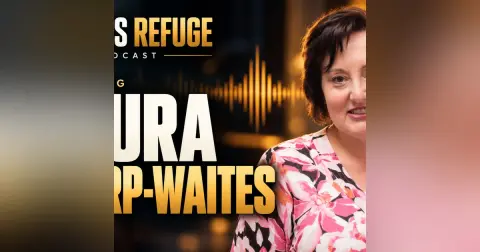
I would love to hear from you. Click the link now The Baking Pastor on grief, presence, and soul care In this episode of Father’s Refuge, host James Moffitt speaks with Laura Sharpwaits, known as The Baking Pastor, about how food, home visits, and honest presence can become ministry in seasons of illness and loss. Laura shares her journey through breast cancer, infertility, widowhood, and grief counseling, offering practical wisdom for anyone carrying sorrow or supporting someone who is.We di...


I would love to hear from you. Click the link now
The Baking Pastor on grief, presence, and soul care
In this episode of Father’s Refuge, host James Moffitt speaks with Laura Sharpwaits, known as The Baking Pastor, about how food, home visits, and honest presence can become ministry in seasons of illness and loss. Laura shares her journey through breast cancer, infertility, widowhood, and grief counseling, offering practical wisdom for anyone carrying sorrow or supporting someone who is.We discuss how ordinary acts like baking a meal, sitting at the counter, or simply showing up can create room for healing. Laura also explains her idea of “worship in the wait,” soul care, and why grief is not something people should rush to “get over.”
Key topics
- Laura shares how she became “The Baking Pastor” after bringing baked goods on home visits to older church members.
- In this episode, Laura describes the counter as a place of honesty, comfort, and pastoral care where people can bring their “junk” and talk openly.
- She tells the story of receiving a visitor during chemotherapy and how that meal became a reminder not to deny others the blessing of giving.
- Laura and James discuss how church fellowship has changed, especially after the pandemic, and how home visits have become less common.
- Laura explains her breast cancer diagnosis, the financial strain of losing health insurance, and the grief of learning she could not biologically have children.
- She describes “worship in the wait” as the spiritual discipline of waiting through appointments, results, and uncertainty while staying close to God.
- Laura talks about prayer and hearing from God through Scripture, daily conversations, and small nudges throughout the day.
- She explains why receiving help was difficult at first and how learning to let others pour into her changed her.
- A memorable story involves a nurse and several medical staff praying over Laura when her veins were difficult to access before surgery.
- Laura shares insights from widowhood and grief, emphasizing that grief has no timeline and is not limited to death alone.
- The conversation covers how men and women may grieve differently, how identity gets tied to work, and why fathers do not need to always be “the strong one.”
- Laura defines soul care as making room for your own replenishment before you run dry.
Timestamps
00:00 - Welcome to Father’s Refuge and introduction to Laura Sharpwaits
01:00 - Why she is called “The Baking Pastor”
02:00 - Why the kitchen counter invites honest conversation
02:37 - A chemo-day visitor and learning not to deny others their blessing
03:48 - How church fellowship has changed in the age of social media
06:01 - Home visits, one-on-one attention, and post-pandemic isolation
07:24 - Breast cancer, financial loss, and infertility
09:52 - “Worship in the wait” and growing closer to God through uncertainty
12:17 - How Laura says she hears from God through Scripture and prayer
14:22 - Learning to receive care instead of always giving it
15:29 - A nurse prays over Laura before surgery and helps her get to the operating room
16:46 - What a spouse needs when illness cannot be fixed
18:15 - Life after the death of a spouse and the reality of grief
19:06 - Moving, sorting, and the long aftermath of widowhood
20:30 - Grief myths, bad advice, and why people need support beyond the funeral
21:33 - Different ways men and women may grieve
22:17 - Why pastors often are not equipped to help with grief
24:06 - The “God will give you what you can bear” myth and a crisis with no water or air conditioning
26:26 - Speaking up for what you need during grief
29:50 - Why people should not fake hope before they are ready
30:46 - Why “being strong” is a grief myth for fathers
32:57 - Talking to children honestly about sadness and loss
34:25 - Supporting family by being vulnerable, not pretending to have all the answers
35:20 - Job loss, identity, and the need for a support circle before crisis hits
42:51 - What soul care means in everyday life
44:37 - Prayer when you only have one word left
45:37 - What refuge means and how to picture a safe place
47:46 - Laura’s book The Empty Chair at the Counter and the upcoming five-night retreat
50:26 - Her private community forum and why grief support needs safety
51:45 - Closing prayer for listeners walking through grief, illness, or exhaustion
53:36 - How to find the community app and where to connect with Laura
At the Counter (Community and App)
Website: https://bakingpastor.com/counter/
Apple: https://apps.apple.com/in/app/at-the-counter/id6794360404
Android: https://play.google.com/store/apps/details?id=com.bakingpastor.app
Notable quotes
“Don’t deny them their blessing.”
“Worship in the wait.”
“Being strong is a grief myth.”
Action items
- If you are grieving, tell someone what you actually need instead of expecting them to guess.
- If you are supporting someone who is grieving, show up without trying to fix everything.
- Make room for soul care through Scripture, music, prayer, rest, or time with a pet or trusted person.
- Let yourself be honest about loss, even if you are not ready to sound hopeful yet.
Facebook Page
https://www.facebook.com/profile.php?id=61583591441571
Podcast Support
https://www.fathersrefuge.com/support/
One Time donation
https://www.buzzsprout.com/2528600/support
Monthly Support
Want to be a guest?
https://podmatch.com/hostdetailpreview/fathersrefuge
Mobile Follow Page
It was when I learned what worship and the wait means. And the Lord said, You are gonna spend time with me. You are gonna grow even closer than you already are. Um, because you're gonna be waiting. I mean, you wait for appointments, you wait for results, you wait for surgery dates, and there's just so many things you wait for. So I got where I would spend time with him, even more so in the mornings. I call it coffee with God. There's usually a juggle of the Bible, my coffee cup, and the cat, and somehow we make it work. And I learned to lean in and listen. And that was I always felt his presence or I could feel his direction, but I really grew close and could feel more of the nudges, the leanings, and and more hearing from him. And it was nice because it now enables me to walk along some people alongside people who have health issues or financial issues or are are grieving whatever it is themselves. It it gave me a point to pull from and say, I don't know how you feel, but I know how I felt. And can I dispute with you?
SPEAKER_00A father is often expected to be the strong one to hold his family together, to keep moving forward, even when part of his world has fallen apart. After losing his daughter Jessica to cancer, James Moffitt discovered how few places existed for grieving fathers, and how many men were carrying in their pain in silence. The Father's Refuge podcast was created to give those fathers a place to be seen, heard, and reminded that they don't have to walk through grief alone. Through honest conversations, personal stories, and faith-rooted encouragement, James explores the realities of loss, trauma, emotional healing, and rebuilding life after the unimaginable. Grief may change a father forever, but it doesn't have to destroy his faith or take away his hope. This is the Father's Refuge Podcast, a place for grieving fathers to find understanding, healing, and refuge.
SPEAKER_01Hello and welcome to Father's Refuge Podcast. My name is James Moffat, and I'll be your host. Today we our guest is Laura Sharpwaits. Is that say that correctly?
SPEAKER_03Yes.
SPEAKER_01Good. Thanks for being here.
SPEAKER_03Thank you for having me. Yeah.
SPEAKER_01So the listening audience, I'll say welcome to Father's Refuge. When life gets heavy, many of us keep showing up for everyone else while struggling to find words for what we're carrying. Today I'm joined by Laura Sharpwaits, known as the Baking Pastor. Laura is a licensed minister, writer, and host of At the Counter with the Baking Pastor. She brings personal experience with cancer and loss to conversations about faith and grief and caring for the soul. Laura already said that, said this, I'll say it again. Welcome to the Father's Refuge. Thank you. So before we get into the difficult chapters, what would you like our listen listeners to know about you?
SPEAKER_03Well, the baking pastor is a nickname that I was given at my first church. It was an older congregation and they actually expected home visits, and I was excited to meet them at their home. But I wanted us to have something comfortable. I mean, because otherwise you've got strange people in your house. So I bake and I took goodies and we had them over coffee and they nicknamed me the baking pastor. So it's not that I, you know, I'm like the baking the pastor over yeast or something. I I actually cook with it. So that's why the nickname.
SPEAKER_01Yeah. And who who doesn't like a baking pastor? We all we all love stuff that comes out of the kitchen, especially baked treats. Exactly. What is it about sharing food or sitting around a kitchen counter that helps people open up?
SPEAKER_03Well, here in the South, it seems to be the the place to go. If you want to have a good conversation, you show up at the table, or in my case, the counter. And I use that imagery when I do pastoral counseling. It seems that people can come, they can, you know, bring their mug, they can show up with what they want and put all their their junk on the counter, and then we can weave through what we need to see what to work with that day.
SPEAKER_01So is there a particular moment that showed you how something as ordinary as a meal could bring or could become an act of ministry?
SPEAKER_03There'd been several. Probably the one that impacted me the most was during chemo for me. And I had just had chemo on Friday and was absolutely dragging. And on Saturday, my husband Todd came in and said, Hey, we have a visitor coming over. And I was like, Are you kidding me? I'm not in any mood, frame of mind, or anything ready to take visitors. And I laid there for a minute and I call them Goddoinks, you know, where he pops you in the back of the head and he popped me. He said, Laura, don't deny them their blessing. I was like, okay. I got up, I said, text them back, they can come. They came, they brought a meal, they were here for five minutes, and it was a real blessing for Todd not to have to cook. And that really stuck with me, you know, don't deny that person their blessing. So it has stuck with me. And I love to be able to take those blessings to people like when I was in the pastorate to my congregation after surgeries or just hard weekends to take them a fresh pot pie or a batch of cinnamon rolls, just to let them know somebody's really thinking about it.
SPEAKER_01Really helps build community too. Seems like speaking of community and fellowship, it seems as if social media and online social media apps like Facebook, Snapchat, Instagram, all of these different apps that connect people to one another. It seems as if it has diluted or watered down the the old-fashioned fellowship of going to somebody's house and sitting around the kitchen table or sitting at the counter, sitting on the porch, or or out in the yard or whatever wherever, right? It just uh it seems like it's a gone by era of how people socialize. I'm like, No. And they're like, Well, you didn't read it on Facebook? And I'm like, No, I don't live on Facebook. And I'm like, and and but everybody, especially at my church, everybody's on Facebook, the pastor's on Facebook, and it seems like that's the become the the normal mode of conversation and fellowship and and uh like you know, the word koinania means fellowship. When the uh disciples, Jesus, the disciples, they they all walked the roads and and went into towns and visited with people. And it and and I remember in my lifetime, it's probably been about 25, 30 years, I remember going out on Monday visitation and going to visit people that were homebound and couldn't make it to church because they were sick or too old or infirmed or hospitalization, surgeries, all of that. And I don't know if there are any churches anymore that even do that. But anyway, that's you kind of reminded me of that.
SPEAKER_03Well, think about it though. I mean, we every Sunday, what'd you do? You went visiting, and there were like weeks where people visited you at your house, and then there were weeks that you went off and saw the rest of the family, and it was just a way of keeping up. But since the pandemic, that stopped. A lot of family reunions have stopped. And honestly, the only place we still see people is church, the grocery store, and funerals.
SPEAKER_01Right.
SPEAKER_03So it's really sad. And I love the fact that that's your kitty. There's my kitty sassy. Um, I love doing home visits. That that presence of memory ministry, going to somebody and seeing them and being able to bring comfort to them, bring them the bulletin from last week, share the Lord's Supper with them. That is so meaningful to people.
SPEAKER_01Absolutely. Do you think maybe it's just us us older generations that that appreciate that mostly?
SPEAKER_03Yeah, but I think when you go visit the some of the younger ones, at first they're hesitant and then they start embracing it because they look forward to you coming because they're not like in in the church where there's 50 to 100 people, they're vying for attention. They've got one-on-one attention. And I think people in general are just so looking forward to that one-on-one attention.
SPEAKER_01Right. So you've spoken about your experience with breast cancer. Where would you like to begin that part of your story?
SPEAKER_03Wow, that that was a challenge. My husband Todd and I have been married a year and a half, and I had a lump that was bigger than it should have been. Um, hospital said it's nothing. A year later, it was double the size, and he had just changed jobs. So, you know, when I say loss, I don't just mean death. There's 40 plus things. So we had no longer had health insurance, which, you know, 35,000 for Cobra was a lot better than 640,000 out of pocket. And so we had financial loss, we had health loss, and it put a strain on our relationship. And then probably the most heartbreaking thing of it was how aggressive the cancer was. And I also had a cancer tumor on my ovaries. And so they said we have to take those. And everything went so, so fast. We didn't have time to prepare. And and honestly, if we had, we didn't have the money to, you know, to take care of like egg storage and removal and all that. So we had been trying for a child. And then to learn that I would never be able to biologically have a child was was really hard. People tried to be so meaningful and helpful and oh, but you can still adopt. That is a hundred percent true. But it also negates the fact that I can't have my own children. Right. And so that was really struggling for me. Mother's Days are hard. And especially when I get the baby shower announcements, there were several years I just didn't go. I'd send a gift. It was it was just too painful to see somebody else getting the blessing of a baby that that Todd and I will never have.
SPEAKER_01Yeah, Katie went through a l some of that. That's a long story.
SPEAKER_03Yeah, it's tough. Some people say, Oh, your body failed you. And I didn't see it that way. I saw my body as like becoming a superhero. It was able to battle um two types of cancer and kick its butt, but in the process, you know, the you've got the losses, and that was one of the losses.
SPEAKER_01Sorry to hear that.
SPEAKER_03Thank you.
SPEAKER_01How did that season affect your sense of identity and your everyday relationship with God?
SPEAKER_03Cancer was one of those really interesting periods. It was when I learned what worship and the weight means. And the Lord said, You were gonna spend time with me, you are gonna grow even closer than you already are because you're gonna be waiting. I mean, you wait for appointments, you wait for results, you wait for surgery dates, and there's just so many things you wait for. So I got where I would spend time with him, even more so in the mornings. I call it coffee with God. There's usually a juggle of the Bible, my coffee cup, and the cat. And somehow we make it work. And I learned to lean in and listen. And that was, I always felt his presence or I could feel his direction, but I really grew close and could feel more of the nudges, the leanings, and and more hearing from him. And it was nice because it now enables me to walk along some people alongside people who have health issues or financial issues or are are grieving whatever it is themselves. It it gave me a point to pull from and say, I don't know how you feel, but I know how I felt. And can I dispute with you?
SPEAKER_01So we may have people in the listening audience that are not believers. And I want to I want to dig into something that you said a little bit. You talk you talked about what was it? What was what did you call it? Waiting with God or Worship and the Wait. Worship in the wait. That's really good. I like that. So you have your you have your coffee cup, your cat, and your Bible. And I hear people talk about I I hear this all the time, especially on Christian podcasts, about like hearing from God, talking to God. And for those people that are not believers that may not have faith in God, what can you can you kind of define what listening to God means or how that works?
SPEAKER_03Well, for me, it's spending time with the word, the Bible, every day. It's when I pray. Sometimes I'm answered through a scripture. If you're you've ever seen Star Wars, the movie, you know, the trailer, something pops up and then it just goes out. Sometimes something will hit my mind and it'll do that Star Wars kind of uh, you know, fade out. And it's really odd, but it'll be a scripture. It may be somebody's name, it may be a situation. And so I would go and look up those those scriptures, and whatever I was going through, it would seem like those scriptures would address us specifically. Even though I had read through the Bible many times and never realized that that specific scripture could be relevant to that situation, it was like, okay. So it's tough when you you don't believe and and you you have a belief in in maybe a different higher power or a a different faith background. Whoever you believe in and whatever it is that you hold on to, that's what you need to lean into when you're going through the tough times. So I say that God is my best friend and I talk to him all through the day. So as I'm getting up and going to that curg, okay, Lord, this is what we've got going on today. What coffee do we want to put in our cup? And I I half chuckle. Sometimes I'll I'll hear, you know, pecan or um chocolate or whatever, and that's fine. But I include him all during the day, not just the hard times or the struggle times when most people, I better pray now because I need a miracle. No, I want him involved in my life all day. So whether it's, hey, we've got this storm coming up, keep us safe, watch over my kitty when she goes out to play. So-and-so's having surgery on Monday. Let's pray for them. Whatever it is, I want to include him all day, every day in my life.
SPEAKER_01What was it like to receive care when you're accustomed to helping other people?
SPEAKER_03There's a term I use, the struggle bus. It's tough when you're used to being the giver to receive. And it was really challenging and it felt odd, it felt awkward. But once the Lord settled me down and said, Okay, Laura, just, you know, you have poured into people, let people pour into you. And it was a whole change of of everything. You know, I had to lean on Todd to to help with one of the drains that was supposed to be in for six days and ended up being in eight weeks. That's not fun. It was depending on people to cook meals or to get me to and from chemo. It was tough and challenging, but when I finally relaxed and and allowed it, then it it was actually really chemo ended up being fun because my mom came and made it fun.
SPEAKER_01Did someone do for you that made a difficult day a little easier?
SPEAKER_03On one of my many surgeries, we I have the tiniest little veins and nothing was working. We had the vein finder from the cancer center, the one from the ER. They had already tried so many times to get the IV in. And a nurse who I had seen on a previous surgery visit came over and said, Honey, can I just pray for you? And I said, Please. She said, Looks like we're your veins are closed up. I said, Yes, ma'am. And she brought over four or five other medical staff from the surgery center. And they laid hands on me and we prayed. And they were able to get that IVN and get me off to surgery in time. And that to know that she looked across that busy ward of all those people that were getting ready and prepared for the various surgeons, saw me, and I'm assuming God told her to come see me, and she did. That that meant a lot.
SPEAKER_01I bet. That's awesome. So that memory kind of stuck with you, huh?
SPEAKER_03Yeah.
SPEAKER_01Yeah. So for a father supporting a spouse or loved one through illness, what would you want him to understand about being present?
SPEAKER_03Your wife doesn't necessarily need you to be the fixer. Uh, and that's a conversation I had to have with Todd. I may come to you and just vent. I may come to you and say, please help fix this. But you know, let let's have a signal so you're not just, you know, putting on your thinking cap and ready to go, you know, fight whatever battle I need. And during cancer, it was something, it may be, you know, can you take something and put it on a lower shelf so I can access it during the day while you're at work? Can you, you know, I've got the clothes washed, can you move them to the dryer? Um, can you pray for me? Can you help with different things? And he prayed. And in fact, that's now his ministry. He, if he hears that one of the workers on the construction site has someone in their family going through cancer, he goes over and and says, It's gonna be a journey. So don't think it's a one and done, but no, you're not alone. And if you need help, you've got my number you can call. And that really impacted him. And and I can see how he's been a blessing to several folks on job sites.
SPEAKER_01Okay. So I'd also like to make room for the loss you experienced if you're comfortable going there.
SPEAKER_03And which loss is that?
SPEAKER_01So you you've uh shared publicly about the death of your first husband. What would you like listeners to understand about that season?
SPEAKER_03Life can go on after the loss of a spouse. It's okay to find love again and open yourself up. I mean, you don't have to live closed off. I'm pretty sure your loved one wouldn't want you to become a hermit or stop living. I'm sure they'd want you to continue living.
SPEAKER_01What did you need from people around you? And were you able to put that need into words?
SPEAKER_03Wow. I was living away from family. I was in Savannah, Georgia, and my parents were in Northern California, and all the rest of my family was in South Carolina. So there were things I needed, and thankfully people stepped in. I did a lot of the things that the typical grief material tells you not to do. I moved, I put things in storage. We had a estate sale, a yard sale, and a moving sale in a period of about four weeks. I packed up what was being kept, and a group of firefighters and all their pickup trucks came over and moved me to storage. And then I moved across the country to stay in California with my parents. Originally, it was just to be just a short period of time to have respite. But at the time I was an online professor, and so nobody knew where I was and nobody cared where I was as long as the students' needs were taken care of. And what was three months ended up being over three years. So, you know, there grief is one of those things where your grief is a hundred percent grief to you, whether it's you lost a sister, a fur baby, a spouse, a job, had finances or health, it's a hundred percent to you. And the way you handle it is up to you. You know, there is no timeline on grief. You know, people say, Oh, well, it's been a year, you should be better. Right. Really?
SPEAKER_01Just get over it.
SPEAKER_03Yeah, get over it. So, I mean, there's a lot of grief myths, and one of the reasons I went into to grief counseling was because of what I experienced. Um, the well-meaning folks who thought they were being helpful but weren't. And then there's also the folks where your grief doesn't re you know, doesn't have somebody bring you a casserole and you wonder if anybody really notices what you're going through. And so it it's it's sometimes it's tough to navigate. You feel crappy, you want to tell somebody you're feeling like that, but you know they're not gonna understand because society thinks grief is death and you're you're stuck. And it's really tough to reach out because the other thing that society doesn't do is handle grief well. They want you to feel better so they can feel better. They want you to stop crying, stop being emotional. And and so here's the thing you're going through, and now you are the one who have to change so that they feel better. That I don't buy that.
SPEAKER_01Do you feel like men and women individually handle grief in different ways?
SPEAKER_03They do. They do. Men typically are quieter, they go off to think and ponder and work through stuff. Women tend to want to be surrounded by by friends. Even if you've got like a brother and a sister, siblings, and a parent dies, they're gonna grieve differently over that same person that passed away because of the relationship that they had with that individual. So no two people grieved the same.
SPEAKER_01So, what did you need from people around you? And were you able to put that need into words?
SPEAKER_03Well, I needed people to help me move. I needed people to help me sort through stuff. I needed people to for them to move on and quit needing things from me, basically, to to grief. They kept coming over asking for tasks. The pastor came and said, Well, I need like five tasks that these people can do because they need to help you so they can move forward. Well, I'm sorry, that's not how grief works, right? So I had, you know, here I am dealing with sorting through everything and trying to close up a house and put things in storage, and yet I have to come up with things for people. So, oh, could you take these books to the library? Could you mow the grass? I it was it was really awkward, and I don't recommend pastors doing that. And sadly, a lot of pastors are not equipped to help with grief. There's usually one pastoral care class that's offered when they're in seminary. And what I'm finding, at least now, a lot of the pastors who know they're going to be pastors, not necessarily a chaplain, but who are going to be a pastor, are not taking that class because it's an elective. So they don't know how to go do the home visits. They don't know how to be beside their congregation when there's a loss or a need. And it's a real, it's a real booger right now. And I I hate that. That for churches because there are people who are going through some really tough things and don't have a pastor that's willing to do it.
SPEAKER_01How was your understanding of faith changed through loss?
SPEAKER_03My husband died, it was like everything that could have happened weird happened. You know, there's this saying that everybody thinks it's in the Bible, but it's not. God will give you what you can bear. Well, that's not in the Bible. I had I was in Savannah in the summer, so ugly, muggy, yucky. Within a day, I had the air conditioner stopped and our well broke. And I had three dogs and we were hot and we were thirsty. And called the landlord and they sent somebody out. It was ants in the air conditioner. They got that back on, but the well was broken, parts were not close, and it was going to be two weeks. And I laid on the floor and I prayed and I cried out to the Lord. And I'm like, Well, I don't know if you ever said this, but I think I've I've I've hit my limit. So I need you to to be those footprints that we see in the sand on all those cards. I'm ready for you to carry. I I need your help. And the the guy who was out working on the well came over and knocked on the door. He said, Well, ma'am, it's going to be two weeks. And I just absolutely burst into tears. And that's not me normally. And he's like, Did I catch you at a bad time? I said, Look, my husband passed away yesterday. I had ants in the fire in the air conditioner, so no air overnight. Now you're telling me I have no water for two weeks. Okay. And he looked at me and went, Oh my gosh. He said, I'll be right back. He went, he called several of his guys. He called his wife. He said, Do you have any food allergies? Which I do. And he said, Okay, let me take care of that. Wife came over with presents, right? She came over, she sat, she prayed, she brought food, and he got people to drive two or three hours to bring parts, you know, so they met in the middle to get the parts. And it was up by about eight o'clock that night. And I asked him, I said, Why did you do that? He said, The Lord told me you couldn't handle one more thing, and this was your one more thing. So, you know, sometimes you have to let people do things. But had I just been a doorknob and said, Okay, sure, fine, two weeks, okay. You know, I'm already battling grief and heat and now no water. And had I not spoken up for myself, even though it was something silly, like I just kind of wanted water running, it was it was enough. And so, you know, I always encourage people, if they're going through grief, tell people what you need because they don't necessarily know. They only know what they've been taught grief is. They only know to be with you up until the funeral, and then their lives are the same and they go back to them, and that's when your new normal hits. And so I don't think people really realize that. And so you need to advocate what you really need.
SPEAKER_01Most people don't know what to do or what to say. And so what they do is they just don't do anything. They don't say anything, they kind of keep you at arm's length, and I'm sure every once in a while they'll probably say, Hey, do you need anything? What can we do? Or, you know, something like that, but they don't really I think a lot of people are afraid of the pain and the sorrow and the anguish and the anxiety and the loss. It's there are some very powerful emotions going on and and and people see that, you know, and they're like, Ooh, ouch, you know. Nobody nobody enjoys loss and grief, you know, the tears, the the heartache, the headaches, everything that you you go through when you lose a loved one. And uh I always say silence is not golden, you know. Don't say something stupid, you know, but just just letting just sometimes coming around people, just show up and like you say, you know, sit at the counter, you know, sit on the couch. You don't have to say anything. There's nothing you can say to take away the grief or the anguish or the pain, the heartache. But just you know, just be another human that's there and and you know, if somebody needs a hug, hug them. If they need you if you need to hold their hand, hold her hand, you know, and just uh let them say what they're gonna say or what what they need to say, or maybe they just need to sit there in silence and and just know that there's another human there that recognizes that you're going through something really tough. And uh So anyway.
SPEAKER_03Yeah, don't don't hold up the line at the funeral home making it all about you and all about the stories you remember. Don't sta I mean uh people have a lot of people to go through the line, you know, don't take twenty minutes, they're getting tired. Just I'm sorry for your loss. Is there anything I can do? And and don't ghost them if they do ask you for something.
SPEAKER_02Right.
SPEAKER_03Okay, because you hear that you hear that frequently. You're like, oh yeah, I I'll be there for you, I'll be there for you. And you're like, Well, can you? No, I can't. I'm busy. Really? You just told me you had nothing to do tomorrow and now you're busy.
SPEAKER_01Right. If you want to if you want to run people off, tell them that you need to move something. Or you need to move. They'll they'll go shoot all of a sudden they don't have a truck, the truck's broken, they've got whatever. You know, they just come up with every excuse in the world. Yeah. So what would you say to someone who feels pressured to sound hopeful before they're ready?
SPEAKER_03Don't do it. Don't do it. Ignore the pressure. You need to be true to you, your values, and and what it is that you were grieving. Don't tell, don't have anybody else tell you what to do or how to do it. Only you can answer that question for you. And if people are pressuring you, tell them to stop. Maybe get a friend, a family member, or a pastor to step in and and and talk with the people and say, no, but let's not do this. You're putting too much pressure on that person. And then be willing to step back if you are the person doing all the pressure. It's not that important. Whatever it is that you think is important is not important to that person right now.
SPEAKER_01For a dad who believes he has to be the strong one all the time, what would you want him to hear?
SPEAKER_03Being strong is a grief myth. It's something we've been told for many, many, many years. But you don't have to be strong for anybody, not for another family member, not even for yourself. Be gentle with yourself, allow yourself to feel the feelings and do what you need to do for you. It doesn't necessarily me being strong. It doesn't mean being busy, because being busy will bite you in the butt. If you're busy when you finally stop doing what you're doing because you were doing it to take your mind off of it, then when you get ready to go to bed, guess what? That's been stuffed down all day. And you'll be laying in bed trying to go into sleep, and all this stuff is popping up in your head, and you're like, whoa, whoa, what's going on? And it's because you didn't let yourself work through the emotions earlier. And so your brain's gonna try and do it when you finish doing what you're doing. You don't have to be strong, you don't have to be busy, and grief's a hundred percent yours. I there was a situation at one point I had lost a fur baby that I had had for 12 years, and he died from I can't even know what it is right this second, but it was really horrible. And the lady next to me at when I was teaching, her father-in-law died. They got her a card, they took up a collection, they brought in a substitute, and they told me to go back to work. And it was like, right, so everybody's grief is theirs. So if you are a father and you're trying to hold it together for the rest of the family, it's okay not to hold it together. It's okay to let them see you cry. It's okay to let people know you don't have the answers and you don't know what that next step's gonna be. It may even be comforting for them to realize you don't have it figured out to.
SPEAKER_01Right. How can a father talk honestly with his children about sadness or uncertainty without making them feel responsible for taking care of him?
SPEAKER_03Well, I I say start with kids when they're when they're young. Don't do the replacement method. Kids are so uh if if they have a pet, you know, let's go get a new pet that if something happens, let's go on Saturday and get a new pet. And so kids get this notion that everything's replaceable, and then grandma or grandpa pass away and they're expecting that the next day, grandma and grandpa will be back. And and so it's really odd. So be honest with the kids. Tell them, you know, no, it's not replaceable. And no, your emotions are yours, mine are mine. You're not responsible for mine, I'm not responsible for yours. But if you're the father, be willing to sit and listen to the kids in their sadness.
SPEAKER_01Hello, Sassy.
SPEAKER_03Hello, Sassy.
SPEAKER_01For the listening audience, Laura has a cat that keeps come coming and she visits on camera. Let's see that face. Let's see that face. Look at that. You're on candid camera.
SPEAKER_03You're on candid camera, Key.
unknownThank you.
SPEAKER_01So when a spouse or child is hurting and he can't fix the situation, what can meaningful support look like from the father, the husband?
SPEAKER_03It can be the father going and talking with a pastor or with the trusted friend or advisor. It could be reaching out and saying, I don't have all the answers. Let's go through this together. It doesn't mean taking on that whole load all by yourself. It means being honest, being real, being vulnerable, and letting your your family see that, you know, hey, you know, dad may provide and dad may be great as a builder and excellent as a coach of a team, but dads can struggle and that's what makes them human. And it's okay to be human.
SPEAKER_01So some fathers are grieving a changed relationship, a lost role, or a future they expected, like if they lose a job. How would you invite them to begin talking about that?
SPEAKER_03For men, it it's different because they a lot of their worth is tied up in their jobs. I I meet with a lot of men, especially when they retire. Women seem to have circles at church and circles of friends and neighbors and all these different groups they can go to where men are typically just hooked in to to work. Maybe church occasionally, or maybe like a a pickup league of some kind of sport, but for the most part they're they're limited and so they they see their worth as is being that job. And so they struggle. And so if you need help, you know, you need to cultivate while things are good, a group of folks that that can be your go-to. You know, Jesus had his disciples and he could go to them when when he was struggling, when he knew things were gonna happen. Get your your band together now and say, hey, you know, I I really want you to be, you know, my accountability partner, or I just want to be there to support you and you can support me. Get it while you can and that have that relationship in place and and nurture it so that you can be there for each other. Don't, you know, if you have to wait until something magical happens that you didn't want to happen, then absolutely. Because you're you're gonna navigate job loss, you're gonna navigate relationship issues. And, you know, maybe the dream you thought you were gonna have. Now you have a health challenge that's blocking that. But you can reach out. You don't have to keep that all tightly wound up inside because I found that emotions can eat away at us and can cause other health issues. So let's not do that.
SPEAKER_01There's many times if you're in a social setting and you ask somebody, well, who are you? 90% of the time, people, especially men, are going to say, Well, I'm a professor or I'm a dentist or I'm a police officer or I'm a astronaut or whatever. You know, our the this the world has conditioned us to wrap a wrap our identity around what we do for a living, you know, or who we are as a as a professional. Well, you know, no, I didn't ask you what you did for a living. Throw away your resume and tell me who are you? What do you like to do? What what makes you tick? What makes you happy? What makes you sad? And I think a lot of men are not comfortable with non-superficial conversations. You know, it's like I hate this kind of thing. I hate going to dinner parties or work-related parties at Christmas or whatever, and everybody's walking around talking about the weather, politics, sports, whatever your typical water cooler conversations that come up. And I'm like, ugh, I don't I don't want to talk about those things. I want to talk about who we are as people. What makes you tick, what makes you happy, what makes you sad, what makes you angry, politics and religion and family stuff, and you can talk about that a little bit on the superficial level, especially if you don't really know the people that well and you don't want to share deep dark secrets or but but yeah, our when when men are kicked to the curb after like I worked for a company for ten years, and I thought I was in my fifties, and I thought, well surely this will be my last job as an adult. And they did a the the company did a reorganization and they cut me loose. They reorganized my me right out the door. Wow. I was angry for quite a while. And uh so this it's tough when you and it's that's something I always want to let people know that loss and grief is is not only about losing a loved one, you know, child, parent, grandparent. Uh in in so many when you say grief, you say loss, so many people identify though that with losing a loved one, the circle of life. We're born, we die, none of us get out of this alive. But there are so many other things in this life that cause us loss and grief. Loss of a relationship, loss of a job, loss of income. All of those things can can well, they're tough. Life is hard.
SPEAKER_03Well, imagine you're you're anticipating that promotion, it doesn't come. Or you now have to your office has moved and you have a further commute. You know, I look at grief as any change in pattern. So some somebody I was in relationship with is no longer. Um, and for kids, it can start early. You know, they go to different schools and they may have a teacher that's there and they fall in love with them, and then that teacher is out for maternity leave and they have a sub that they just can't connect with. I mean, grief is one of those things that we we go through life and we start carrying like a backpack and it we just kind of chunk the things in there. The point is if we don't deal with them at some point, that backpack goes from being a backpack to a really large suitcase to a steamer truck to a Mac truck driving right behind us. Right. So any change, you know, it's okay to to have a situation where you feel, you know, not fully okay with something. About four months ago, there was an opportunity from us to possibly go to Mississippi for a job. And I'm from Mississippi, don't necessarily need or want to go back, but the idea of moving, since I was an Air Force brat and love moving and new places and the excitement of it, I was excited. And then Todd said, No, I don't think that's the job for us. And I had to spend the afternoon grieving that that decision, not moving and not taking sassy and and all her places to hunt. So it was a really tough one. And people are like, Really? You're upset about that? I'm like, it's it's just different. And that's okay. So, you know, it can be something as simple as your decision. It can be, you know, any of that stuff going through there. But it's okay not to not to feel comfortable with it. But let somebody know what's going on. Let your your best friend know. Women are different, right? Women want, they have these different people that they can go and be with, they can tell things. And if you ask a mom who who they are, they're gonna say, I'm a wife, mother, daughter, aunt, coworker, friend, leader of Bible study. I mean, they're gonna tell you all the things they are. And they see their identity in all of those things. Right. And I I wish men were able to see beyond just I'm I'm the provider. You know, you're a dad, you may be a son, you, you know, you may be a brother or an uncle. There's more to you than just that job.
SPEAKER_01Right. So you use the phrase soul care. What does that mean in ordinary, everyday terms?
SPEAKER_03Soul care to me is when you are busy pouring into others and no one is pouring into you, including yourself. You're not taking care of the soul of you. And you need to spend time with you. That may be spending time with scripture, devotionals, it may be listening to your favorite music, hanging with your favorite person or your favorite pet, but doing something that replenishes you. You know, if you are a teapot, eventually you're gonna quit pouring. And so you need to spend time with care for you. Uh, and so you need to figure out what it is. You know, it's raining here today. And so that means my husband, who's normally out and about doing all kinds of things, is stuck inside. And if Todd is sitting, it is not good. It's either he's bored, the weather is horrible, or he's sick because he'd much rather be out doing stuff. But have something that you you feel good at doing. You know, if you like gardening or keeping your lawn cut, or for us planting crops for hunting or chasing a crazy kitty.
SPEAKER_01So, what helps you connect with God when you're tired and don't have many words? We get that way.
SPEAKER_03Wow. There were times either after various losses or through the health crisis where all I could physically get out of my breath was the Lord, and I had to trust that he knew what it was that I needed when I needed, and he could take that that prayer and go with that. There are times when I have really elaborate prayers for people when they're going through surgeries or really horrible situations, and I the Lord will say, send so-and-so a prayer. And it it's a beautiful, eloquent prayer, but that's not what your prayer life has to look like or be. It can just be something as simple as Lord and let him just take it from you and and run with it.
SPEAKER_01I think God knows what's going on with us before we even go to him.
SPEAKER_03He does, but he expects us to tell him and and like own up and face it, you know.
SPEAKER_01So when you hear the word refuge, like father's refuge, what does it mean to you today?
SPEAKER_03It means going to my safe place, and that safe place can be whatever you need it to be. For me, it's a term I use in my counseling. I tell people to imagine their their safe place. It would have been like if you're old enough to know Calgon take me away, right? That that people used to dream of taking a big, nice bubble bath and oh, how wonderful. But it it may not be. It may be the man cave, it may be a hunting blind, it may be, you know, for some of my clients, it's a cabana at the beach or a cabin in the woods, whatever it is that you can put your mind to. It's still falling. Whatever you put your mind to that can be safe and and give you refuge, right? From from where stuff are. Oh, good gracious, sassy. She's still playing with it. Oh, that's so stare. That's hilarious. It is. It's and it's real life, and it's okay. So safe place. You can imagine in your brain going someplace, like you're having a really hard day at work, everything's going wrong, and you can just for like two seconds imagine I'm in my hunting blind and I'm just sitting there watching the wildlife, right? That's enough for you to calm down, get your thoughts back together and pull you back. Maybe your refuge, your safe place has your favorite soda. Maybe it has blankets or books or hunting magazines or whatever it is that you want in it, and you have it, and it's okay. You can just envision being there for a few minutes and then feel like you're able to go back and face whatever your next challenge is.
SPEAKER_01So, Laura, where can listeners connect with you and learn more about your podcast and resources?
SPEAKER_03They can go to bakingpastor.com. They can listen to the podcast there, they can learn about um the book coming out next Monday, they can learn about the retreat coming up, and there's all kinds of goodies up there.
SPEAKER_01Talk about the empty chair and the online retreat that you're gonna host.
SPEAKER_03So it was named after the book. In January, the Lord spoke to me and said, Laura, you're gonna need to write another book. Now keep in mind I had just had a weekly devotional come out in March, February or March. And I thought, another book, Lord? Really? Okay. And he said, My people are gonna be hurting, and I want you to be prepared for it. And I thought, okay. So the book is the empty chair at the counter and advent companion for whatever feels different. And so the chair can be whatever you're going through. And so the book's coming out Monday. And so I thought, okay, great. I've checked the Lord wants the book, we've got the book. And he says, now I want you to do a retreat. And I'm thinking, what? So we have a five-night retreat starting October 19th. It'll be one hour each night, Monday through Friday at 8 p.m. Eastern. And there'll be a speaker. I've pulled speakers who were fan favorites from my podcast, and they're gonna come on and talk anything from caregiving of a loved one who passed away, a husband and wife team who are have navigated a variety of seasons, someone who had health issues and and has now gone on the good side of that. And it opens with an really interesting one for me. The guest actually wrote a book on emotions, and not just what emotions mean, like what the dictionary says the emotion is, but it's it's a list of uh, I think like 8,000 emotions. So, like if someone comes to me and says, I don't know what I feel, but people around me think I'm depressed. They can open that book and look and see what the various people, so you know, like I think Nancy Reagan's in it, J.R. Tolkien, I mean, just people who've used these words to express how they feel. And so the point is that people can come together, they can be at home with their blanket, whatever they want in their mug, there's no judgment. And they can listen to these speakers, learn how to navigate and move forward from the situation they're in for whatever their empty chair is this year. And we can just we can love on each other. I have a community that you can go be a part of as part of this. There's a form. And you can chat with folks, and then you'll have a chance to have the recordings, depending on what you choose, for some a period of time to listen to if you're busy and you can't get there at eight o'clock Eastern time, Monday through Friday.
SPEAKER_01So where where are these forums at that people can connect with you on?
SPEAKER_03Well, I am on Facebook and Instagram, but what I found is people with grief often need a private place. And so there's a community on my website. If you go to bakingpastor.com slash counter, you can go in there and there is a forum in there and there's prayers, there's reflections from the podcast, they can actually share their comments. I've shared speakers, books that I that have touched me and I thought would benefit them. But they can go, they can come as they are if they need prayer, if they need someone just to to think happy thoughts about, or if they just need to post a word. I think somebody posted yesterday angry and I was like, okay, we can we can deal with that emotion. And so it it's just a way to come together for five evenings, and then the community will be ongoing. It's something that the Lord said, I just needed to keep people safe. You know, I can block people on Facebook, but they can come back. This community I control. So if somebody is bullying or not being appropriate, then I can block them.
SPEAKER_01Right. That's awesome. So would you be willing to close with a brief prayer for listeners walking through grief, illness, or exhaustion?
SPEAKER_03Absolutely. Holy Lord, thank you for being there for us. Lord, you know our hearts even before things happen. You know what we're going through, what we're going to be going through. Give us the strength to navigate it to take care of ourselves and to care for our loved ones. Lord, just be with us and let us know that it's going to be okay. We know you don't have to fix everything for us, but just give us that holy hug, that nudge, that whisper, that scripture, or that friend checking in on us just to let us know that we're not alone in this. Thank you, Lord, for walking alongside us. In your holy mighty name. Amen.
SPEAKER_01Amen. So, Laura, thank you for sharing your story and spending this time with us. It's going to be uh yeah, it'll be pretty cool, I think. It'll be uh something that's easy and convenient from from your recliner, your chair, your counter, whatever. Just pop open that laptop and uh or that tablet or your phone and just uh join is that gonna be is that gonna be Zoom?
SPEAKER_03It will be Zoom, but the just FYI the counter, which is where I told them they can come to the community, that is now an Android and an Apple app. So you can download that app and everything will take place right in there. So yeah.
SPEAKER_01I may have to download that and check it out. And it's uh when you go to the the uh app section of your phone, where you're what are you looking for?
SPEAKER_03The counter.
SPEAKER_01At the counter. Okay. Yeah, I'll I'll test that out and see how it works.
SPEAKER_03And I can send you the link if you want for both iPhone and for Apple or uh Android folks.
SPEAKER_01And I can put that in the show notes or people can click on it. So to the listening audience, I want to say thank you for the privilege of your time. If this conversation touched something you've been carrying, consider reaching out to one person you trust. You don't need a perfect explanation to begin with. It's been a hard season, and I could use someone to talk to. It's just something simple like that. You can connect with Laura at BakingPastor.com and find her podcast at the counter with the baking pastor. And you can connect with me on father'srefuge.com. That's the website. There's a survey you can take at the very top, and you can see all the episodes that are coming out and see whatever is interesting to you. And if you're on the if you're listening via Spotify or or Apple Podcasts, uh iHeartRadio, Amazon Music, one of the many, wherever you get your podcast. If you would if you listen to the podcast, if you would sub subscribe and follow and leave a short comment about you like the podcast you liked the episode or you didn't like it, or you're looking for something else, or any kind of engagement, I would I know I know uh Laura and I both would appreciate any kind of engagement. Subscribe, follow, tell your friends and family and all of that. So thank you for joining us on the Father's Refuge, and we will talk to you next week. Thanks, Laura.
SPEAKER_03Thank you for having me. And the crazy cat.
SPEAKER_01Yes, the cat destroyed your uh your uh a barrier. You're trying to hide from us, and the cat was like, No, you're not hiding here. Let's just show you everything.
SPEAKER_03There you go.
SPEAKER_01That's funny. All right, everybody. Goodbye.


