Grief and Gratitude - The Father Who Chose Both with Mark Stackpole
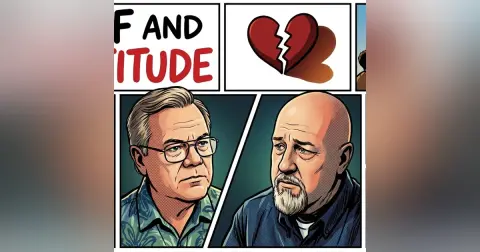
I would love to hear from you. Click the link now Mark Stackpole on grieving his daughter Corinne, gratitude, and showing up for fathers in pain This conversation is a deeply personal reflection on fatherhood, grief, and the long aftermath of losing a child. James Moffitt speaks with Mark Stackpole, who shares the story of his daughter Corinne, how his family has changed, and why gratitude, presence, and kindness have become central to his life.We discuss what it means to keep going after dev...


I would love to hear from you. Click the link now
Mark Stackpole on grieving his daughter Corinne, gratitude, and showing up for fathers in pain
This conversation is a deeply personal reflection on fatherhood, grief, and the long aftermath of losing a child. James Moffitt speaks with Mark Stackpole, who shares the story of his daughter Corinne, how his family has changed, and why gratitude, presence, and kindness have become central to his life.We discuss what it means to keep going after devastating loss, how spouses can support each other through shared grief, and why fathers in crisis need simple, immediate support rather than advice or fixes.
Key topics
- In this episode, Mark Stackpole introduces himself as a father of three and an educator who has spent his career helping students succeed.
- Mark describes the reality of living in a family transformed by loss, explaining that grief and gratitude now coexist in daily life.
- He shares the story of Corinne, the daughter he describes as loud, kind, affectionate, and deeply present with the people she loved.
- Mark walks through Corinne’s illness, from early symptoms that seemed routine to her diagnosis of acute myeloid leukemia on April 23, 2025.
- He explains how a stem cell transplant initially worked, then the leukemia returned because of mutations that made treatment difficult.
- Mark recounts the final stage of Corinne’s illness, when a lung infection became too much for her weakened immune system, and how she passed after nearly 11 months of treatment.
- He reflects on what surprised him most in grief: not anger, but a sudden turn toward thankfulness for the 22 years they had with Corinne.
- James and Mark compare the experience of being a father under grief pressure, including the expectation that men should stay strong and emotionally contained.
- They talk about how spouses can support each other by not trying to fix everything, but by listening, holding hands, and simply being present.
- Mark emphasizes that support for grieving families is often as simple as showing up, bringing food, babysitting, sitting quietly, or making room for a couple to reconnect.
- The episode closes with Mark encouraging fathers in crisis to keep breathing, steady themselves, and focus on whatever small actions are still within their control.
Timestamps
00:00 - A father’s story of grief, gratitude, and faith
00:57 - Mark Stackpole introduces his family and work in education
01:43 - Why grief and gratitude now live together
03:25 - Fatherhood, infertility, and raising three close siblings
06:18 - Corinne’s personality and the kind of presence she carried
10:14 - Early symptoms, diagnosis, and the first chemotherapy rush
11:15 - Stem cell transplant, remission, and the setback that followed
12:45 - The infection that became too much for Corinne’s body
14:09 - The gift of a long goodbye
16:24 - Why Mark expected anger and found gratitude instead
18:49 - Choosing gratitude over resentment after 22 years together
20:26 - Grief, triggers, and the reality that healing is not linear
22:36 - The pressure on fathers to be the strong one
24:31 - Therapy, lack of support, and lessons from a previous loss
29:50 - Why fathers need self care and emotional honesty
33:41 - Grief does not expire on someone else’s timeline
35:13 - The guilt fathers can feel when they cannot protect their child
38:50 - Why people say hurtful things when they mean well
42:14 - How grief changed the marriage dynamic
46:30 - What spouses need most: presence, not fixing
49:36 - The simple ways friends and family can truly help
50:50 - Raising sons to show up for other people
52:27 - Kindness as strength, not weakness
55:28 - Corinne still “bossing” her dad around
57:59 - What to tell a father whose child has just been diagnosed
60:09 - Mark closes with appreciation for the chance to share Corinne’s legacy
Notable quotes
"Grief and gratitude go together."
"We choose gratitude."
"Keep breathing."
Facebook Page
https://www.facebook.com/profile.php?id=61583591441571
Podcast Support
https://www.fathersrefuge.com/support/
One Time donation
https://www.buzzsprout.com/2528600/support
Monthly Support
Want to be a guest?
https://podmatch.com/hostdetailpreview/fathersrefuge
Mobile Follow Page
I couldn't look myself in the eye without saying, look, you are this is awful, but you are lucky. And it brought up a lot of sort of sympathy for for those folks. And like, who am I? Who am I to complain about 22 wonderful years? How many people don't get the the chance to say that? And and so that's really uh from an emotional tack, that really set me on a new, on a new voyage, if you will, a voyage of gratitude instead of anger or resentment or or any of those things. And it's something I try to carry today, being grounded, being grateful and being mindful of of every sort of moment. Hey, that breeze just went by. I enjoyed that. The sand between my toes. Let me focus on this for a second. My wife likes to look for yellow butterflies because those are meaningful to her. So Corinne, in some ways, is still all around us, and I'm grateful. I'm grateful for that. I'm grateful for those 22 years.
SPEAKER_03Amen.
SPEAKER_00After losing his daughter Jessica to cancer, James Moppett discovered how few places existed for grieving fathers, and how many men were carrying in their pain in silence. The Father's Refuge podcast was created to give those fathers a place to be seen, heard, and reminded that they don't have to walk through grief alone. Through honest conversations, personal stories, and faith-rooted encouragement, James explores the realities of loss, trauma, emotional healing, and rebuilding life after the unimaginable. Grief may change a father forever, but it doesn't have to destroy his faith or take away his hope. This is the Father's Refuge Podcast, a place for grieving fathers to find understanding, healing, and refuge.
SPEAKER_03Hello and welcome to the Father's Refuge Podcast. My name is James Moffat, and I'll be your host. Today's conversation is tender, honest, and deeply human. We're joined by a father who has walked through unimaginable loss and yet continues to seek joy, gratitude, and faith in the middle of it. Mark Stackpole is here to share his journey, his daughter Corrine's story, and the lessons grief has taught him. This is a conversation for every father who has ever carried a heavy burden. Mark, thank you for being here. Thank you very much for having me. Yeah. Your willingness to sit with us in this space means more than you know. And uh I would like to say I'm sorry for your loss, and I'm sorry you're part of this um unfortunate club.
SPEAKER_02Club that no one belongs to, but there are a lot of us out there for sure. Hey, do me a favor and introduce yourself to the listening audience. Sure. Um my name is Mark Stackpole. I am uh the father of three, including the aforementioned Corinne who passed away. Uh I have two sons. Uh I've worked in education for my whole career. Uh, and really now I'm focused on helping students be successful. So it feels like a very organic part of my development as a human and a professional to try to help people be successful, um, which is why having the opportunity to speak about Corinne in in an environment like this is so meaningful to me.
SPEAKER_03Amen. I'm glad you're here. So you said grief has transformed your life, but you refuse to let it define you. How do you live in that tension day to day?
SPEAKER_02Well, um, some days are are it it is a constant tension, right? I think grief and gratitude go together. Um, but in terms of grief, I mean, our family has literally been transformed. There were five of us, and now there are four. Um, so there's actually a literal transformation. But that doesn't mean, and there's a sadness that comes with that. But the only way to honor our our absent sister and daughter is to continue to live um, to live life, to, to not to spend time in anger, to spend time in despair. While there are moments, of course, would be disrespectful to her memory. It would be everything that she was against. She would not like to see her family suffering or struggling. And so we, yes, we have been literally transformed. Our whole family's been transformed, our relationships have been transformed. But we don't have to be defined by this loss because we can incorporate that into what we do on a daily basis and how we feel on a daily basis. And so influenced, yes. Defined, no. We we're committed to being defined on our own terms and terms that we know that Corinne would have loved to be a part of.
SPEAKER_03Hey, tell us a little bit about your your family and and uh what it's like to be a father and how Corinne's um loss has affected that.
SPEAKER_02Well, uh being a father was the greatest gi still is the uh the greatest gift uh ever. My wife and I uh battled infertility for years. Uh we weren't even sure we were going to be able to be parents. In fact, we had pretty much resigned ourselves to the fact that we would not um be parents. And then with a little uh medical intervention, we were we were able to have Corinne. Um and then we didn't figure the doctors told us, well, you'll always need medical intervention, so we didn't pay much attention, and that's how we got Lucas. Um, and then we're like, well, if we can if we can have one on our own, let's try it. And that's how we got Christopher. Um, so Lucas is 21, Christopher is 19, both of them are uh in college. Um and fatherhood of boys is a is a joy, but as if you have daughters and sons, you know it's different with a daughter. A father and daughter relationship is is different. Um not more special, not less special, just just different. Um, and so we're blessed enough that those three were close enough in age to really be peers um and really be friends. Uh they never knew life without each other until about six months ago, obviously. Um, and Corinne was really a confidant for them. Uh stuff that they needed some guidance on, but didn't really want mom and dad interfering. The boys each would go to her. And she would, no matter what they needed, uh a kick in the butt or uh a hug and a kiss on the forehead, she would be there for them. If they were screwing up, she would let them know. Um, if someone was treating them poorly, she would demand that they stand up for their, you know, their their rights or or whatever the case might be. Um so those three were very, they were very close, which made being apparent to them just a mate. We were blessed and grateful. We we never had any serious issues or problems or or there were some growing pains, obviously. Um, but they were just really I hate to sound like a cliche or a Hallmark card, but they were really just wonderful. Um and it was wonderful to it was wonderful to raise them. And uh, of course, you know, my wife has a a huge role um in that as well. So um we're we're we're pretty happy.
SPEAKER_03And so you your situation, uh your profile kind of lands right in the middle of that. So that's good. So tell us about your daughter, Corinne. What did what do you want people to understand about the who she was and the light she brought into your family?
SPEAKER_02Well, again, I'm I'm biased as a father. I'm gonna say she was special. Um I would say, you know, I she always she told me, she's all don't don't don't do two things. She's all don't call me brave, because what else was I supposed to do other than fight? Um so she didn't like being called brave or courageous or anything like that. She also said, never introduce me uh as someone who lit up a room. She said, because that reminded her too much of Dateline. And, you know, that was always the description before things went bad. Oh, she had a smile that lit up a room. So so I'm mentioning that uh by mentioning to you what she told me not to, not to not to say. Um but the fact of the matter, she was a light. We used to, we used to call her sort of love wrapped in skin. Um she she took up she took up space, and I mean that in a the most positive of ways, because she was wherever she was, she was there. Um she had, she laughed loud, uh, she talked loud, she talked a lot, um, she gave big hugs. Uh she just was not she just was not shy. So when she was in the room, you knew she was in the room because you could hear her no matter how far away you were. Um and she just had that, she really cared about people. She was very kind. Uh and I think that's what if anything the world needs more right now, it's kindness. Um, like she would display. And she was very empathetic. And so if you were crying about something, she would sit next to you and she would cry with you. And then you're both done crying and you'd give each other a hug, or she'd laugh at a joke, or she'd, you know, so she was just one of those neat people. Um, and I could list the adjectives, right? Smart and all this other stuff. But it but at the heart was how big her heart was, and that, like I said, that space, she was a presence. Um, and that's also what I think I missed the most, is just she was so here. Um and and now she's you know, unfortunately she's not.
SPEAKER_03Some people when they when they walk into the room, they they have a a certain way that they carry themselves and they are a uh a presence or a force that is noticed, you know. Not everybody has that. Um so do you feel like talking about the what happened with her? The illness or whatever?
SPEAKER_02Yeah. Um, well, she had been not feeling great for a little while. She was diagnosed on April 23rd, 2025. She had not been feeling well for a little while before that, but she was a a busy college student. She had been traveling. There was every reason for her to be kind of worn out. And when she'd go to the doctor, um, they'd tell her, well, you know, just relax or get some rest. Maybe it's the flu, maybe it's this. Um, and then she started noticing bruises uh that she couldn't explain.
SPEAKER_01Right.
SPEAKER_02And that is AML, acute myeloid leukemia, leukemia. A lot of those early symptoms sort of look like something else, something not as serious. So a lot of times people don't pay attention. Um but it was the bruises, and that set off a sensor in my wife's mind. And she said, do me a favor and go back to the campus health clinic. Go back one more time. Just to make sure it's nothing. Um she went to the campus clinic. Uh, they sent her to the hospital, um, and they diagnosed her that morning with um with leukemia. Said, we're sorry, it's leukemia, and she was undergoing chemotherapy later that day. Um the doctor said that if if she had come in two weeks later, there wouldn't have been anything they could do for her. Um the disease would just have to run its run its course. Um, so in the process, she underwent chemotherapy in preparation for a stem cell transplant, which is often the the only way to um cure quote unquote leukemia and other blood cancers. That uh stem cell uh transplant was successful uh all the way up until the very end, right at the time where the doctors were about to say, hey, it's good, it's gone, um, it showed back up. Um and it turns out that her leukemia had a specific mutation that made it difficult to treat. And then in addition to that mutation, there was another protein or another mutation that protected the first mutation. So, really, she had a couple different layers, if you will. The leukemia was protected, ironically, by these mutations. Um, and so it came back. And so uh she underwent chemo. We changed hospitals. Uh, she underwent chemotherapy again. She was leukemia free. Um, and then literally she caught uh a lung infection, and that lung infection, uh, breathing in something we all breathe in every day. Um, but she had zero immune system, and that lung infection came in and just just sort of exploded, and it was too much. It was too much for her. So um, and that was that that uh she she passed away. It'll be six months tomorrow. Um Wow. And she she made it, she fought uh bravely, right? Which she doesn't want me to say. Sure. Um it was almost exactly 11 months from the day of her diagnosis to the day she passed.
SPEAKER_03I'm so sorry to hear that.
SPEAKER_04That's a thank you. That's a that's a tough loss. Very much.
SPEAKER_02But I will say um that we did have talking about gratitude in this process, you know, looking back, obviously for 11 months, we were trying everything we could. Doctors, everybody, obviously, doctors all over the world. We had doctors from Stanford Hospital calling colleagues all over the place saying, why is this lung infection doing this to her? It's you know, and there were no answers. Uh so for 11 months, everybody was fighting as hard as as we could, including her, obviously, mostly. Um, but really in in looking back with some in retrospect now, really what we got in in addition to the fighting for her life was we got the opportunity for a long goodbye. Uh, she was not taken from us uh violently. It was not a car accident, it was not uh something like that. She was not torn from our lives where we went to bed one night and woke up to sirens or or any of these other horrible things that that families go through. Um and so our goodbye had ice cream and our goodbye had movies, and our goodbye had steak dinners. Um, and so there are really some along those 11 months, as painful as they were, there were some really special moments uh that a lot of families um are not, and I I'm I know you're familiar with this, that a lot of families don't have that opportunity. And so again, in grief, um we choose gratitude.
SPEAKER_04Amen. Well during that 11 months you were able to develop uh some lifelong memories that you can cherish now.
SPEAKER_03Um we had we had the um we had 14 months with Jessica and I discovered that when when Jessica passed away, August 5th, 2001, I discovered that there was not a lot of support for parents. And um well, especially dads. And that's that's kind of where father's refuge was kind of born in my heart and mind that I wanted to have fathers uh give fathers a safe space to uh to talk about the emotions and all of that. So since losing Corinne, what has surprised you most about your own grief emotionally, spiritually, or physically?
SPEAKER_02I think what surprised me the most, it doesn't surprise me anymore, but it surprised me the most was that I wasn't angry. Um I expected I expected anger. I expect, you know, a father's righteous indignation. Um why me, why us, why her, uh, you know, uh yelling at the sky and you know, being angry at the universe. Um, because that had kind of been my pattern as a human being. Uh, you know, very emotional, very raw, very quick to get frustrated or anger. Um, and so I'm like, well, this is the biggest worst thing that's ever happened to me. Why am I not angry? Um and that was that started a whole process for me. Uh, because I realized that it it's just being angry isn't gonna, it's not gonna solve anything. There's nothing to fix here. Um, there's nothing to be mad at here. Um, there's no the doc nobody screwed up. There wasn't an accident, it wasn't a willful act of violence. There's nothing to be mad at here. And so instantly, and again, completely unexpected. I have no explanation for it. I don't know how or why it happened. But instantly my perspective turned to one of being thankful for what we had had. And I think some of that was from our time in the hospital, where uh we saw a lot of sick kids. Um, we saw a lot of children who probably weren't going to get out of the hospital, uh, and toddlers, and we saw uh cancer, cancer rooms, cancer treatment rooms, hospital rooms that didn't have beds, they had cribs. Um we made passing, had a passing relationship with a father who had two sons in the hospital, each with a different disorder. They had never, they had never left. The boys were born in the hospital three years prior, and that's where they had lived the the whole time. And I would think to myself, how as as awful as this is, as awful as losing current is, if I were to talk to any one of these parents of a toddler and said, Oh, geez, I only had 22 years with mine, what those parents wouldn't have said, what they wouldn't have given, what they wouldn't have prayed for to have 22 years. Right. Um and so I I couldn't look them in the eye. I couldn't look myself in the eye without saying, look, you are this is awful, but you are lucky. Um, and it brought up a lot of sort of sympathy for for those folks. And like, who am I? Who am I to complain about 22 wonderful years? Um, how many people don't get the the chance to say that? And and so that's really from an emotional tack, that really set me on a new, on a new voyage, if you will, a voyage of gratitude instead of anger or resentment or or any of those things. And it's something I try to carry um today, being proud, being grateful, and being mindful of every sort of moment. Hey, that breeze into my body. I enjoyed that. Stand between my toes. Let me focus on this for a second. Um my wife likes to look for yellow butterflies because those are are meaningful uh to her. Um so Corinne, in some ways, is still all around us. Um, and I'm grateful. I'm grateful for that. I'm grateful for those 22 years.
SPEAKER_03Amen. Well, it's good there are like six stages of grief. Some people go through all of them, like the full kaleidoscope, like I did. I went through all of them.
SPEAKER_04And uh anyway.
SPEAKER_03Um I'm amazed at six months that you're able to even sit there and talk dry eyed about this. Uh I because I couldn't have done it. I could not have done it.
SPEAKER_02It it depends on when it depends on when you get me. Uh I got you. No, I mean there are, and and like I said, sadly, uh we're we're in the same club. I mean, it's people ask me how I'm doing, and I tell them it depends on the minute.
SPEAKER_04Right.
SPEAKER_02Um I'm I'm fine, and then I'll be in the middle of something else, and I'll just just cry just because I miss her. Or I'll see some, I'll see something that reminds me of her, or something like that. And then then I'm then I'm a basket case. I'm just lost. And then slowly sort of find my way back. And I really do think that that that long goodbye was incredibly helpful. Um in the sense, like I said, if she had been torn. Away, um, then I think I would be more inconsolable if that makes I don't know if there's such a thing as more more inconsolable. Yeah. Um absolutely. But I but again, grateful for that. Grateful for that time. You know, that we got to see the last movie she saw in the theaters was uh was Superman. And we both left the re- the most recent Superman movie. We both left that movie feeling a little better um about about humanity and about maybe our chances uh against this thing. Um the last movie we watched together on TV was The Blues Brothers, which is a an all-time favorite of mine that she was not probably particularly interested in, um, but she watched with me. You know, and and to have those, and and you mentioned this earlier, to have these moments under the umbrella. Um, you know, I call it the the black umbrella. Underneath this umbrella to have these moments, these diamonds, these crystalline gifts. Um, that's where I go. I can go there to those places when I'm feeling my my saddest. And and I and I they bring me peace, they bring me calm. Um, they bring her back, they bring her back to me.
SPEAKER_03So Mark, many fathers feel pressure to be the strong one. Have you felt that weight? And how has it shaped the way you show up for your family?
SPEAKER_02I think I'm the I think I'm the only one who put that pressure on me. Um because again, I you know, like you mentioned, the dad, their expectations, you know, the leader of the family, the the man, the this, the that, um, the other thing. But I nobody looked at me. I I have cried more openly in front of more strangers in the last six months than I ever than I ever have, than I ever would have thought. Um, that I ever would have been, I'm I'm hardly a macho type A. I'm hardly that guy. Um, but I'm like, well, at least I'm not crying in front of everybody. And then I opened my mouth and I'd start to cry. Um, and that happened in front of doctors, it happened in front of nurses, it happened in front of family, it happened in front of everybody. Um, and so even I think even if I had felt that pressure, I'm not sure I would have been able to respond to it. Um because again, it it was so um, I had already, I think, in in my head, already maybe I want to be careful how I say this, maybe sacrificed a little of the stereotypical masculinity um father type by just crying all the time. Uh, I'm not sure people would have believed me if I had come in and said, no, I'm fine, everything's fine, we've got this under control. It just wasn't, it just wasn't our experience. Um and so my wife certainly never put that pressure on me, family never put that pressure on me. Um, I could see where there's a lack of resources, as you mentioned before. There's more now than there were. Um, but as you mentioned, now, you know, and that's why I'm so honored to be here as a part of the legacy that your daughter established to try to help so many people and so many fathers. So I thank you again for having me here. Um that it just uh it I you know, I I never felt the need to go to a support group or or anything like that. I am in therapy. Um but I never felt that I think stereotypical or traditional be the dad, be a man. Um I I never felt that. Which I for which I'm grateful because that would have just added an extra layer to you know feeling bad about myself feeling bad about myself in addition to grieving the loss of my daughter and mourning with my family.
SPEAKER_03Well, thinking back uh on it, um my wife and I, or probably my whole family, were we were just kind of devastated and there were no resources that I know of. Uh my my pastor was uh uh director of pastoral care at a local hospital. He never even mentioned to us about getting therapy or pastoral care. He never he never offered to sit down and talk with me or us. We didn't get help for we didn't get help for our other kids. We had we had four children. And um in retrospect, I wished I'd have done that because I can see I can hindsight's always 2020. I can look back and I can I can see their lives and I can see where the damage was caused, and I wished we had known to get them some counseling or a therapist or whatever. Uh so ultimately we probably didn't handle it correctly. But there is no book, there's no manual that says, okay, when your child's in the hospital for however long or experiencing this, this is what you need to go do. You know, we didn't have that. Right. And being a child of the 70s, had a my adoptive father, my sister and I were both adopted in Germany for in a out of an orphanage. Well, you know, we're very we're very thankful that they adopted us and brought us to America, and we we've certainly experienced uh life to the fullest, and we have experienced uh uh a lot of things that uh this great country uh offers to people that we would have never we would have never experienced it, we wouldn't gotten the medical health care that we got, all the education, everything, right? Um but my dad was a child uh he was a child of the I guess 40s and 50s, right? And uh his his um dad, I don't know how old his dad was or how old he was when his dad passed away from pneumonia. And his mother raised six or seven kids by herself. Wow, wow. And so he was a he was a tough guy. He was a drill instructor for 26 years in the army, and men don't cry, and you pull yourself up by the bootstraps, uh, the typical John Wayne Clint Eastwood mentality. Get off my lawn, you know, right, right. And and so there was a I think there one of the biggest things was there was a lack of emotional intelligence. Because we're human. I don't care how how big of a tough guy you are, uh things are gonna affect you and they're gonna make you angry, they're gonna make you sad, they're gonna make you cry, you know, and it's okay to cry. But there's a there was a stereotype back then where men were told it's not manly to cry. You know, you just don't do that. Men don't cry. Suck it up. Right. Go have a beer, go do whatever men are supposed to do. Go ride your horse. For sure.
unknownYeah.
SPEAKER_02But anyway, yeah, they were saying go hang out with other men who have that same approach. Yeah, absolutely.
SPEAKER_03Their peer group. Well, as I sit here talking to you, uh, I can I can see uh signs to where you have uh a good solid grasp on emotional maturity, you know, and emotional uh what did I what's the other word I was I used? I just filled out.
SPEAKER_02Emotional intelligence.
SPEAKER_03Yes, emotional intelligence. And and men in general are not necessarily uh in touch with their feelings that much. Right? We like to we like to shove pain down, we like to we like to compress it, we like to compartmentalize everything you're going through. First responders kind of uh fall prey to this as well, because they see a lot of tragedy, you know, a lot of horrible things, and in the moment they have to they have to sort of ignore that. They have to push it down and they have to compress it and they're like, okay, well I can't feel this emotion right now, I'll deal with it later. And I think I think a lot of men are susceptible to that. And I think that I think uh to the listening audience, I would say if you're a guy, you know, it's okay to cry. It's okay, it's okay to go get self-care. Yes. We do on my parenting podcast, I tell the moms that it's not selfish to get care. It's not it's not selfish at all. You you when your cup is empty, you can't help anybody else. Like you can't and and to dads, if you're the leader of the family, if you're the main uh provider, if you bring home the paycheck, uh if you're the quote unquote strong one. There's there's no there's there's nothing embarrassing to be the pillar of your family, right? Because our our families in America desperately need fathers who are willing to be the men and the fathers that they're supposed to be, to be present in the family, to be leaders in the family, to be the emotional support of the family, you know, and uh having a good, solid marriage relationship uh with our spouses. Uh, we're modeling uh quality things that our children desperately need to see. And there's there's so many statistics about families where young men wind up in gangs and wind up in prison, wind up committing crimes, and it because they don't have a strong father figure in their their home, you know, they turn to other sources to to get that uh what they're looking for, for their sense of identity, for their confidence, for love, and and all of those sort of things. So for fathers that are standing tall in their families and being the type of person that they need to be, that's a that's a huge responsibility, number one, but it's also very rewarding in the end, you know. And uh so anyway, I'm I'm glad that I'm glad to hear that your experience, while painful and while very, you know, uh devastating, uh you have you you have not allowed that situation to destroy you. And uh I know you I know you have moments like there are triggers, like for the first six months to maybe five years, you know, I'd hear I'd be driving down the street and I'd see a restaurant that we all like to go to, or I'd hear a song on the radio, or we would go to church, and you know, you you remember the good things and the bad things. Right. And uh like I today I hate hospitals. I don't like going into hospitals, just don't like it. I just uh they suck. Yeah they're they're unfortunately they're a very important part of the human experience. And if you're a baby boomer like me, the older you get, the closer you get to the finish line, the more you need it. Right?
SPEAKER_02That's right. Yeah, and there's and there's sorry, go ahead. Sorry.
SPEAKER_03No, no, no. I was I was gonna I've heard that uh we don't make it out of this alive.
SPEAKER_02You mentioned hospitals, you know, and it's it's everything, it's the right, it's the sights, it's the sounds, it's the smell, um, all of those things. And even, you know, I find myself if I drive the same route, if I happen to be driving on the freeway and it it mimics the route that we used to take to the hospital, and I see the billboards and I see the exit and I get nauseous, you know, it trigger as a physical, you know, and those those triggers are, like you said, everything from something directly like, hey, my family and I love to eat at this restaurant, to something as random as a a business billboard on the side of the road that makes you sick to your stomach now. Um, those connections and I don't think those connections uh will will ever go away. I mean the the the worst memories are those in the you know in the hospital, you know, fighting the the sickness. Um but no, I I completely understand. I completely understand what you're saying, completely relate to it.
SPEAKER_03Yeah, and and people will come up to you like in another six months or maybe two or three years. You may be having a moment, right? And a trigger will happen. And and if they're so bold, some people will tell you, you just need to get over it. You know, it's been it's been two years, it's been three years, it's been five years, whatever the time period is, they'll look at you and tell you you need to get over it, and you're like, great grief is not something you get over. Loss and grief is part of the human experience. We're people that lose their careers. Like, like I read stories all the time where a man will turn 65 years old or 66 years old or whatever, and he's been with the company for 20, 30 years, and all of a sudden they let him go. You're like, we no longer pat you on the head, give you a watch. They don't even give watches anymore. They used to give you a gold watch, right? Gold watch, yeah. My dad got a gold watch. You know, gold watch, pension, retirement, pat you on the head and send you out to go golfing every day. Right, right. Well, that's not that's not reality anymore.
SPEAKER_02No, not anymore. But it speaks again to what we were talking about before in manhood and masculinity. You know, I mean, if you are supposed to be the provider and then that gets taken away from you like that, and you're supposed to be a protector. I'm supposed to protect my children. Um and was there anything I could have done to protect her? No. And I did everything I could, fought like crazy once we got the diagnosis. But again, that's you do feel a little bit like, hey, as a dad, I was supposed to protect her and I didn't. Um and I find I I and I went through that and I again I focused, went back to the gratitude. There really wasn't anything I could have done. And I did everything. We all did everything we could we could do, but there is a moment where you go, geez, dad, you know, you know, you were maybe supposed to do something here, and that that little that little guilt, that little fatherhood slash manhood kind of guilt did show it made a cameo appearance. I'll put it, I'll put it there. Sure.
SPEAKER_03We all we all have those voices in our head that that are always talking down to us and telling us that we're not worth we're not worthy, you know, we didn't do the We had people during the 14 months of Jessica's treatment at MUSC Children's Hospital. We had we had I was getting emails, phone calls, voicemails, people in person telling me about all these things that we could try. Why why haven't you tried this? Like I had one guy who was like um uh what was it? Shark bone marrow, I think it was. Oh wow. Yeah, the that's been known to heal people from cancer. Why haven't you tried that? And I'm like, I'm like, you don't get this. I'm doing everything humanly possible to get her well. You know, I'm not a doctor, I'm not a scientist, I'm a father, right? And I'm I'm depending on the medical industry to you know, uh all the medical knowledge and all these scientists and all the, you know, I'm I'm putting her in a position to where she can be the recipient of all of this stuff. And so, you know, when people would tell me crap like that, I'd be like, you know, you just need to shut up and leave me alone because that's just ridiculous. It is. And uh I would I never would just out and out tell them to shut up and leave me alone. But I'd look, I'd just go, okay, well, we'll take that into consider. You know, we'll consider that. Right. And just kind of move on and go, oh, great, here we go again.
SPEAKER_02You know Yeah, yeah. No, we and we have family members who either would either try to explain it or try to fix it and say, well, you know, the reason they got that is because they're spraying, you know, mosquito spray in your neighborhood, or uh there's too there's too much dust, uh wind's blowing because you live in the valley. So we got a lot of people who tried to sort of explain it. And then the other people is like, well, you know, you should three walnuts a day will improve your, you know, and this other sort of sort of stuff. So they're either trying to explain it away or fix it in equally nonsensical measure. Um and it really it was it's hurtful and it's frustrating.
SPEAKER_03I think I think ultimately uh I want to believe that most people are trying to be helpful. Absolutely. You know, and I and I took that into consideration as I was standing there listening to them, going, Wow, or if you were in my shoes, you probably wouldn't want to hear this. But anyway. Yeah, right.
SPEAKER_02Well, so let's talk about Sorry, just if I can, if I can put a pin on that, uh, you know, that that you're talking about. Because people are so well-meaning and they don't know what to say either, right? It's awkward for them. But we spent a lot of time, and and maybe you had this experience as well. We spent a lot of time comforting other people. Um, a lot of people would come up to us and cry, and I would hug them and say, you know, it's gonna be okay. We're gonna be all right, and this is terrible, and I know, you know. And so it was, and that's that is much appreciated that people were grieving, but it's also exhausting while you're grieving sort of yourself. And then the flip side that people would come and say, you know, she, you know, why do bad things happen to good people and she didn't deserve it? And like, who, who does, who does deserve it? Um, you know, because to imply that some people don't deserve it implies that other people somehow do. Um, and the fact of the matter is this, this, this, this happens, you know, life life happens and tragic things, um, tragic things happen. And the thing, you know, I asked her after a particularly rough appointment. We had a long car ride from the hospital back to home. And I asked her, I'm like, you know, just as a thought experiment, I'm like, if you could give this disease to any random person, just pick anybody, you know, anybody on the planet, you don't have to know them, just say, hey, I wish that this person had this disease, whoever they were, instead of me. I'm like, would you cure yourself by giving it to someone else? And she said, absolutely not. She said, because in a situation like that, it implies that someone consciously decided to give a person that disease. And in that example, I would be the person who consciously decided to give that person this disease. And she said, That I couldn't I couldn't do that. So I thought that was an interesting, really interesting take on her part.
SPEAKER_03Absolutely. So let's talk about marriage and shared grief for a moment. You and your wife are walking this road together. How does grief show up differently for each of you? And how are you learning to support one another?
SPEAKER_02You know, we're we're still, I think we're still um stumbling along a little bit there. Uh as close as as we are, we've been together for more than 30 years. Um, we know each other pretty well. Um, but it's it it changed, it does change, it does change you, you know, and and during Corinne's treatment, we would spend months apart. Her initial treatment was about 500 miles away from where we live. And we wanted to make we wanted to make sure that she was never alone. And so my wife would go down for a month and then we'd switch, and I'd go down for a month. And we're again grateful. We had employers who basically told us do whatever you need to do. Um, and not a lot of families have that gift, have that opportunity. And so Corinne never um, she never went to an appointment alone, she never went to a procedure alone. Um, but the flip side of that is there was a span of almost a year where my wife and I spent maybe five days together. Um and that you you get into new routines. You get into, you know, wake up early, go get blood work, go get breakfast, go back for, you know, and and so I came back because we still have one son at home. Um and so we'd get routines, and then when we'd get together, and it would be it'd be almost like, okay, I I feel like I know you, but I don't know you as well as I did. Or things have have have kind of changed. And even when, you know, sleeping in the same bed, you know, I'm the you know, I'm the big spoon, I'm a big guy. Um, but I'd be like, wait, no, usually your arm is here and my arm is here. And then usually I, and even that, it was uh it was a great metaphor, not feeling like we we sort of fit together physically was a great metaphor for we we didn't feel quite like we fit together emotionally either. We're doing some of that grieving by definition. You do some of that grieving by yourself. It's a very personal process. Um, and so sometimes we would sit and cry together and get strength from that. Sometimes the other person would cry and we'd uh you'd step up and and be the strong one, you know, in that in that case. And so I think, and and my wife actually, you know, we're still having, we just had this this conversation this morning, where, you know, she's like, everything's fine. I'm just kind of struggling a little bit. I'm just not. I'm just I'm just sad. I'm just sad. And of course, then the male instinct, right? What can I do? How can I help? Can I fix it? When that's not, she just wants, she just needs to be sad. And I need to be be there for her and respect that. But also know that we're not trying to fix each other. We're trying to be there for each other, but we're not we're not in the business of fixing each other. That doesn't work.
SPEAKER_03Well, men are typically hardwired to solve problems and fix things. And sometimes our wives have to slap us up the head, uh upside the head and go. You know, my wife's told me several times, yeah, James, I don't want you to I'm not looking for you to fix the problem. I just want you to listen. Just listen to it. She'll come home and she'll tell me about she's a teacher, special ed teacher, and we've been married thirty 36 years. Okay, great. Uh she'll come home and tell me about something in during her day or whatever. And uh I do IT support for a living, so that's all I do all day long. It's just troubleshoot and fix a computer problem. Soft software, hardware, networking, the whole nine yards. And so I'm I'm constantly tuned into you know, identifying symptoms and cause and effect and and applying fixes, right? And that that bleeds over into my relationship some. Sure. And does. So yeah, yeah, it's like our wives need us to shut up and just be there and just listen and just provide a a shoulder to cry on. And there's there's plenty of other times that we can help and fix things, but that's this is not one of those moments.
SPEAKER_02No, it's not. And even, you know, sometimes it's not even it's not even um you're right, it's not talking. Sometimes it's just holding a hand. It's just sitting, we're not we're not saying anything, we're not talking. We know basic, we know we're maybe equally kind of sad or just need a hand to hold, and we're not gonna say a word. Uh, we're just gonna sit here and we're gonna hold hands and be together through, you know, whatever this is. And to know that that to know that there's always that shoulder, to know that there's always that hand, um, is is enough. It's critical to know that you have that kind of support from your partner and from your your family and friends and stuff like that.
SPEAKER_03Yeah, uh, I remember when Jessica was nearing the end and look, felt I felt like the church family kind of pulled away. And I think that, you know, when we were when we would go to church, she was in her wheelchair and every everybody would love on her, and I I think they knew that she was sick. Uh probably maybe not to the degree that we knew she was sick. You know, they didn't know all the gory details. And um I picked up the phone one day and I called my pastor and I said, I said, people understand that she's fixing to die, right? She's she's like it was like within two weeks of her passing away. And and uh he was like, James, what do you what do you want us to do? I said, Well, if if if people want to see her before she dies, they need to show up. They need to come over here and just sit with her and hold her hand and give her a hug. Whatever, you know, and and that was it people don't really don't know what to do. You know, people know you know, people don't know what to do, they don't know what to say. And and you said something really important. Family members and friends, uh, coworkers, whatever. Um, we're not looking for you to fix it. You know, this is outside of our control, it's certainly outside of your control. That's right, yeah. Right. And and so I we don't expect you to fix anything. Um but the but the answer or the solution to supporting somebody that's going through this, uh, i.e. the parents, is not staying away and being silent. Right. Silent silence is not golden, right? And so and so I just told the pastor, I said, i we need we need for people to just show up. Yes, you know, just come help come help Katie with the laundry, come help bring food, you know. Whatever. Let us go out on a date night one night, you know, or whatever. Just give us an hour alone to step away from that situation and kind of reconnect with one another as husband and wife, you know. And so and so, yeah, the it's it's um if you're listening to this podcast and you know people that are are dealing with uh terminal illness, uh cancer, whatever whatever it is, if you if you have friends and family that are walking through this sort of thing, um just love on them. Just just call them and say, hey, we we recognize and realize uh you're going through this, your family's going through this, and we don't have any answers, and we don't want to impose, but just call us and let us know what you need. If you need for us to just come over and sit on the couch with you and listen to you talk, or you need for us to come over and babysit, uh be present while you and your husband or wife go out to have dinner or go to a movie or reconnect with one another, uh, then do that. It's real simple. You don't there's there's you don't have to have a PhD in healthcare to to be a support to somebody that desperately needs it, right? And so I just want to put that out there.
SPEAKER_02No, and I and I and I could not agree more. Um that it's about showing up. Um because if you don't show up, nothing else happens. Nothing else happens if you don't show up. Um and that's so important. And it's it's so noticed. Um hey, this person I haven't heard from in a long time just reached out. You know, and instead of saying, well, geez, of course, now they reach out because some so-and-so had to be sick for them to reach out, I'm like, that's a little cynical. I'm just appreciative that they, that they, that they reached out. And I told, you know, and I tried to raise my boys that way too, in that, you know, a couple years ago, a uh a young man that my my son played baseball with, his father suddenly passed away. And I told Lucas, I'm like, we're Lucas, my son, I we're going, we're going to the memorial service. And he's all I don't want to go. I said, I don't care if you want to go. We're showing up because that's what you do. You you show up for your community, you show up for your friends, and you show up for and and I really try to instill that, and they seem to they seem to be doing okay with that message as well for people who are showing up for them, being appreciative, but also doing a little more to to show up for other people. Um and I that I take great pride in the fact that that message seems to have resonated with my boys. Absolutely.
SPEAKER_03I mean, we're we're not on an island, you know. No. We're we're all connected, we're all part of this huge community community called humanity. That's right. You know, and and it's like you said earlier in the in the episode, you said uh we all need more kindness. And we do need more kindness. We need more kindness in the world that we're living in because it's uh it's full of lot of other negative stuff that is not necessary.
SPEAKER_02That's right. That's right. And continually kindness, you know, we talked about emotion and crying and stuff, kindness wrongly associated with weakness. Um when in fact I think being kind is one of the strongest things you can you can be.
SPEAKER_03Well, just just in life in general, um, we should be kind to other people. Because guess what? Every everybody is struggling with something. We we have no idea what's going on under the surface with people. We don't know what financial struggles they have, we don't know what kind of family struggles they have, what kind of professional struggles they may have. We don't know if they're dealing with depression. There's a whole host of things that could be going on with other people, and we just owe it, we just owe it to uh be kind to one another, you know, because just being kind uh to somebody could be the light in their day that they desperately need.
SPEAKER_02That's right. That's right. And you and you never know what you say one way or the other. I mean, if you say something positive like you just said, that could be that could make a real difference in that person's day or that person's life. Um and unfortunately, the flip side is also true, you know, where you make an off-handed comment or make a joke, and you don't know what that person is going through, and maybe it hits it wrong. So I think we underestimate we underestimate the power of a of a simple moment. Um, are we you are we using the power of that simple moment to help this person, or are we unfortunately using it to help them feel worse about themselves? And that should be an easy choice. Uh it's not for a lot of people, unfortunately, but it should be an easy choice.
SPEAKER_03Well, our our words are powerful. Yes. And we don't think about that. Sometimes, you know, I I can't tell you how many times I've stuck my foot in my mouth and and said something stupid that I regretted. And people will forgive you for saying something stupid typically, but they'll never forget it. They'll always remember what you said. And so our words have the power to either tear people down or to lift them up and encourage them. And so I think it I think we owe it to society and our communities in general, just to be nice to people. If you, you know, if you can't be nice, just don't say anything. Just that's right. Just but just because a word or a thought goes through your lizard brain, it doesn't mean it's got to come flying out of your mouth. Just keep it to yourself. Yeah.
SPEAKER_02No, that's absolutely true. And we don't, you know, it and we don't know, you know, because I've had a lot of people, I spent some time in education, and and I've had a lot of people come up to me over the years and say, Do you remember when you said this? And I'd be like, Oh, you know, I don't. And so and sometimes it's been, well, that made a difference for me in a positive way, right? And I'm I'm grateful to hear that because you never know what's gonna stick, right? Like you just said. Sure. And then other times it would say, Well, you know, you made me feel you made it felt like you were making fun of me, or it felt like you're and then it's like, oh no, that's the right, that's the worst because that's the last thing I would want to do. And the fact that that was the takeaway from something I said and now don't even remember saying, um, is a ter is a terrible feeling. Right. Um, you know, and and so this is something to to sort of bring it back to Krin a little bit. This is something that I learned a lot from her, you know, because I would make a joke and she would tell me. She's all that's not nice. I mean, she had she had a great sense of humor. But if she leaned over, instead of laughing at my my joke or whatever it was, if she leaned over and said too much, then I would, then I would know. I'm like, okay. Because she would, she even, you know, my wife just kind of rolls her eyes and walks away, you know, with a um, but but it's but it's but it was Corinne. Corinne was a lot of times my anchor in that we had a lot of our personalities were very similar. And she would tell me, she's all that wasn't nice, or you don't need to say that. Or sometimes I'd be like, about to say something, and she'd point at me and she'd go, because she knew she sometimes, sometimes her psychic power would tell her that dad was about to say something that that not everybody would appreciate. But but I hear that now when before I before I say, even more before I say stuff, it's her. I can I can hear her because if she's the one telling me not to say it, then I know absolutely 100% that it's the wrong way to go. So she's still bot she's still bossing me around a little bit.
SPEAKER_03So hey, do you have any do you have a dad joke? Being a father and talking about that sort of thing. No. Do you have any dad? You have a good dad joke?
SPEAKER_02I I I don't I don't do jokes. Um I don't I I appreciate a good dad joke. I will I will say that. And that's that's how I know because I look, I'm like, that's really funny. And the my kid will go, my son will go, that's a dad joke. I'm like, really? Because I don't feel that doesn't feel very dad jokey to me. That feels like really funny to me. So I know I'm in that category. Um there you go. No problem. As soon as we get off the interview, you'll think, Oh, I got one. I'm like, oh, I got a great one. Yeah. Yeah, there you go. Now I'm already thinking, I can't, of course, my brain is totally empty right now.
SPEAKER_03So that's fine. So let's speak to the father in crisis here at the end. For the father listening who just received a devastating diagnosis for his child, what would you say to him from where you stand today?
SPEAKER_04Keep breathing.
SPEAKER_02Um because you know your brain's gonna need the oxygen. Um but you're gonna there's gonna be you're gonna s at some point that's gonna sound strange, at some point you're gonna want to stop breathing. Um or you're gonna you're gonna hold your breath and forget to breathe sometimes. Um and so I would I would encourage um I would encourage uh folks to to keep breathing. And I would encourage, now this is a little antithetical to what we were talking about, but uh what what are we gonna there is an element of what are we gonna do. There is an element of, okay, take a deep breath and let the, you know, let the shock wear off a little bit, and then focus on focus on what is it you can do, how you can be there. You don't have to have a full-fledged plan. Uh nobody has a full-fledged plan. Right. Um but you're gonna feel like you're gonna feel like you need to do something, you're gonna feel like you need to be busy, you're gonna feel those things. Take a deep breath, determine what's important, um, and come up with a way that you can feel productive and active, but also understand that you're under in immense emotional pain. Um but it starts with that deep breath. It starts with that deep breath and doing and doing what you can. Because there's a lot that's out of your control. In fact, most of it, I think, is probably out of our control. Um, so find what is under your control and make efforts to to have a positive impact in that way.
SPEAKER_03Mark, thank you for sharing Corinne with us today. Thank you for your honesty, your courage, and your willingness to sit in the hard places so other fathers don't have to sit there alone. Your story is a refuge for men who are hurting and we're grateful for you. If today's conversation touched you, share it with a father who needs strength, hope, or simply the reminder that he's not alone. This is Father's Refuge, where men find shelter, healing, and brotherhood. And to the men that are listening, I want to say thank you for the privilege of your time. Uh if this podcast episode resonates with you, please leave a review on Apple Podcasts, Spotify, or wherever it is you get your um your podcasts. Also, you can go to fathersrefuge.com. Uh at the top of the website, I have a um survey for fathers. And if you would take that survey, that would help me to understand uh how I can serve you better. Mark, thank you again for being here. I really uh I'm sorry that I'm sorry that you and I are in the same club. Uh and and I am very thankful that you have such a positive outlook and that you're so thankful for the the love and the joy and the uh meaning that Corinne brought to your family and to you personally.
SPEAKER_02I I appreciate the opportunity and I appreciate the part the opportunity to be a part of of your knowledge and your daughter's legacy. Thank you so much.


