The Father's Identity Crisis: Who am I When Life Falls Apart by James Moffitt
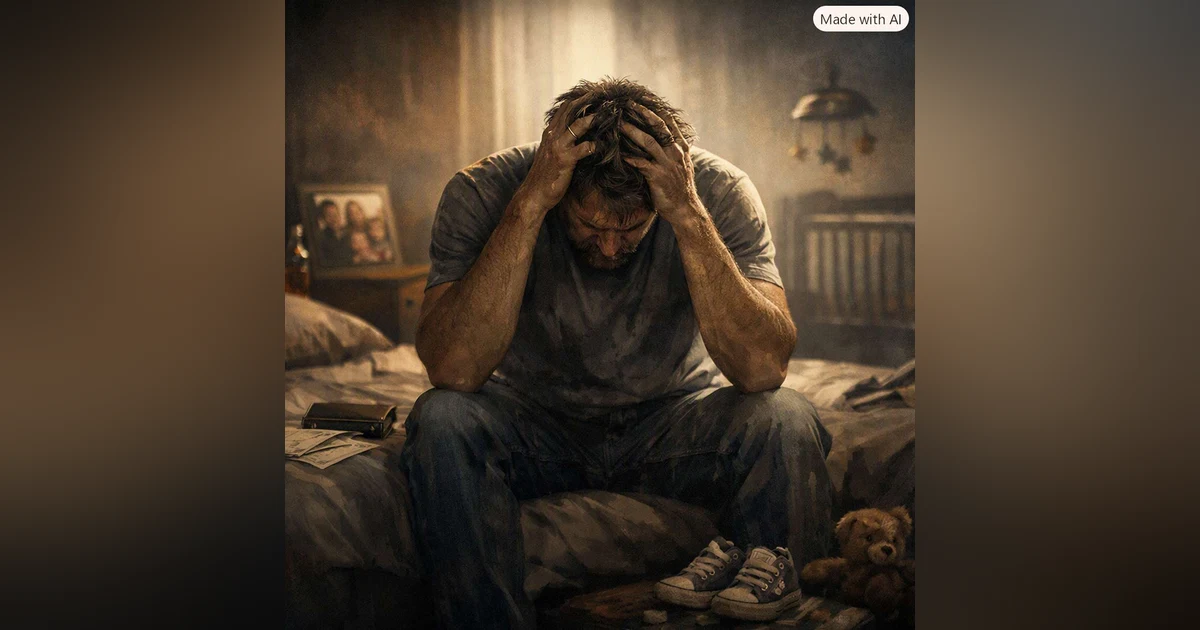
I would love to hear from you. Click the link now The Father's Identity Crisis: Who Am I When Life Falls Apart? James Moffitt explores what happens to a man’s identity when the roles he relies on, provider, protector, husband, father, worker, begin to shake. This episode is a biblical reflection on identity, showing how God forms men through trial, not just success, and why community, humility, and Christ-centered character matter more than performance. Key topics In this episode, James Moffi...


I would love to hear from you. Click the link now
The Father's Identity Crisis: Who Am I When Life Falls Apart?
James Moffitt explores what happens to a man’s identity when the roles he relies on, provider, protector, husband, father, worker, begin to shake. This episode is a biblical reflection on identity, showing how God forms men through trial, not just success, and why community, humility, and Christ-centered character matter more than performance.
Key topics
- In this episode, James Moffitt asks the central question: who am I when life falls apart?
- He explains how many men build identity around providing, protecting, and accomplishing, then feel lost when grief, marriage strain, work collapse, or failure disrupt those roles.
- He breaks down the false identities men often wear, including stability, achievement, education, and dependable leadership.
- He argues that identity is not earned through performance but given by God, rooted in Genesis 1:26 to 27 and the belief that men are made in God’s image.
- James shares that biblical identity is shaped through fire, using Abraham, Moses, David, and Paul as examples of men formed through hardship, waiting, exile, rejection, and suffering.
- He emphasizes that masculinity is expressed through virtue, such as courage, humility, integrity, sacrificial love, justice, mercy, and faithfulness.
- He outlines calling-based identity, including husband, father, provider, protector, and servant leader, framing each role as responsibility rather than superiority.
- He warns that forgetting God leads men to lose themselves, producing directionlessness, anger, and shame.
- He presents Jesus as the true model of manhood, showing what strength, love, humility, and leadership actually look like.
- He closes by stressing that men are shaped in community through brotherhood, mentorship, accountability, and spiritual friendship.
Timestamps
- 00:02 - The question at the heart of a father’s identity crisis
- 00:28 - Why men feel lost when life shakes their roles
- 01:26 - The false identities men often build
- 02:07 - Identity is not performance, strength, or a job
- 02:39 - Made in God’s image, not culture’s image
- 03:09 - How trials shape masculine identity
- 03:20 - Abraham, Moses, David, and Paul as examples of formation through fire
- 03:48 - Identity expressed through character and virtue
- 04:29 - Husband, father, provider, protector, servant leader
- 05:20 - How forgetting God causes identity loss
- 05:53 - Jesus as the model of true manhood
- 06:18 - Why men need brotherhood, accountability, and community
- 06:45 - A summary of biblical masculine identity
- 08:37 - Losing the old identity as the start of God’s work
- 09:01 - Final encouragement for men wrestling with identity
Notable quotes
Copy
"Your identity is the man God is shaping in the fire."
Copy
"A man doesn't build his identity, he receives it."
Copy
"A man alone is a man vulnerable. A man in community is a man growing."
Facebook Page
https://www.facebook.com/profile.php?id=61583591441571
Podcast Support
https://www.fathersrefuge.com/support/
One Time donation
https://www.buzzsprout.com/2528600/support
Monthly Support
Want to be a guest?
https://podmatch.com/hostdetailpreview/fathersrefuge
Mobile Follow Page
A father is often expected to be the strong one to hold his family together, to keep moving forward, even when part of his world has fallen apart. After losing his daughter Jessica to cancer, James Moffat discovered how few places existed for grieving fathers, and how many men were carrying their pain in silence. The Father's Refuge podcast was created to give those fathers a place to be seen, heard, and reminded that they don't have to walk through grief alone. Through honest conversations, personal stories, and faith-rooted encouragement, James explores the realities of loss, trauma, emotional healing, and rebuilding life after the unimaginable. Grief may change a father forever, but it doesn't have to destroy his faith or take away his hope. This is the Father's Refuge Podcast, a place for grieving fathers to find understanding, healing, and refuge.
SPEAKER_00The Father's Identity Crisis. Most men build their identity around what they provide, what they protect, and what they accomplish. But when those things shake, when grief hits, when marriage struggles, when work collapses, when life breaks in ways we didn't choose, we don't just lose stability, we lose the version of ourselves we thought we were supposed to be. Today we're going to talk honestly about identity, about the false identities we wear, about the pressure to become someone we're not, and about the deeper identity God is forming in us, not through success, but through surrender. If you've ever felt lost, unsure, or disconnected from the man you used to be, this episode is for you. Let's walk through it together. The false identities men wear. Men often define themselves by what they provide. Stability, being dependable, establishing personal habits and patterns, being a good husband and father figure, spiritual leadership in the home, security and protection for family, guidance for wife and family, what they protect, what they accomplish, such as work accomplishments, climbing the corporate ladder, education, experience. But when those things shake, we feel like we disappear. Let's talk about God's identity versus our identity. Your identity is not your job, not your performance, not your strength. Your identity is the man God is shaping in the fire, not the man you were before it. The Bible is brutally honest about men, but also incredibly hopeful. Identity is given by God, formed through trials, and expressed through character, not performance. Core identity, men are made in God's image. The Bible begins masculine identity in Genesis chapter one verse twenty six and twenty seven, where men are created in God's image, meaning dignity, purpose, and worth come from God, not culture, achievement, or strength. This identity is declared, not earned. A man doesn't build his identity, he receives it. Identity is shaped through fire, trials, testing, refining. Throughout Scripture, God forms men through hardship. Abraham was shaped through leaving home and waiting on God's promise. Moses was shaped through exile, insecurity, and leadership under pressure. David was shaped through rejection, danger, and repentance, becoming a man after God's own heart. Paul was shaped through radical transformation and suffering for Christ. Biblically, fire is not punishment, it is formation. Let's talk about identity that's expressed through virtue. Scripture consistently ties masculine identity to character, integrity, courage, humility, sacrificial love, Ephesians chapter five, first Corinthians sixteen, thirteen through fourteen, justice, mercy, and walking humbly with God, Micah six, eight. Faithfulness and steadfastness modeled by Christ Himself. Identity is not being strong, it's being Christ like. Identity includes calling, husband, father, provider, protector. Scripture gives men specific roles, not to dominate, but to serve husband, loving sacrificially like Christ loves the church. Ephesians chapter five verse twenty three. Father, shaping, teaching, and nurturing children, Deuteronomy six, Ephesians six four. Provider, caring for family needs, Timothy five eight. Protector, standing firm in faith, and courage. Servant leader, leading by humility, not dominance. Biblical masculinity is responsibility, not superiority. Identity is lost when God is forgotten. When men disconnect from God, they lose themselves. Forgetting God causes a man to forget his own identity. This is why so many men feel directionless, angry or ashamed. They're trying to define themselves without the one who created them. Identity is restored through Christ. Jesus shows men what strength actually looks like, what love actually costs, what leadership actually requires, what humility actually means. He's the model of manhood, not culture, not politics, not performance. Identity is lived out in community. Men in Scripture were shaped through brotherhood, David and Jonathan, mentorship, Paul and Timothy, accountability, Nathan confronting David, spiritual community, early church leaders like Peter, James, and John. A man alone is a man vulnerable. A man in community is a man growing. The Bible summary of a man's identity. A man is created in God's image, called to reflect God's character, shaped through trials, responsible for loving leadership, strengthened by humility, anchored in Christ, defined by God, not culture, formed in the fire, not in comfort. This is why your line is so powerful. Your identity is the man God is shaping in the fire. It is biblical. It is true. It is exactly the message men today desperately need. If today's conversation hit close to home, I want you to hear this clearly. Losing the identity you built is not the end of your story. It's the beginning of God reshaping you into who you were meant to be. Your identity is not your job, it's not your performance, it's not your strength, it's not the version of yourself you tried to hold together. Your identity is the man God is forming in the fire, the man who learns, who grows, who surrenders, who rises again. Thank you for joining me today on Father's Refuge. If this episode encouraged you, share it with another father who might be wrestling with his own identity right now. None of us have to walk this journey alone. Until next time, keep showing up, keep seeking truth, and keep trusting that God is doing a deeper work in you than you can see. Thank you for the privilege of your time, and we will talk to you next week.


